The 3D printer market blends speed, precision, and ease of use. Whether you’re prototyping, teaching, or pursuing personal projects, the right machine can unlock faster iterations and higher quality prints. Below are five standout models that balance high-speed performance, reliable leveling, and robust build quality, helping you choose a top-tier option without sacrificing value.
Summary of Selected Products
| Product | Brand | Print Size | Main Strength |
|---|---|---|---|
| FLASHFORGE Adventurer 5M Pro | FLASHFORGE | 220×220×220 mm | Ultra-fast high-speed printing with auto bed leveling |
| FLASHFORGE Adventurer 5M | FLASHFORGE | 220×220×220 mm | Automatic leveling and quick nozzle changes |
| Creality K2 SE | Creality | 220×215×245 mm | High-speed CoreXY with solid metal frame |
| Creality K2 Combo | Creality | 260×260×260 mm | Multicolor capability with CFS system |
| Bambu Lab P1S | BAMBULAB | Unspecified (large FDM enclosure) | Multi-material/color, high-speed, enclosed design |
FLASHFORGE Adventurer 5M 3D Printer

The Adventurer 5M delivers automatic bed leveling and a direct-drive extruder, enabling smooth first layers and reliable filament feeding. Its CoreXY configuration supports fast travel speeds up to 600 mm/s with aggressive acceleration, translating to rapid prototyping without sacrificing print quality. A perforated, dual-sided PEI platform aids fast part removal and repeatable adhesion across a variety of materials. The printer’s 280°C nozzle expands material compatibility for more ambitious projects, and a quick 3-second nozzle change reduces downtime between tasks. This model is designed for users seeking a balance of speed, reliability, and user-friendly operation within a compact footprint.
FLASHFORGE Adventurer 5M Pro 3D Printer

The Adventurer 5M Pro emphasizes efficiency and detail. Its 600 mm/s maximum travel speed and up to 20,000 mm/s² acceleration enable rapid design iterations, while a heated nozzle reaches 200°C in about 35 seconds for quick setup. The Core XY structure and all-metal frame maintain stability at high speeds, and multiple nozzle sizes (ranging from 0.25 mm to 0.8 mm) let users choose between speed and fine detail. Automatic bed leveling with multi-point sensing reduces the need for manual calibration, and a dual-sided PEI print surface simplifies part removal, supporting multi-color or multi-material workflows when paired with compatible filaments.
Creality K2 SE 3D Printer
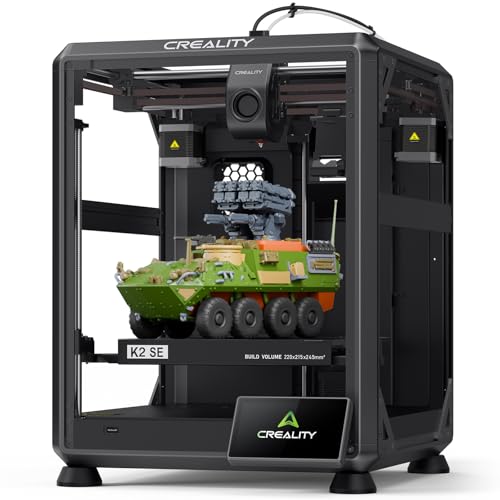
The K2 SE combines a CoreXY high-speed drive with a solid metal frame for stable, precise prints at speed. Its 500 mm/s top speed, 20,000 mm/s² acceleration, and integrated vibration sensing minimize ringing and wobble, delivering sharp walls and reliable detail during rapid movements. The printer supports multi-color printing through Creality’s CFS ecosystem, enabling smoother transitions when using compatible modules. Built with rigidity in mind, the K2 SE reduces flex during high-speed runs, making it a solid option for professionals needing fast, dependable results.
Creality K2 Combo 3D Printer
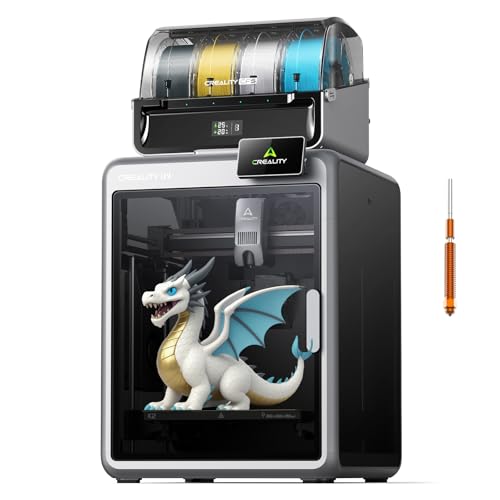
The K2 Combo expands on the K2 lineup with multicolor throughput via the CFS multicolor system, enabling up to 16 distinct color options when paired with compatible modules. Its 600 mm/s print speed and 20,000 mm/s² acceleration support rapid production, while the smart filament system includes automatic identification, relay switching, and moisture control to keep materials ready and dry. The aerospace-grade aluminum frame and reinforced X-axis rail provide stability for large, multi-material prints, making this model a strong choice for color-rich prototypes and finished parts.
Bambu Lab P1S 3D Printer

The P1S emphasizes speed and multi-material capabilities within a fully enclosed design. While specifications vary by model, this printer is widely recognized for combining high-speed printing with multi-color/multi-material readiness and a ready-to-use, ready-to-run architecture. Automatic bed leveling reduces setup time, and the enclosure helps maintain stable print environments for advanced filaments. The P1S is positioned as a capable option for creators needing color versatility and robust print quality in a compact, safe package.
Buying Guide: Key Purchase Considerations
Choosing the right 3D printer depends on your goals, workflow, and materials. Here are essential factors to weigh when evaluating high-speed models like those listed above.
- Print speed versus quality: High speeds can affect layer accuracy. Look for printers with proven acceleration control, robust frame design, and effective print cooling to balance speed with detail.
- Auto leveling and bed adhesion: Automatic bed leveling reduces setup time and improves first-layer reliability. A quality bed surface (PEI, glass, or composite) supports consistent adhesion across various materials.
- Motion system and frame rigidity: CoreXY or Cartesian systems paired with a solid metal frame minimize resonance and wobble at high speeds, preserving wall quality and dimensional accuracy.
- Material compatibility: Nozzles and extruders supporting high-temperature ranges and different filament types (PLA, PETG, ABS, nylon) enable broader project scope. Consider direct-drive versus Bowden setups for flexible filaments.
- Multicolor and multi-material support: If your work requires color changes or multi-material prints, ensure compatibility with CFS or other color-management ecosystems and compatible software.
- Maintenance and upgrades: Quick-swapping nozzles and tool-free components save time. Check for serviceability and availability of replacement parts.
- Software and ecosystem: Consider slicer compatibility, firmware updates, and community support. A rich ecosystem can shorten the path from concept to finished part.
- Safety and enclosure: Fully enclosed builds aid with temperature stability and user safety, especially for higher-temperature filaments and kids’ or classroom deployments.
- Print volume needs: Larger build volumes unlock bigger prototypes, but often at the expense of speed. Match the printer size to typical project dimensions.
Overall, the best-practice approach is to align a printer’s speed capabilities with your material choices, post-processing needs, and intended usage environment. The models reviewed here emphasize robust leveling, fast warm-up, and reliable high-speed performance, offering solid options for professionals, students, and hobbyists seeking top-tier performance without excessive complexity.