For fast-paced gaming and dynamic sports viewing, a TV with a high refresh rate can drastically reduce motion blur and improve clarity. This guide highlights five top models that push 120Hz or higher, offering smooth action, responsive gaming experiences, and vibrant picture quality. Each option combines strong motion performance with modern picture technologies and smart features, helping you pick a screen that aligns with your gaming setup and living room environment.
Below is a quick summary of the selected models to compare at a glance. The table lists the brand, size, key refresh-rate feature, and notable imaging tech to help you decide faster.
| Product | Brand | Size | Refresh Rate | Notable Tech |
|---|---|---|---|---|
| TCL 55 Inch Class T7 Series | TCL | 55″ | 120Hz | QLED, Dolby Atmos, Google TV |
| TCL 65 Inch Class T7 Series | TCL | 65″ | 144Hz | QLED, 4K, Google TV |
| Roku Smart TV 55-Inch Pro Series | Roku | 55″ | 120Hz | Dolby Vision IQ, Backlit Pro, Roku OS |
| Hisense 55 U8 Mini-LED ULED | Hisense | 55″ | 165Hz | MINILED, Dolby Vision IQ/Atmos |
| Panasonic Z85 Series 65-Inch OLED | Panasonic | 65″ | 120Hz | OLED, Dolby Vision IQ, HDR10+/HLG |
TCL 55 Inch Class T7 Series – 120Hz QLED Google TV
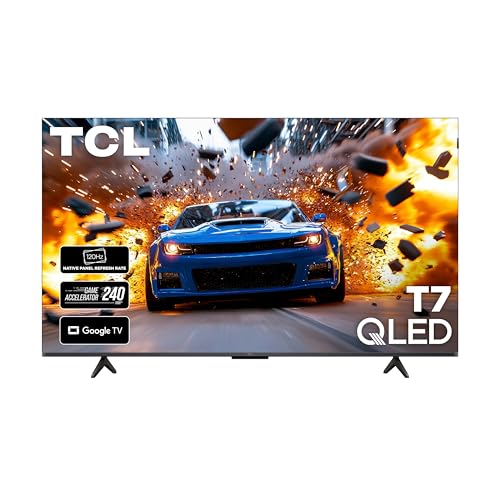
The 55T7 from TCL delivers 4K Ultra HD resolution with QLED color, offering rich, near-DCI-P3 coverage for vibrant scenes. A 120Hz panel supports smooth motion for fast action films and gaming, reducing motion blur during rapid movements. This Google TV model integrates Google Assistant, streaming apps, and voice control via the included remote. Its gaming-friendly specs and bright picture performance make it a strong all-around pick for households prioritizing motion clarity and smart features.
TCL 65 Inch Class T7 Series – 144Hz QLED Google TV

The 65T7 uses a higher 144Hz panel refresh rate for even smoother motion handling, ideal for high-frame-rate gaming and fast sports broadcasts. With QLED color reproduction and strong brightness, it preserves vivid imagery across diverse viewing scenarios. Dolby Atmos support adds immersive audio, while Google TV provides a broad app ecosystem and voice control for a convenient entertainment hub. This size and speed pairing makes it a compelling choice for dedicated gaming spaces or large living rooms.
Roku Smart TV 55-Inch Pro Series

This 55-inch Roku Pro Series delivers a 120Hz refresh rate with HDR processing and Dolby Vision IQ. The Pro line emphasizes a sleek, wall-friendly design and a refined picture performance that suits streaming-heavy use and gaming alike. Roku’s user interface simplifies app discovery, while the Backdrops feature can turn the TV into a digital art gallery when not in use. It’s a balanced option for those who want a strong streaming experience with excellent motion handling.
Hisense 55 U8 Mini-LED ULED – 165Hz
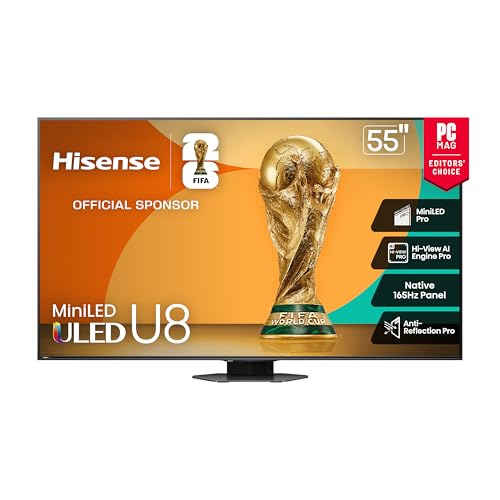
The 55U8QG redefines motion with a native 165Hz panel and extensive local dimming across thousands of mini-LEDs. This model also uses HDR formats (HDR10, Dolby Vision, HLG) and Dolby Atmos for immersive sound. Its Game Booster features and VRR support cater to gamers who demand timing precision, while the high brightness and advanced processing enhance general viewing with outstanding contrast and color accuracy.
Panasonic Z85 Series 65-Inch OLED – 120Hz

The Panasonic Z85 OLED pairs a 65-inch OLED panel with a 120Hz refresh rate and the HCX Pro AI Processor MKII for refined color accuracy and contrast. With multi-HDR support (HDR10, HDR10+, Dolby Vision, HLG) and Dolby Vision IQ, this model adapts to lighting conditions while delivering cinema-like image depth. While OLED excels in contrast, it is best suited for varied viewing angles and content with high dynamic range, offering an excellent motion-rich experience for gaming and sports alike.
Buying Guide: Key Purchase Considerations And Comparisons
- Refresh rate and motion handling: Look for native 120Hz or higher for smoother motion. Some models offer higher effective rates through motion processing; verify real panel refresh rate versus interpolation features that can introduce artifacts during gaming.
- Panel technology and brightness: QLED/miniled options provide bright, vibrant image with strong color volume, while OLED offers exceptional contrast and viewing angles but has distinct brightness characteristics. Choose based on lighting in your room and content preference.
- HDR formats and processing: Ensure support for Dolby Vision, HDR10+, HDR10, and HLG. The combination with capable tone mapping produces more accurate highlights and shadows across diverse content.
- Gaming features: VRR (Variable Refresh Rate), ALLM (Auto Low Latency Mode), and low input lag are important for gaming. HDMI 2.1 ports enable features like eARC and 4K at 120Hz from compatible consoles.
- Smart platform and apps: Consider whether you prefer Google TV, Roku OS, or another ecosystem. App availability, voice control, and ease of use contribute to long-term satisfaction.
- Size, seating distance, and room lighting: Larger screens benefit from higher brightness and better motion handling. Match screen size to room dimensions and typical viewing distance.
- Audio: Dolby Atmos support provides immersive sound; some models include robust speakers, while others rely on external audio systems. Decide whether built-in audio meets your needs or you’ll add external speakers.
- Durability and burn-in risk: OLED displays can be susceptible to image retention with static content, though modern implementations mitigate this with pixel-shifting and automatic maintenance features.
- Connectivity and future-proofing: Ensure multiple HDMI ports, preferred ports (HDMI 2.1 for gaming), and reliable wireless connectivity for streaming and casting.