Choosing the right speaker cable can impact sound clarity, signal reliability, and overall system performance. This guide highlights five reliable options across different gauges and styles, focusing on common use cases—from home theaters to car audio and studio setups. Each choice balances conductivity, cost, and ease of installation to help you wire your speakers with confidence.
Summary of selected products:
| Product | Brand | Gauge | Length | Key Benefit |
|---|---|---|---|---|
| Amazon Basics Speaker Cable, 16-Gauge | Amazon Basics | 16 | 100 ft | Clear audio with easy assembly |
| Amazon Basics 14-Gauge Audio Speaker Wire, 200 ft | Amazon Basics | 14 | 200 ft | High-quality, oxygen-free copper |
| 16 AWG Gauge Speaker Wire Cable Stereo, Install Link | Install Link | 16 | 100 ft | Copper-clad aluminum, flexible |
| Install Link 14 Gauge Speaker Wire, 100 ft | Install Link | 14 | 100 ft | Strong conductors, good flexibility |
| Kinter Cable 16-Gauge 100 ft Speaker Wire | Kinter | 16 | 100 ft | Polarity marked, flexible |
Amazon Basics 16-Gauge Speaker Cable, 100 Ft

In the box, you’ll find 100 feet of 16-gauge speaker wire designed for simple setups. The plastic jacket helps protect signals and reduce interference, supporting clean, undistorted audio between receivers, amplifiers, and speakers. It’s a practical choice for standard A/V systems where budget-friendly, reliable connections are a priority. This cable excels in home theater and stereo configurations where straightforward, easy installation matters most.
Key considerations: 16-gauge conductors are well-suited for short to medium runs, typical in many living spaces. The jacket’s durability aids installation in tight spaces, but long runs may benefit from thicker gauges to minimize resistance. Ideal for first-time setups or replacing worn cables in an existing system.
Amazon Basics 14-Gauge Audio Speaker Wire, 200 ft

This 200-foot roll uses 14-gauge conductors to deliver robust performance for larger rooms or longer runs. The 99.9% oxygen-free copper construction supports clear, undistorted signals between speakers and A/V receivers or amplifiers. It’s suitable for multi-room setups or home theaters that demand stronger current handling and reduced resistance over extended distances. The white jacket helps with visibility during installation and cable management.
Buying note: higher gauge numbers (lower gauge values) mean thicker wires. A 14-gauge cable supports longer runs with less signal loss compared to 16-gauge, making it a versatile choice for mid- to large-sized rooms and outdoor-friendly installations when protected indoors.
Install Link 16 AWG Speaker Wire Cable (100 Ft)

Designed for flexibility and ease of use, this 16-gauge wire employs copper-clad aluminum (CCA) with a double conductor. It provides good conductivity with manageable cost, making it a strong option for home theater setups, car audio, or studio environments where you want reliable signal transfer without the weight or expense of pure copper. The frosted red/black pairing aids polarity identification for quick, correct connections.
Practical tips: consider this gauge when you need a balance between flexibility and performance for shorter or medium-length runs. The CCA construction helps control cost while still delivering solid sound quality for most consumer audio applications.
Install Link 14 Gauge Speaker Wire, 100 ft

The 14-gauge option from Install Link doubles as a versatile choice for home theaters, cars, or professional studios. It uses copper-clad aluminum (CCA) to maintain strong conductivity while keeping costs reasonable. The 100-foot length makes it suitable for longer runs in rooms with multiple speakers or larger layouts. The wire’s polarity-identification features simplify installation, ensuring correct speaker wiring across complex setups.
Considerations: for high-power systems or long speaker runs above 50 feet, the 14-gauge option generally offers less resistance than thinner wires, preserving audio integrity with fewer losses and less heat buildup during extended use.
Kinter 16-Gauge 100 ft Speaker Wire
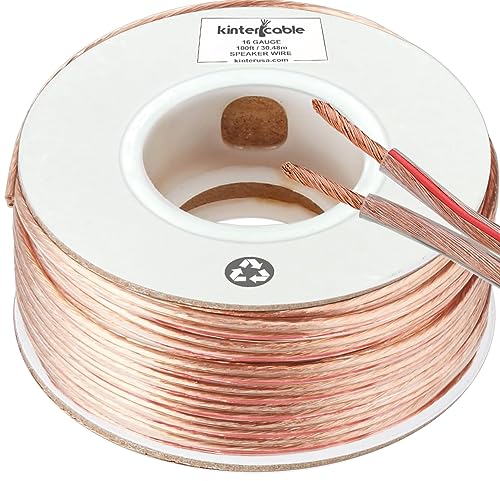
Kinter’s 16-gauge cable provides a practical option for standard setups where cost-conscious choices meet dependable performance. The 100-foot length is convenient for mid-size rooms and home theater configurations. The red polarity stripe on the soft PVC jacket helps installers quickly identify correct speaker polarity, reducing the chance of wiring errors. The copper-clad aluminum material offers a good balance of conductivity and value, suitable for everyday listening needs.
Usage guidance: best suited for typical living rooms, entertainment centers, and classroom AV installations where runs are not excessively long and high-frequency clarity is prioritized without premium copper costs.
GEARit 14 Gauge Speaker Wire, 100 Ft

GEARit’s 14-gauge speaker wire emphasizes versatility for car audio, home theater, or studio installations. The durable PVC jacket protects the conductors, while the copper-clad aluminum composition contributes to a cost-efficient solution with solid conductivity. This option is well-suited for users who need reliable performance in tighter spaces or custom installations where a balance between flexibility and performance matters.
Key takeaways: 14-gauge is a good default for many home theater runs and medium-length installations. GEARit’s 100-foot length adds convenience for longer routes or multi-room wiring projects, especially where budget considerations are important.
Buying Guide: Key Purchase Considerations and Comparisons
- Gauge and length: Choose 12–14 gauge for long runs or high-power setups; 16 gauge is often sufficient for shorter runs in typical rooms. Length should exceed the longest run by a comfortable margin to avoid excessive tension and resistance.
- Conductor material: Oxygen-free copper (OFC) offers best performance but costs more. Copper-clad aluminum (CCA) provides a cost-effective alternative with acceptable conductivity for many consumer applications.
- Jacket durability: A flexible PVC jacket eases installation in tight spaces and through walls; look for jackets with good strain relief and protection against abrasion.
- Polarity marking: Polarity indicators (red/black stripes or printed marks) help ensure correct installation and phase alignment, reducing phase-related listening issues.
- Application focus: For home theaters, prioritize cables with low resistance and secure connections to avoid signal loss. For car audio, flexibility and resistance to movement are key. For studios, emphasizing minimal signal loss and shielding may be worthwhile.
- Cost vs. performance: Higher gauge (thicker) wires tend to cost more but can reduce resistance over longer runs. Weigh the total length of runs and system power to determine the best value.
- Installation considerations: If you’re running cables through walls or under floors, plan routes to minimize bending radii and use cable organizers to maintain clean, safe wiring.
These selections provide a range of gauges, materials, and lengths to cover common setups. When evaluating options, consider your room size, speaker impedance, and the total distance from the amplifier or receiver to each speaker to maximize audio quality without overinvesting in premium copper where it isn’t necessary.