Finding the right NAS storage solution involves balancing capacity, performance, and ease of use. This guide reviews five top options to help you centralize backups, share files across devices, and keep data secure. Each pick includes practical features like RAID, cloud-like access, and robust support to fit different budgets and workloads.
| Product | Capacity | Type | Key Benefit |
|---|---|---|---|
| BUFFALO LinkStation 210 6TB | 6 TB | 1-Bay NAS | Value RAID for centralized storage |
| BUFFALO LinkStation 210 4TB | 4 TB | 1-Bay NAS | Compact home cloud and backup |
| BUFFALO LinkStation SoHo 220 4TB | 4 TB | 2-Bay NAS | Small office/home collaboration |
| TERRAMASTER F4-425 Plus | Diskless, up to 144 TB with drives | 4-Bay NAS | High performance with M.2 slots |
| Seagate IronWolf 8TB NAS HDD | 8 TB | Internal NAS HDD | Optimized for NAS environments |
BUFFALO LinkStation 210 6TB 1-Bay NAS
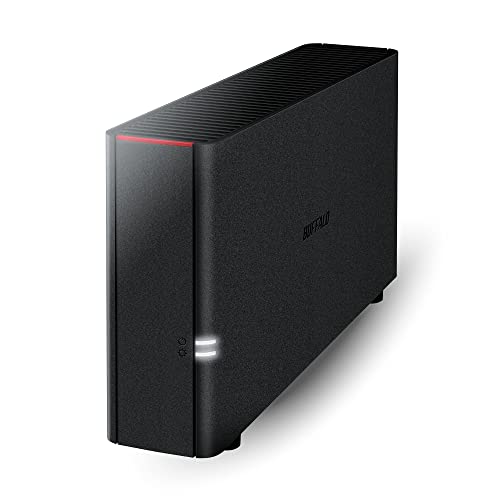
BUFFALO’s LinkStation 210 series provides a budget-friendly entry into centralized storage with RAID support for backups across devices. This 6 TB model is designed for households seeking simple network storage shared across Windows and macOS clients. It plugs directly into a router to create a personal cloud-like environment without ongoing fees. Buffalo offers 24/7 US-based support for setup and troubleshooting, and the device emphasizes easy installation and ongoing accessibility for media, documents, and backups. This option is best for users who want straightforward, reliable NAS storage with expandable backup options.
BUFFALO LinkStation 210 4TB 1-Bay NAS
This 4 TB variant emphasizes centralized storage and backup for multiple devices, leveraging RAID for data protection within a compact form factor. It remains compatible with Windows and macOS, and it supports a subscription-free personal cloud experience for quick access to files, photos, and videos. The device is positioned as an affordable way to create a shared home network storage solution without monthly service fees, ideal for households with moderate media libraries and backup needs.
BUFFALO LinkStation SoHo 220 4TB (2x2TB)

The LinkStation SoHo 220 is a 2-bay NAS designed for small offices or home offices needing more robust sharing and storage capability. It supports RAID configurations for data protection across two drives and offers easy router integration for network-wide access. The SoHo 220 is suitable for users needing higher uptime, better redundancy, and the ability to manage multiple workgroups or family devices from a central location.
BUFFALO TeraStation Essentials 2025 4-Bay NAS

The TeraStation Essentials 4-Bay model targets professional-grade data protection with 256-bit drive encryption and flexible replication features. It offers a 2.5 GbE port for high-speed transfers and rapid backups, making it suitable for small offices that require stronger security and faster data movement. This option emphasizes enterprise-level reliability while remaining accessible for SMBs and advanced home setups needing robust data protection and scalable storage growth.
TERRAMASTER F4-425 Plus NAS

The TERRAMASTER F4-425 Plus is a high-performance 4-bay NAS configured for demanding workloads. It features an Intel N150 quad-core CPU with up to 3.6GHz, 16GB DDR5 RAM, and triple M.2 slots for optional SSD caching or storage pools. Dual 5 GbE LAN ports enable link aggregation and SMB Multichannel, delivering over 1 GB/s sequential speeds in ideal conditions. TRAID technology optimizes capacity with strong data protection, including features like snapshots and HyperLock-WORM for added security. This model targets power users, creative teams, and small businesses needing rapid access to large media libraries and collaborative projects.
Buying Guide: Key NAS Purchase Considerations
- Capacity and drive configuration: Decide between 1-bay versus multi-bay units. If you plan to store large media libraries or backups across multiple devices, multi-drive bays with RAID options provide redundancy and resilience.
- Performance and network interfaces: Look for NAS units with Gigabit Ethernet as a baseline; 2.5 GbE or 5 GbE interfaces offer faster transfers, especially with multiple users or large files. Consider CPU and RAM requirements for your workload (media editing, backups, virtualization).
- Data protection and backup: RAID levels, drive encryption, and snapshot capabilities protect against drive failures and accidental data loss. Check for features like automatic backups, cloud integration, and replication.
- Cloud access and remote work: A NAS should offer easy remote access, mobile apps, and secure user management to support remote work and on-the-go file access without ongoing fees.
- Noise, power, and footprint: For home use, consider quieter models with reasonable power consumption. If space is limited, compact 1-bay units or small 2-bay enclosures may be preferable.
- Drive type and reliability: For NAS duty, purpose-built drives (NAS HDDs) provide reliability, error recovery, and warranty coverage tailored for continuous operation.
- Support and ecosystem: Manufacturer support quality and community resources can be decisive for setup and ongoing maintenance. Look for models with good warranty terms and accessible customer service.
- Expansion potential: If you expect storage needs to grow, choose a model with expansion options or easier drive replacements without downtime.
These considerations help determine which NAS storage setup balances capacity, performance, and cost. Whether you need simple file sharing at home or robust, scalable storage for a small office, the options above provide a spectrum of capabilities to fit different environments.