Turning digital audio from MP3 players and mobile devices into MIDI data opens up creative routing for producers, DJs, and hobbyists. The following review highlights five cables and adapters designed to connect MP3 sources to MIDI-equipped gear. Each option emphasizes reliable signal transmission, ease of setup, and broad compatibility with common audio devices. Use this guide to compare how 3.5mm stereo outputs, 5-pin DIN MIDI sockets, and USB/Type-C interfaces translate into functional MIDI signals for keyboards, synths, and DAWs.
| Product | Brand | Connection Type | Length |
|---|---|---|---|
| zdyCGTime 7-Pin DIN to 3.5mm Cable | zdyCGTime | 7-Pin DIN Male to 3.5mm Stereo | 0.5 m |
| BTFO 3.5mm TRS to DIN MIDI Cable (2-Pack) | BTFO | 3.5mm TRS to 5-Pin DIN MIDI | 1.5 m |
| FORE MIDI to USB Interface | FORE | MIDI In/Out to USB (Type-C) | 6.5 ft |
| 2 Pack Type-A MIDI to 3.5mm Adapters | Eldraqth | MIDI 5-Pin DIN to 3.5mm | 14 in |
| FORE TRS 3.5mm to MIDI Cable (2-Pack) | FORE | 3.5mm TRS to 5-Pin DIN MIDI | 2 ft |
zdyCGTime 7-Pin DIN To 3.5mm MIDI Cable

The zdyCGTime cable combines a 7-pin DIN MIDI connection with a 3.5mm stereo jack, enabling a bridge between portable MP3 players, tablets, and smartphones and legacy audio systems or MIDI-enabled gear. The 0.5-meter length is suitable for compact studio setups or on-the-go rigs. It touts precision-molded terminations for a tight fit, which helps reduce looseness that can interrupt MIDI signal flow. Although primarily designed for turning stereo output into a DIN-compatible input, users should verify compatibility with their specific B&O, Naim, or similar hi-fi pipelines that accept DIN-based MIDI signals. This is a simple, budget-friendly option for basic MP3-to-MIDI routing.
BTFO Type A 3.5mm TRS To DIN MIDI Cable (2-Pack)

The BTFO set includes two 1.5-meter cables that convert 3.5mm TRS audio to a 5-pin DIN MIDI connection, making it ideal for keyboards, synths, and DAWs that interpret MIDI over standard DIN. The PVC and copper construction provides durability for studio and stage use, and the two-pack arrangement reduces the risk of signal interruption due to a missing connector. This option is versatile for setups where 3.5mm stereo outputs are used as MIDI sources, with a focus on reliability and flexible placement in the studio.
FORE MIDI To USB Interface (Type-C) For MIDI Gear
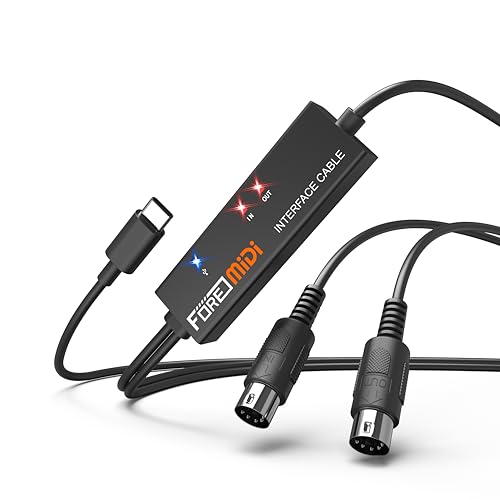
The FORE USB-C MIDI interface supports 1 MIDI in and 1 MIDI out with 16 MIDI channels, designed to connect MIDI keyboards, synthesizers, or controllers to iOS, Android, Windows, or macOS devices. It emphasizes plug-and-play operation with built-in drivers and LED indicators for power and data activity. This option is well-suited for users who require USB-based MIDI communication with reliable latency characteristics, a feature important for live performance or precise sequencing in DAWs.
FORE TRS 3.5mm To MIDI Cable (2-Pack)

This two-pack features a TRS 3.5mm to 5-pin DIN MIDI cable with ultra-small plugs designed for tight spaces. The cable is marketed for high-speed MIDI data transmission with a focus on low latency and robust connectors. The compact design makes it a practical choice for compact rack setups or desks where space is at a premium, enabling quick connections between 3.5mm audio sources and DIN MIDI devices.
PIIHUSW MIDI Cable 3.5mm To 5-Pin DIN

The PIIHUSW cable provides a 5-pin DIN MIDI plug to a 3.5mm stereo jack, enabling use with devices featuring a 3.5mm output routed into MIDI-enabled systems such as Bang & Olufsen or other European-style setups. The 1.5-meter length offers comfortable reach for studio desks, stages, or classroom environments where MIDI-capable equipment is used alongside MP3 players and other audio sources. It emphasizes compatibility with MIDI devices and general 3.5mm to DIN connections.
Eldraqth 2 Pack MIDI To 3.5mm Adapters

The Eldraqth adapters convert MIDI 5-pin DIN to a 3.5mm jack, packaged in a two-pack with 14-inch wiring. They are primarily positioned as a companion for MIDI controllers, keyboards, and audio interfaces that require a 3.5mm input. The design emphasizes universal compatibility and durable shielding to maintain signal integrity during performances or studio work. This option is useful when converting between common MIDI jacks and consumer audio outputs appears necessary.
SiYear 6.35mm TRS To DIN MIDI Cable Adapter

The SiYear adapter uses a 6.35mm female to DIN MIDI configuration to connect professional audio equipment with 6.35mm outputs to MIDI keyboards or synths. Designed for professional studios, it highlights oxygen-free copper for high signal purity and durability. This cable is best suited for setups where guitar amps, mixers, or high-impedance devices feed into MIDI-enabled outboards or computers, bridging large-format gear with MIDI control surfaces.
Buying Guide
Purpose and compatibility: Determine whether you need a direct MP3-to-MIDI path (analog-to-MIDI conversion via a simple cable) or a more flexible computer-based MIDI interface. Some products emphasize pure signal transfer (3.5mm to DIN), while others provide USB/Type-C interfaces for computer or mobile device routing. If you work with iOS, Android, Windows, or macOS, prioritize USB or Type-C options with driver-free, plug-and-play operation.
Connector types and signals: MP3 playback devices typically output stereo audio on a 3.5mm jack. To convert to MIDI, you generally rely on a signal that your MIDI device can interpret, which may involve bespoke adapter circuitry or passive wiring decisions. Ensure the product supports the required DIN pin configuration (5-pin vs. 7-pin) and the correct audio jack (3.5mm TRS vs. 3.5mm mono).
Cable length and durability: Short cables reduce noise and echo in tight setups, while longer cables improve flexibility but may introduce minor signal loss. Look for molded connectors, corrosion-resistant contacts, and durable shielding for reliable performance on stage or in the studio.
Latency and performance: Some options emphasize “no delay” MIDI transmission, which is crucial for live performance or precise sequencing. If latency matters in your workflow, select interfaces and cables that advertise low-latency data transfer and stable signal paths. Verify user reviews for real-world latency impressions in similar setups.
Ease of use and installation: Plug-and-play solutions with clear LED indicators or status lights simplify setup, especially for beginners. For more complex rigs, USB or USB-C MIDI interfaces can require minimal driver installation, but confirm compatibility with your host software (GarageBand, FL Studio, Cubase, etc.).
Budget and ecosystem: The market offers bundles (2-pack) and single cables at varying prices. Consider whether you need multiple spares, or if a single high-quality adapter will cover your typical workflow. Also, check return policies and warranty periods for peace of mind when wiring essential gear.
Usage scenarios to consider:
- Small home studio: compact 0.5 m to 1.5 m cables paired with a USB MIDI interface for laptop-based production.
- Live performance: durable, low-latency cables with robust connectors and space-saving plugs for crowded racks or pedalboards.
- Legacy equipment: DIN-to-TRS adapters to bridge older synths or hi-fi systems with modern MP3 players.