The top picks for a world radio receiver cover shortwave, AM, FM, and emergency listening needs. This guide helps buyers choose a device suited for travel, outdoor adventures, or home use. Each product highlights multi-band coverage, tuning precision, and portability. Below you’ll find concise reasons to pick each model and who it’s best for.
| Product | Best For | Key Benefit |
|---|---|---|
| Tecsun PL330 | All-around portable listening | Wide band coverage and DSP reception |
| Raddy RF919 | Advanced tuning enthusiasts | Dual tuning knobs and multi-band storage |
| Emgykit R11 | Emergency prep and outdoor use | Solar/hand crank power, NOAA alerts, SOS |
| Raddy RF320 | App-controlled users | BT app remote control and 955 station storage |
| Kaito KA500 | Comprehensive emergency radio | Multiple power options and NOAA weather |
Tecsun PL330 Digital World Band Radio
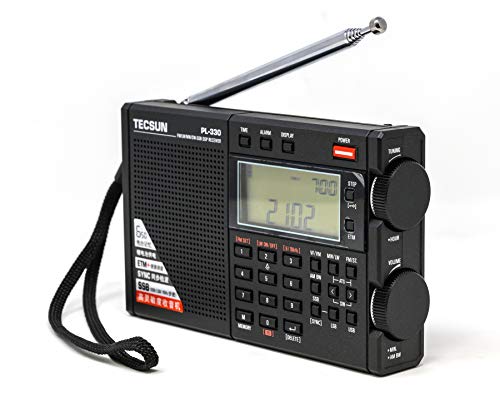
The Tecsun PL330 is a compact digital portable receiver that covers AM, FM, longwave, shortwave, and single side band. It uses DSP digital demodulation and synchronized detection to improve reception sensitivity and anti-image interference across bands. A premium 8-ohm, 250 mW speaker delivers clear, dynamic sound, while a 3.5 mm stereo jack supports private listening with included earphones.
Best for: travelers and hobby listeners who want broad band coverage in a small package. The DSP approach helps minimize interference in crowded RF environments.
Limitation: While feature-rich, extremely niche listening like rare SSB broadcasts may require additional antennas or accessories for optimal results.
Raddy RF919 SSB Shortwave Radio

The Raddy RF919 offers extensive multi-band reception, including FM, AM, SW, SSB, VHF/UHF, AIR, CB, and WB. It features dual tuning knobs for main and fine frequency adjustments and a rear antenna tuner. A 3.54-inch main screen and a seven-color backlit secondary display provide clear status information and a decorative light that syncs with playback in BT mode. It supports up to 1600 channel storage for quick access.
Best for: serious radio hobbyists who value tactile tuning control and large channel storage. The dual screens help users monitor reception at a glance.
Caution: The device’s numerous features may require a learning curve for first-time users.
Emgykit R11 Portable Shortwave Radio

The Emgykit R11 is an all-weather emergency radio with NOAA/SW/AM/FM bands. It includes solar, hand crank, USB charging, and Bluetooth streaming. A built-in 5-watt speaker ensures solid playback, and the unit supports USB drive/TF/Micro SD playback. It also comes with a flashlight, compass, and SOS feature for outdoor and disaster scenarios.
Best for: campers, hikers, and emergency kits that need a reliable power-independent radio with multiple charging options.
Limitation: The included speaker is adequate but not designed for high-fidelity music listening in quiet environments.
Raddy RF320 APP Control Shortwave Radio

The RF320 covers AIR, FM, VHF, MW, SW, and WB with a rechargeable design and a 9.85 ft wire antenna. It supports BT 5.0 for iOS, Android, and HarmonyOS with app remote control. Features include auto, semi-auto, and manual searches, a precise 0.005 MHz tuning step, and storage for up to 955 stations across multiple bands.
Best for: users who want app-based control and large station storage for quick recall during travel or daily listening.
Limitation: App reliability and compatibility can vary across devices and OS versions, so plan for occasional software prompts or updates.
Kaito KA500 Emergency AM/FM/SW Radio

The Kaito KA500 is a six-way powered emergency radio with hand crank, solar, and battery options. It supports AM, FM, 2-band shortwave, and seven NOAA weather channels, plus a built-in NiMH rechargeable battery pack. A 5-LED reading lamp, a flashlight, and an SOS beacon enhance its emergency usefulness, while a USB output can recharge devices.
Best for: preparedness kits and outdoor enthusiasts who prioritize multiple power options and NOAA weather alerts in a single device.
Limitation: Shortwave performance can vary in busy urban environments due to interference and antenna constraints.
Buying Guide
What should you consider when choosing a world radio receiver?
- Band coverage: Decide which bands you need (AM, FM, LW, SW, SSB, WB). Shortwave and SSB are key for global listening and amateur/marine signals.
- Power options: For emergencies, prioritize radios with solar, hand crank, USB, and battery options. Confirm battery type and capacity.
- Tuning and interface: Tuning precision (step size) and control style (knobs vs. digital) affect ease of use and speed in finding stations.
- Storage and memory: If you like presets, check the number of stations you can save per band and the organization method.
- App compatibility: Some models offer companion apps for remote control and recording. Check OS support and data privacy terms.
- Portability and durability: Consider size, weight, and ruggedness for travel or outdoor use. A solid build helps in adverse conditions.
- Audio quality: A good speaker improves enjoyment for music and broadcasts. Look for additional audio features like treble/bass controls.
- Noise and interference: In urban areas, devices with strong anti-interference features will provide clearer reception.
FAQ
- What is a world radio receiver?
A world radio receiver covers multiple bands, typically including AM, FM, longwave, and shortwave, with some models adding SSB and WB for broader international listening.
- Do I need SSB for shortwave listening?
SSB is useful for certain amateur, maritime, and aviation signals. It improves clarity on those transmissions but isn’t required for general broadcasts.
- Which power option is best for emergencies?
Radios with solar, hand crank, USB, and battery options offer the most reliability when power is unavailable.
- Is app control beneficial for a shortwave radio?
App control can simplify tuning, storage, and recording, but confirm the app’s compatibility with your device.
- Can all these radios be used for travel?
Yes, most listed models are designed with portability in mind, though size and weight vary. Factor your travel needs and storage space.
- What should I expect from a buying guide like this?
A buying guide highlights practical considerations, helps compare models, and explains why a feature matters for your listening goals.