Finding reliable wireless XLR solutions for speakers hinges on reliable range, interference resistance, and compatibility with your gear. This guide reviews five notable options, highlighting how each model handles live sound, PA systems, and stage setups. Whether you’re upgrading a small venue or outfitting a larger show, these picks cover 5.8 GHz, 2.4 GHz, and Bluetooth approaches to help you choose the right wireless link for your speakers.
Summary of chosen products
| Product | Brand | Type | Key Benefit |
|---|---|---|---|
| Xvive U35D Stereo XLR Plug-on Wireless Audio System | Xvive | 5.8GHz | PA-friendly, mixer-free operation |
| JOYO MW-2 | JOYO | 2.4GHz | Multi-channel, dynamic/condenser options |
| ALTO Stealth 1 Mono | ALTO | UHF | Long-range, selectable channels |
| HHLPRO UHF System | HHLPRO | UHF | Dual antennas, auto channel scanning |
| Xvive P3 Bluetooth Receiver | Xvive | Bluetooth XLR | Wireless Bluetooth to XLR |
Xvive U35D Stereo 5.8GHz Wireless XLR System
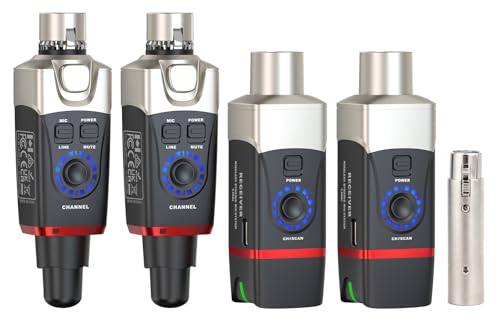
The Xvive U35D offers a stable 5.8GHz wireless link designed to minimize interference in venues crowded with wireless devices. It is tailored for PA systems, allowing a direct connection from a mixer or console to powered main speakers without cables. The receiver can connect straight to a speaker’s XLR input, enabling mixer-free operation for quick setups at small to mid-size events. Its 5.8GHz band helps reduce common 2.4GHz interference, making it a solid choice where solid, reliable wireless performance matters most.
JOYO MW-2 2.4GHz Wireless System

The JOYO MW-2 supports 2.4GHz wireless transmission with auto-pairing across four channels, converting wired mics into a wireless setup for dynamic mics and some condenser options. It emphasizes 24-bit/48kHz lossless audio for clear vocal performance, with universal compatibility across mics, PA systems, mixers, and cameras. While it broadens versatility, users should test condenser compatibility due to varying phantom power needs and potential noise from some condensers in certain environments.
ALTO Stealth 1 Mono UHF Wireless System
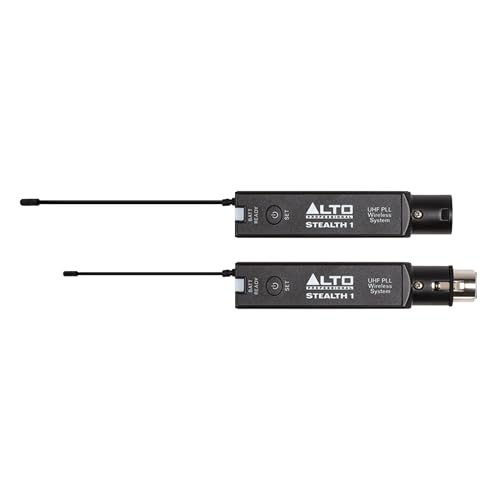
ALTO’s Stealth 1 Mono uses UHF connectivity with 16 selectable channels to reduce interference in live settings. It’s designed for powered speakers, mixers, and dynamic mics, offering reliable range and quick setup—an essential feature for venues where cable runs are impractical. Its emphasis on a cable-free workflow makes it a practical option for engineers seeking a robust wireless backbone for on-stage monitoring and main speakers.
HHLPRO UHF Wireless XLR System

HHLPRO features dual antennas for stronger anti-interference performance and a long 470-foot transmission range, suitable for large outdoor events. Its auto channel scanning helps identify interference-free frequencies with one-touch pairing for quick setup. This system aims at professional users who require stable performance in challenging audio environments and larger venues where latency and reliability are critical.
Xvive P3 XLR Bluetooth Receiver

The Xvive P3 converts Bluetooth audio to an XLR feed for speakers, mixers, and PA systems. It supports mono output on a single unit and stereo output when using multiple units for broader coverage. With Bluetooth 5.1, A2DP, and a range exceeding 100 feet in optimal conditions, it’s designed for quick, cable-free music playback and flexible wireless pairing across multiple devices.
Xvive P3D Dual Bluetooth XLR Receiver

The P3D expands the Bluetooth-to-XLR workflow with dual receivers for either dual mono or true stereo output. It enables quick setup for live performances, ensuring that Bluetooth audio can reach active PA systems or mixers without cables. The system emphasizes ease of use with reliable Bluetooth transmission and straightforward pairing for larger setups.
SINWE P16 Dual-Stereo Wireless XLR System

The SINWE P16 system offers dual receivers for flexible stereo or dual-mono configurations. It supports 24bit/48kHz DAC with a claimed Bluetooth 5.3 foundation and an ultra-low latency below 4 ms in open-field testing, with a substantial 160-foot range. This setup aims to deliver high-quality, synchronized wireless audio for DJ setups, weddings, and large gatherings.
Buying Guide: Key Purchase Considerations
- Frequency Band and Interference: 5.8GHz systems typically offer good resistance to congestion in venues with 2.4GHz devices; UHF options may be more robust in dense RF environments but can require careful channel selection.
- Range and Latency: Consider the actual stage-to-speaker distance and whether you need reliable performance beyond 100 feet. Latency should be minimal for live performers and DJs; check reported ms latency figures.
- Channel Availability: Devices with auto channel scanning or multiple selectable channels help avoid interference. For large events, dual-receiver or stereo configurations can improve coverage and imaging.
- Compatibility: Ensure the transmitter/receiver pair supports your mixer, powered speakers, and mics. If you intend to use condensers, verify phantom power compatibility and noise considerations.
- Power and Battery Life: Battery life matters for longer sets. Some units are plug-and-play with direct XLR inputs, while others rely on external power or battery packs.
- Ease of Use: Look for quick pairing, straightforward setup, and reliable rebuild/reconnect features, especially for quick-change scenarios on stage.
- Sound Quality: DAC resolution (e.g., 16-bit/48kHz vs higher) and latency influence overall audio clarity. Professional-grade units emphasize low noise and clear, consistent output.
- Mobility and Durability: For touring or outdoor venues, rugged enclosures and weather resistance can be important depending on the event.
In choosing a wireless XLR system for speakers, balance RF maturity with your venue size, number of channels, and the type of microphones you use. If you frequently perform in crowded RF environments, a 5.8GHz or UHF solution with strong channel management and a robust transmitter-to-receiver design will typically offer the most reliable results. For cable-free quick setups and easy integration with powered speakers, prioritize devices with direct XLR outputs, low latency, and clear pairing methods.