Boost your TV viewing with wireless speakers that deliver clear dialogue, rich surround sound, and simple setup. This guide highlights top-rated options that work with most smart TVs and streaming devices, helping you choose the right balance of ease, audio quality, and price. Below you’ll find five standout picks with concise specs and features to compare at a glance.
| Product | Brand | Format | Key Benefit |
|---|---|---|---|
| ULTIMEA Poseidon M60 | ULTIMEA | 5.1 channel with subwoofer | Dolby Atmos, 0.5 ms latency |
| Bose TV Speaker | Bose | All-in-one soundbar | Enhanced dialogue, simple setup |
| VIZIO SV510X-08 | VIZIO | 5.1 with wireless subwoofer | Dolby Atmos & DTS:X support |
| ULTIMEA Aura A40 | ULTIMEA | 7.1 virtual surround | AI tuning, multiple surround modes |
| SEREONIC Portable TV Speakers | SEREONIC | Wireless TV speakers (portable) | Supports hard of hearing, easy placement |
ULTIMEA Poseidon M60 5.1ch Dolby Atmos

The Poseidon M60 delivers a simplified 5.1-channel Dolby Atmos experience without rear speakers. Five built-in drivers, including side-firing units, create a wide soundstage while precision DSP minimizes latency to under 0.5 ms, producing smooth, theater-like audio. A wired wooden subwoofer handles bass, with a frequency range of 45 Hz–18 kHz and a peak output up to 300W. The system supports voice clarity features and app control for convenient tuning on compatible TVs.
Bose TV Speaker

The Bose TV Speaker is a compact, all-in-one soundbar designed to clarify dialogue and provide natural, spacious audio for smaller home theater setups. It focuses on enhancing speech intelligibility through focused driver design and angled placement, delivering an easy, no-fuss upgrade for TV viewing without a complex setup or multiple components.
VIZIO 5.1 Soundbar SE SV510X-08

The VIZIO SV510X-08 features a 5.1 setup with wireless subwoofer, delivering room-filling sound with Dolby Atmos and DTS:X compatibility on select content. The system is designed for straightforward installation, with app-based tuning and compatibility with a range of streaming devices. This option is versatile for mid-to-large rooms and offers a secure, cable-light arrangement.
ULTIMEA Aura A40 7.1ch Virtual Surround

The Aura A40 provides a 7.1-channel virtual surround experience with three front channels and four surround speakers. AI-driven tuning coordinates all speakers for lifelike motion and directionality, while wired connections for the front and rear surrounds aim to reduce timing issues. This setup is designed for users seeking a more immersive cinematic feel without deploying separate rear speakers.
Roku Wireless Speakers
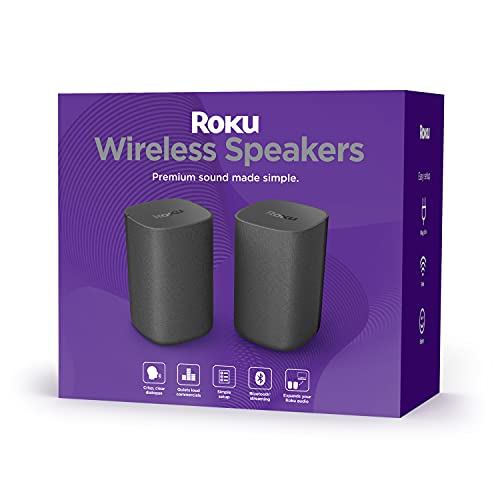
Note: The Roku Wireless Speakers are included for reference as a system that complements Roku TV or Roku audio devices. They deliver robust mid-to-high frequency detail and clear dialogue, with emphasis on sync between audio and video. The setup is straightforward, and the speakers are designed to pair cleanly with compatible Roku hardware for a cohesive ecosystem.
Buying Guide
Key considerations when choosing wireless speakers for TV include compatibility, room size, and whether you prefer a single all-in-one unit or a component-style system with separate subwoofers and surround modules. Important factors to compare across models:
- Sound quality and loudness: Look for a balance of clear dialogue, dynamic midrange, and impactful bass. Systems with dedicated subwoofers or multiple drivers usually deliver fuller sound.
- Surround configuration: 2.1, 5.1, and 7.1 setups offer progressively richer spatial audio. Virtual surround can also emulate depth without multiple speakers.
- Dolby Atmos and DTS:X: For 3D sound effects, ensure the model supports Atmos or DTS:X and check compatibility with your content and TV.
- Latency and lip-sync: Low-latency DSP processing minimizes lag between on-screen action and audio, especially important for dialogue-heavy scenes.
- Connectivity: HDMI-ARC or eARC provides simple, high-quality connections to most TVs. Optical, Bluetooth, and auxiliary inputs expand compatibility with older devices.
- Size and placement: Consider room dimensions and whether you want a slim soundbar or a larger configuration with separate surrounds and a subwoofer. Wireless subs reduce clutter, while wired surrounds can offer stable performance.
- User interface and app control: Some models include mobile apps or remote controls for EQ, dialogue boost, and mode adjustments.
- Power and protection: Look for peak power ratings that suit your room and features like auto-standby to save energy.
In evaluating options, prioritize models that align with your content preferences (movies, sports, gaming) and your existing hardware. For households prioritizing speech intelligibility, a dedicated dialogue enhancement feature or a Bose-level focus on vocals can be a decisive factor. If you crave cinematic immersion with less wiring, consider a 5.1 or 7.1 system with a subwoofer and optional rear surrounds. Finally, portable wireless models can be ideal for apartments, bedrooms, or rooms where you want to relocate speakers quickly without running new cables.