Find dependable wireless access points that extend coverage, support MU‑MIMO, PoE, and flexible modes for home, small office, or busy retail environments. This guide highlights carefully chosen models with strong performance, security features, and easy management. Whether you need outdoor resilience, cloud management, or multi‑SSID support, the selections below balance value and capability to help you build a robust wireless network.
Summary of chosen products:
| Product | Brand | Key Points |
|---|---|---|
| TL-WA1201 | TP-Link | MU‑MIMO, 2.4/5 GHz, Passive PoE, Multi‑mode |
| EAP110‑Outdoor V3 | TP-Link | Outdoor, 2×2 MIMO, SDN/Cloud, PoE |
| U6+ | Ubiquiti Networks | Wi‑Fi 6, AX, 3 Gbit/s, enterprise‑grade |
| WAX210 | NETGEAR | Wi‑Fi 6, AX1800, MU‑MIMO, compact |
| EAP650 | TP-Link | Wi‑Fi 6, 4×4 MU‑MIMO, cloud management |
TP-Link TL-WA1201 Wireless Gigabit Access Point
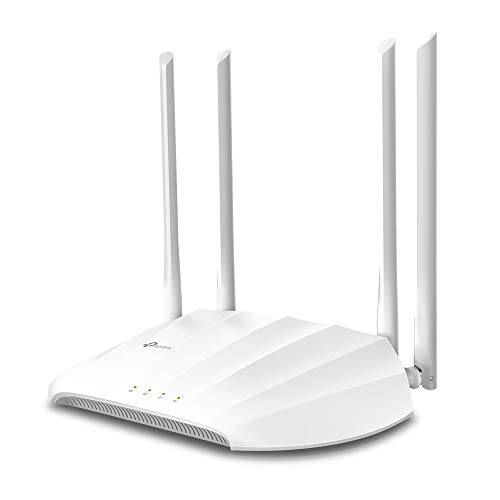
Overview: The TL-WA1201 is a dual‑band access point that leverages MU‑MIMO to deliver up to 1200 Mbps across devices. It supports four operation modes: Client, Multi‑SSID, Range Extender, and AP, enabling flexible deployments in homes or small offices. It uses Passive PoE, allowing simple, centralized power delivery with minimal cabling. This makes it suitable for desk or wall installations where power outlets are limited.
Security and performance: With Wave 2 MU‑MIMO, the device efficiently serves multiple clients, reducing latency in busy networks. The four fixed antennas provide steady coverage, and beamforming helps direct signals toward clients. The device is designed to be deployed in environments requiring reliable wireless bridging and a straightforward setup.
TP-Link EAP110-Outdoor V3

Overview: The EAP110‑Outdoor V3 is designed for outdoor Wi‑Fi coverage up to large areas, featuring 2×2 MIMO and outdoor‑grade robustness. It supports PoE for installation flexibility and integrates with Omada SDN for centralized management. The device is built to withstand outdoor conditions while delivering reliable guest and enterprise wireless access with strong security and remote provisioning options.
Security and management: It supports enterprise‑class WPA/WPA2 authentication and options for RADIUS, ensuring secure connections for a variety of devices. The long‑range coverage makes it suitable for campuses, hotels, and other outdoor deployments where a sturdy, scalable wireless backbone is needed.
Ubiquiti U6+ Dual Band Access Point

Overview: The U6+ is a high‑end wireless access point supporting IEEE 802.11a/b/g/n/ac/ax with up to 3 Gbit/s aggregate throughput. It targets business networks requiring robust performance and reliability, with enterprise‑grade features, strong security, and seamless integration into larger UniFi deployments. The device is designed to handle many devices with low latency, ideal for dense environments such as offices or clinics.
Network integration: Its compatibility with Ubiquiti’s ecosystem offers centralized management, advanced analytics, and scalable expansion. The U6+ emphasizes modern Wi‑Fi 6 capabilities while maintaining compatibility with established infrastructure, providing a smooth upgrade path for growing networks.
NETGEAR WAX210 Wireless Access Point

Overview: The WAX210 is a WiFi 6 dual‑band AX1800 AP designed for compact spaces while delivering solid performance for small businesses or retail settings. It supports up to 128 devices, MU‑MIMO, and simple PoE deployment. The small footprint makes it suitable for retail counters, offices, or classrooms where discreet yet capable networking is desired.
Security and management: As part of NETGEAR’s ecosystem, it offers WPA3 security and straightforward setup. Remote management is available, enabling easier monitoring and configuration from a central management point, which is beneficial for multi‑AP deployments.
TP-Link EAP650 Ultra‑Slim Wireless Access Point

Overview: The EAP650 is a Wi‑Fi 6 AX3000 access point with an ultra‑slim design, ideal for modern office spaces, hotels, schools, or cafes seeking an unobtrusive network device. It includes MU‑MIMO, remote management, and seamless roaming to maintain steady connectivity as users move around the venue. The cloud‑managed approach enables centralized setup and monitoring across multiple APs.
Security and features: Free Omada cloud management simplifies administration, while the 2.5 Gbps port supports future network upgrades. The compact form factor pairs with a robust feature set to deliver reliable coverage and easy expansion for growing networks.
Buying Guide: Key Considerations For Selecting A Wireless Access Point
- Purpose and environment: Indoor vs outdoor; office, hospitality, or retail needs dictate weather resistance, IP ratings, and mounting options.
- Wi‑Fi standard and speed: Wi‑Fi 6/6E and MU‑MIMO improve capacity in dense environments; consider AX1800 vs AX3000 or higher depending on client density.
- Power and deployment: PoE vs DC power; Passive PoE can simplify cabling, while active PoE (802.3at/af) supports higher powered devices and longer runs.
- Management model: Local vs cloud management; Omada/UniFi ecosystems offer scalable control for multiple APs and remote monitoring.
- Security features: WPA3, RADIUS support, rogue AP detection, and enterprise authentication options help protect guest and device networks.
- Network capacity: Number of supported devices and MU‑MIMO effectiveness; compare supported speeds on 2.4 GHz and 5 GHz bands.
- Expansion needs: Look for multi‑SSID support for guest networks, VLAN tagging, and seamless roaming to ensure smooth device handoffs.
- Warranty and support: A longer warranty and accessible vendor support can be valuable for business deployments.
- Budget and total cost: Consider initial hardware cost plus potential cloud subscriptions or management licenses when evaluating total cost of ownership.
In practice, matching the right access point to your space involves balancing coverage, capacity, and management needs. Outdoor locations may benefit from rugged models with SDN integration, while indoor environments can prioritize compact form factors and cloud management for easier administration. For growing networks, consider scalability features and upgrade paths to Wi‑Fi 6 or beyond to maintain performance as client devices evolve.