If you’re filming with a DSLR or mirrorless camera, clear, reliable audio is essential. The right wireless microphone system can dramatically improve sound quality while offering freedom of movement. This guide highlights five top options that suit a range of buyers—from solo vloggers to small crews. Each pick is evaluated for ease of use, battery life, range, and audio clarity so you can choose confidently for interviews, vlogs, or outdoor shoots.
| Product | Best For | Key Benefit |
|---|---|---|
| DJI Mic Mini (2 TX + 1 RX) | Two-person vlogs | Extended transmitter count with strong range |
| PQRQP 3 in 1 Wireless Lavalier | All-in-one versatility | Universal receiver and noise reduction |
| NEEWER KM19 | Budget-friendly, multi-device | Long battery life, dual TX with minimal setup |
| RØDE Wireless PRO | Professional content creation | 32-bit float on-board recording, robust transmission |
| Movo WMX-1 | DSLR-friendly tutorials | Long-range, DSLR compatibility |
DJI Mic Mini: 2 TX + 1 RX for Duo Set

Best for two-person conversations, this compact wireless lavalier system includes two transmitters and a single receiver, enabling natural on-camera dialogue without a tangle of cables. The small, ultralight transmitters are comfortable for long shoots, making it ideal for interviews, on-location reports, or duet-style vlogs. The included charging case extends use, supporting lengthy sessions away from power outlets.
Best for: small interview setups, dual-host vlogs, on-camera discussions. Advantages include discreet wear and stable 400 m transmission range with 48 kHz sampling and 120 dB SPL for clear voice capture. The 48-hour battery life with the charging case helps cover long days of shooting. A practical caution: heavier on-camera rigs may require attention to wind management in outdoor environments.
PQRQP 3 in 1 Wireless Lavalier Microphone

This 3-in-1 system centers on versatility, offering a universal receiver compatible with smartphones, cameras, and laptops. It supports up to 65 feet of reliable wireless transmission and features active noise reduction to minimize wind and crowd noise. The compact mic is designed for hands-free operation, making it well-suited for livestreams, on-the-go vlogs, and outdoor recording.
Best for: creators who need a single solution across multiple devices. Choose this for multi-platform shoots, or when you frequently switch between camera and phone footage. Caution: the 3.5mm output may not work with all laptops, so verify your input compatibility before use.
NEEWER KM19 Lightweight Wireless Mic System

NEEWER KM19 is a budget-friendly option with a compact receiver and two transmitters. It offers omnidirectional pickup and robust noise handling, making it a practical choice for entry-level creators, YouTube tutorials, and small remote shoots. The system supports 48 kHz/24-bit sampling and provides up to 100 meters of range, with a 54-hour total battery life via its charging case.
Best for: beginners or creators who want a simple, affordable system with long battery life. Limitation: while the set is capable, it may not match the audio fidelity of higher-end systems in highly noisy environments or complex interference scenarios.
RØDE Wireless PRO Wireless Microphone System
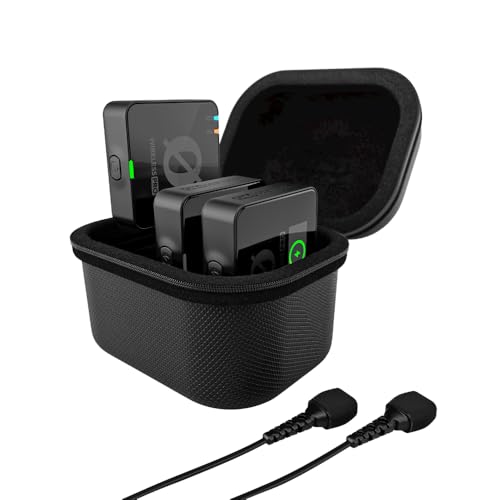
RØDE Wireless PRO is built for professional content creators and filmmakers. It features digital transmission with encrypted 128-bit security and impressive range, plus over 40 hours of on-board 32-bit float recording. This system is compatible with cameras, smartphones, and computers, offering a robust solution for diverse productions and high-stakes shoots.
Best for: more demanding shoots where high-fidelity audio and secure transmission matter. A potential limitation is the higher learning curve and setup complexity compared to simpler plug-and-play kits.
Movo WMX-1 2.4GHz Wireless Lavalier

The Movo WMX-1 provides a long-range wireless link suitable for DSLR shoots, with a compact design that’s easy to mount on-camera or on talent. It supports up to 60 meters of operation and is designed for filmmakers and vloggers who need reliable audio in dynamic settings. It stands out for compatibility with a broad range of devices and ease of use.
Best for: DSLR-based productions that require dependable wireless audio with straightforward operation. Limitation: like many entry-to-midrange kits, it may underperform in extreme RF-heavy environments without proper channel management.
Buying Guide: How To Choose The Right Wireless Mic For Your DSLR
- What’s your production context? For solo vlogging, compact one-transmitter systems reduce setup time. For interviews or dual-host formats, kits with two transmitters work best.
- Device compatibility: Ensure the receiver outputs match your camera’s input type (3.5mm, USB-C, or other). Some kits include adapters; others require separate accessories.
- Battery life and charging: Consider total run time across intermissions and whether a charging case is included. Longer shoots benefit from cases that recharge on the go.
- Distance and range: If you shoot outdoors or across noisy spaces, a longer stable range helps prevent dropouts. Look for tested ranges and signal stability.
- Audio quality features: Noise reduction, wind screens, and 24-bit/32-bit float capabilities can dramatically influence clarity in busy environments.
- Ease of use: Beginners benefit from plug-and-play designs and simple pairing. Advanced users may prefer systems with matrixing, timecode, or onboard recording.
- Format and editing: Check whether the system supports direct recording to the camera or requires post-processing. Onboard 32-bit float can simplify post.
- Wind and disruptive environments: If shooting outdoors, wind protection and high SNR (signal-to-noise ratio) are important.
Frequently Asked Questions
- Can I use a wireless microphone with any DSLR?
Yes, most wireless lavalier systems connect to cameras via a 3.5mm input or USB-C when supported. Verify your camera’s input options and ensure the receiver’s output matches.
- What is the typical range for wireless lavalier systems?
Most kits advertise anywhere from 30 to 200 feet depending on environment and frequency use. Real-world performance varies with interference and obstacles.
- Do I need wind protection for outdoor shoots?
Yes. Wind screens or deadcats can substantially reduce wind noise and improve intelligibility in outdoor or breezy conditions.
- Is onboard recording on wireless systems necessary?
Onboard recording like 32-bit float helps recover clipped or quiet audio in post, but not all systems offer it. Consider whether you need a backup track in case of dropouts.
- How many transmitters should I buy for a two-person setup?
For two people, a kit with two transmitters and one receiver (or a dual-receiver setup) is ideal to minimize audio sync issues and keep each mic separate.
- Do higher-priced systems always mean better audio?
Not always. While premium models often offer better range, stability, and features, the right pick depends on your specific shooting needs, environment, and battery life requirements.