The wireless in-ear monitor (IEM) market offers many systems designed for stage performers, studios, and church settings. This guide highlights five top options that emphasize low latency, clear sound, and reliable wireless connections. Each product below includes key features, suitable use cases, and practical considerations to help you choose the right IEM setup for your needs.
| Product | Brand | Connectivity | Best For |
|---|---|---|---|
| LEKATO MS-02 | LEKATO | 2.4 GHz | Small to mid-sized stages |
| Xvive U45 | Xvive | 5.8 GHz | Stable multi-channel setups |
| LEKATO MS-1 | LEKATO | 2.4 GHz | Auto-pairing, multi-receiver |
| JOYO JW-07 | JOYO | 2.4 GHz | Practice and live practice setups |
| MELONARE PM-2 | MELONARE | 2.4 GHz | Long battery life, on-the-go use |
LEKATO MS-02 Wireless In-Ear Monitor System

LEKATO’s MS-02 offers an upgraded low-latency experience with mono mode <4.5 ms wireless transmission and a 24-bit/48 kHz sampling rate for detailed, realistic sound. It supports One TX to Many RX up to four receivers, making it ideal for small to medium stage groups or rehearsal settings. The system includes a beltpack transmitter and compact receivers, with a practical 6–8 hour battery life and LED indicators for battery level and volume. Auto-pairing simplifies setup, while the built-in volume controls let performers quickly adjust on stage.
Xvive U45 Wireless In-Ear Monitor System

The Xvive U45 uses a 5.8 GHz true diversity design with a solid 100 ft (30.5 m) range, minimizing interference and delivering stable performance on stages and studios. Its Channel Scan Mode simplifies finding the best channel, and it supports a broad 20 Hz–20 kHz audio range with 24-bit/48 kHz fidelity and a high 110 dB SNR for clear, detailed sound at any level. The system emphasizes reliability in dynamic environments, making it suitable for bands and churches seeking steady wireless monitoring.
LEKATO MS-1 Wireless In-Ear Monitor System
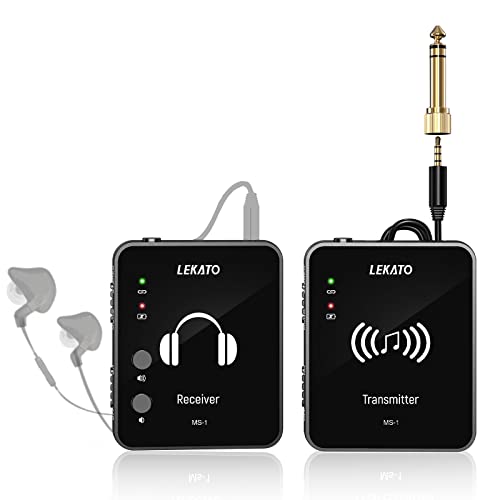
LEKATO’s MS-1 focuses on multi-receiver scalability with support for up to six receivers from a single transmitter, suitable for small-to-medium gigs or band practice. Auto-pairing simplifies setup—power on, hold the pairing buttons, and wait for the green light to indicate success. It offers true stereo transmission and a quick switch between stereo and mono input. This makes it a practical option for ensembles needing reliable, scalable monitoring without complex configuration.
JOYO JW-07 Wireless In-Ear Monitor System

JOYO’s JW-07 offers a practical 2.4 GHz wireless IEM solution with low latency (<5 ms) and 48 kHz/16-bit audio clarity. It emphasizes anti-interference through frequency hopping and robust transmission, making it suitable for guitar players, DJs, or live performers who need dependable on-stage monitoring during practice and performances. The system emphasizes fast setup and stable operation in dynamic environments.
Xvive U4 Wireless In-Ear Monitor System Set
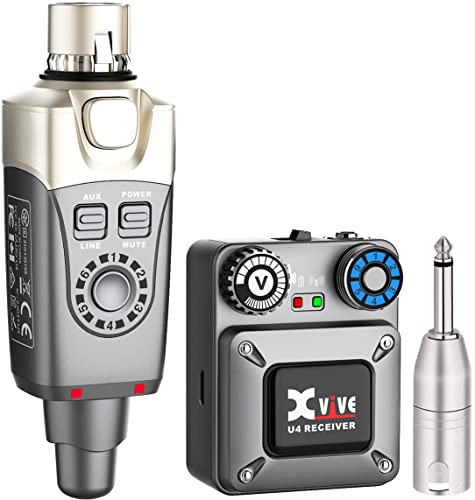
The Xvive U4 provides a compact, flexible 2.4 GHz system with a range exceeding 90 feet and six channels. It advertises sub-5 ms latency and reliable performance across channels, making it suitable for multi-per former scenarios and venues where stage configurations vary. The system emphasizes portability and ease-of-use, appealing to touring musicians and venue staff seeking quick setup and dependable wireless transmission.
MELONARE PM-2 Portable Wireless In-Ear Monitor System

MELONARE’s PM-2 emphasizes long battery life and portability with up to 30 hours of total runtime when used with the included charging case. It supports OTG input for direct connection to smartphones and laptops, enabling real-time monitoring in mobile setups or on-location shoots. The system delivers 24-bit/48 kHz audio with a wide 20 Hz–20 kHz range and a 100 dB SNR, ensuring clear, accurate sound across mono and stereo modes. This is well-suited for mobile performers, studios, and small- to mid-size venues.
Buying Guide: Key Purchase Considerations And Comparisons
- Latency: Look for systems with sub-5 ms latency for real-time monitoring, especially important for musicians and vocalists who rely on precise timing.
- Frequency Band: 2.4 GHz systems are common and versatile, but 5.8 GHz can reduce interference in busy RF environments. Consider your venues and existing wireless traffic.
- Range and Channel Availability: Ensure the system supports multiple channels and sufficient range for your typical stage size. Channel scanning and auto-pairing features simplify setup.
- Battery Life and Charging: Longer battery life reduces downtime on stage. Some models include charging cases to extend run time for tours or lengthy events.
- Mono vs. Stereo: Stereo transmission delivers richer, more natural sound. Check whether the source material and cabling support stereo input, and whether a quick switch to mono is available.
- Auto-Pairing And Easy Setup: Auto-pairing and straightforward pairing methods save setup time and reduce on-stage fiddling.
- Durability and Build: Stage gear should withstand transport and handling. Look for rugged transmitters, beltpack receivers, and secure connectors.
- OTG And Connectivity: OTG inputs enable direct mobile device connections for on-the-go monitoring and quick setups in studios or on location.
- Use Case Fit: For small bands or church use, prioritize systems that support multiple receivers from a single transmitter and offer clear audio with reliable monitoring on stage.