The right wireless headset microphone can elevate stage performances, speeches, and live events with clear, consistent sound and reliable wireless stability. This guide highlights five top options, covering dynamic and condenser heads, UHF systems, and single-unit wireless kits. Each product is selected for stage-friendly sound, comfortable wear, and solid range to minimize interruptions during performances or presentations.
Summary of chosen products:
| Product | Brand | Key Benefit | Range | Notes |
|---|---|---|---|---|
| TONOR Wireless Microphone System (4 mics) | TONOR | Up to 200 ft range; 4-mic system | 200 ft | Great for groups and events |
| Bietrun Wireless Headset Mic System | Bietrun | 2-in-1 headset/handheld; 160 ft | 160 ft | Flexible form factor |
| Shure PGA31-TQG Headworn Wireless | Shure | Secure headworn design; detailed vocal | – | Stage-ready brand |
| TONOR Wireless Headset Microphone (2-in-1) | TONOR | 65 ft range; clear sound | 65 ft | User-friendly |
| XIAOKOA Wireless Headset Microphone | XIAOKOA | 164 ft range; skin-tone mic | 164 ft | Discreet for performances |
TONOR 4-Microphone Wireless System

This TONOR system provides four wireless channels with handheld or headset-compatible mics. Its cardioid dynamic capsules reduce background noise and feedback, making it well-suited for stage performances, weddings, lectures, and church events. The receiver supports up to 200 ft of range, allowing flexible staging and movement on large stages or outdoors. With ten channels on each mic and bodypack, this setup can handle multiple performers without noticeable interference, though it requires careful frequency management in very crowded RF environments. It includes compatibility with mixers and amplifiers via a 1/4″ output for optimized sound output.
Features referenced include a professional cardioid dynamic capsule, stable 200 ft range, and 10 channels per mic. For stage setups with several performers, this system offers scalability and reliable performance, though users should verify local RF usage and potential channel overlap in crowded venues.
Bietrun Wireless Headset Mic System
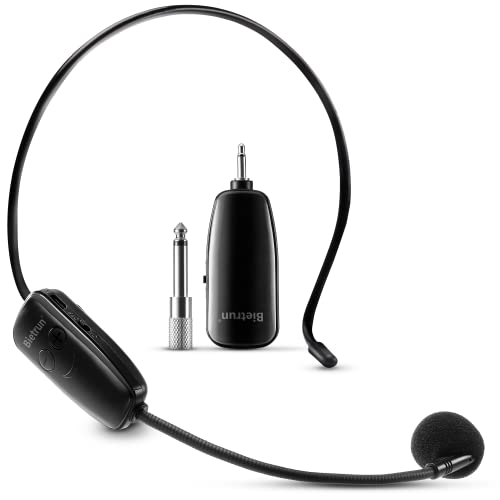
The Bietrun headset system offers a 160 ft transmission range and a 2-in-1 design that blends headset and handheld capabilities. It features a built-in high-sensitivity condenser mic and stable signal with no noticeable delay, radiation, or howling, making it suitable for vocal performances, small to mid-size venues, and gym or classroom presentations. It’s designed for quick setup and easy pairing, with a 3.5 mm receiver output and optional 6.35 mm adapter for broader equipment compatibility. The system ships with rechargeable batteries, offering hours of use per charge.
In practice, this model prioritizes ease of use and versatility, which is ideal for presenters who need to switch between headset and handheld quickly. It’s best suited for environments with moderate RF traffic and where quick, reliable setup matters most.
Shure PGA31-TQG Headworn Wireless

The Shure PGA31-TQG headworn system is designed for performers who need constant mobility on stage. It features a wireframe headset that stays securely in place during dynamic movements, and a permanently charged electret condenser cartridge for detailed, crisp vocals. Its unidirectional cardioid pattern helps reject ambient noise, improving gain-before-feedback on loud stages. This setup is well-regarded for reliability in live venues, and Shure’s build quality provides long-term durability for frequent performances and touring.
Key considerations include comfort for extended wear, sound clarity in noisy environments, and compatibility with stage mixing and monitoring systems. The PGA31-TQG excels in active performance settings but may require compatible wireless receivers and accessories to maximize compatibility with existing gear.
TONOR 2-in-1 Wireless Headset Microphone
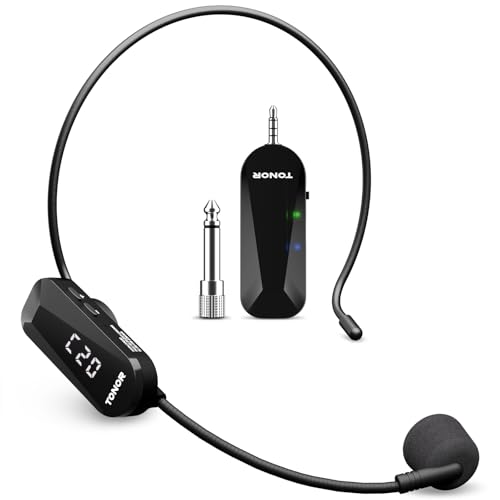
This TONOR system combines headset and handheld capabilities in one unit, offering 65 ft of reliable wireless range and a cardioid mic core for clear, authentic sound. The system auto-pairs on startup, with a display showing frequency, battery level, and volume for quick adjustments. A rechargeable battery provides several hours of operation, and charging is straightforward with a dual-port Type-C setup. It’s suitable for fitness classes, teaching, guided tours, and small-to-mid-size venues where mobility and simple operation are priorities.
Pros include easy pairing, user-friendly controls, and a compact, 2-in-1 design. It’s best for presenters who move across a stage or room and want a straightforward setup without complex frequency management. Potential drawbacks involve RF performance in crowded venues and the need to ensure compatibility with existing PA systems.
XIAOKOA Wireless Headset Microphone

The XIAOKOA headset system provides a long 164 ft range with UHF transmission and a skin-tone headset that blends discreetly with the wearer. It supports both handheld and headset usage, enabling flexible performance styles. The unit is designed for teachers, tour guides, fitness instructors, and conference speakers who require freedom of movement on stage while maintaining clear, reliable audio. The system emphasizes easy setup with simple matching procedures and general compatibility with PA equipment using common 3.5 mm or 6.35 mm adapters as needed.
Considerations include the discreet design for live performances and the need for consistent RF performance in venues with multiple wireless devices. The XIAOKOA option balances range, comfort, and ease of use for stage performers seeking a low-profile headset solution.
Buying Guide: Key Purchase Considerations
- Microphone type and pattern: Cardioid mics reduce background noise and feedback on loud stages; condenser mics can offer more sensitivity in quiet scenes, but may be more prone to feedback in noisy venues.
- Range and interference: Choose a system with ample range for your venue size and consider systems with multiple channels to avoid cross-channel interference when several performers are on stage.
- Wired vs. wireless reliability: Wireless systems depend on RF clarity. Look for auto-pairing, channel scanning, and error correction features to minimize dropouts.
- Wearability and comfort: For extended performances, headset weight, fit, and skin-tone designs can affect comfort and visibility on camera or stage.
- Battery life and charging: Longer battery life reduces mid-performance changes. Check whether the system offers easy charging options and real-time battery indicators.
- Compatibility and outputs: Ensure the system’s outputs match your mixer, PA, or amplifier inputs (3.5 mm, 6.35 mm, XLR). Adapters may be needed for some setups.
- Durability and build quality: Stage environments demand sturdy construction, especially for frequent setup and teardown and travel.
- Support and brand reliability: Trusted brands often provide better service, firmware updates, and compatibility with a wide range of accessories.
In summary, for stage performances, prioritize systems with reliable range, secure wearability, and robust noise rejection. For larger venues or multi-performer shows, consider multi-channel options with clear channel management. For presenters who move actively, head-worn designs from reputable brands tend to offer the best combination of comfort and consistent sound.