Wireless Ethernet bridges convert wireless signals into wired connections, letting printers, TVs, game consoles, and other devices join a network without running cables. This guide reviews five prominent options, highlighting speed, range, setup, and use cases to help American homes and small offices choose the best bridge for their needs.
| Product | Brand | Best For | Key Benefit |
|---|---|---|---|
| BrosTrend AC1200 WiFi To Ethernet Adapter | BrosTrend | Smart TVs, game consoles, printers | High-speed dual-band connection up to 1200 Mbps |
| TP-Link TL-WA1201 | TP-Link | Multi-device homes, AP/extender options | MU-MIMO and beamforming for robust coverage |
| BrosTrend Dual Band 1200Mbps WiFi Bridge | BrosTrend | Any Ethernet-enabled device | Reliable wired connection with external antennas |
| Point-to-Point Wireless Bridge System CPE688KIT | UeeVii | Long-range outdoor linking | 5 KM line-of-sight bridge with dual Gigabit ports |
| AdaLov 3KM 5.8G Wireless Bridge CPE660 | AdaLov | Surveillance, outbuildings, remote offices | High-gain 5.8 GHz link for distant connections |
Wireless ethernet bridges provide a cable-free bridge between your router and wired devices. They are ideal when you want to place a smart TV, printer, or gaming console far from the router without drilling or running long Ethernet cables. The following five products cover a range of needs—from indoor MU-MIMO-capable adapters to outdoor, long-range point-to-point links—so you can pick one that matches your distance, environment, and device requirements.
Product Reviews
BrosTrend AC1200 WiFi To Ethernet Adapter
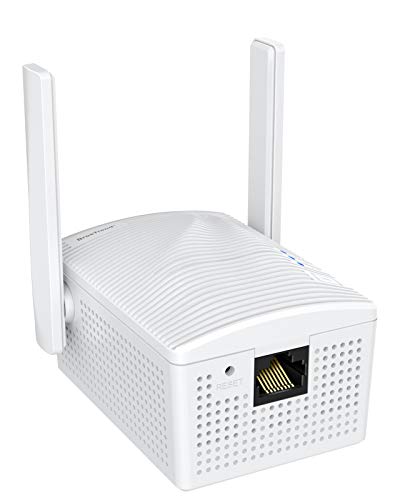
The BrosTrend AC1200 adapter converts wireless signals into a wired connection for Ethernet-enabled devices. It supports dual bands, delivering up to 867 Mbps on 5 GHz and 300 Mbps on 2.4 GHz, which is suitable for streaming, online gaming, and general browsing. It’s designed for easy setup with no driver installation, and it powers from a standard wall outlet. Its practical use cases include connecting a smart TV, game console, Blu-ray player, or a network printer to a wireless network, especially where cable runs are impractical.
Adalov Wireless Bridge, 3KM 5.8G

The Adalov CPE660 is a long-range wireless bridge designed for point-to-point or point-to-multipoint deployments. Operating on the 5.8 GHz band, it delivers data speeds up to 300 Mbps with dual 100 Mbps Ethernet ports for straightforward integration with cameras, access points, or network hubs. Its emphasis on long-range coverage makes it a solid option for extending networks to barns, warehouses, or remote sites where wired Ethernet is impractical.
TP-Link AC1200 Wireless Gigabit Access Point (TL-WA1201)
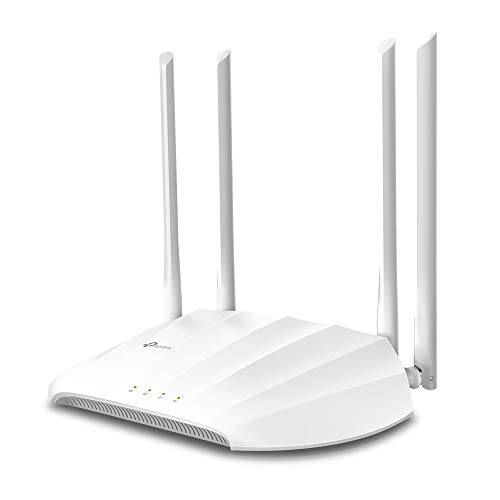
TP-Link’s TL-WA1201 brings MU-MIMO Wave 2 support to a versatile wireless bridge. It delivers dual-band speeds up to 1200 Mbps and supports multiple modes—Client, Multi-SSID, Range Extender, and AP—making it adaptable for several scenarios in homes or small offices. The device supports Passive PoE for straightforward installation, allowing flexible placement. With its two antennas, it emphasizes strong signal strength and broader coverage for multiple devices sharing the network simultaneously.
BrosTrend Dual Band 1200Mbps WiFi Bridge
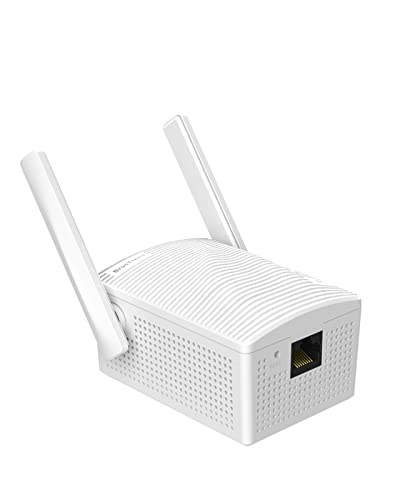
This BrosTrend model is a straightforward, dual-band bridge that converts your WiFi signal into a wired Ethernet connection. It uses an RJ45 LAN port for the wired side and leverages two external antennas to improve signal reception, providing a stable connection for devices like smart TVs, printers, game consoles, and PCs. The setup focuses on reliability and ease of use, especially suitable for non-WiFi devices that require consistent bandwidth.
Point-to-Point Wireless Bridge System CPE688KIT

The CPE688KIT from UeeVii provides a complete outdoor wireless bridge solution with WiFi 6 AX3000 router included. It targets long-range deployment with up to 5 kilometers of line-of-sight transmission and dual Gigabit Ethernet ports for fast wired connections to cameras, PoE devices, or switches. The kit is designed for surveillance, remote offices, barns, or remote site connectivity and emphasizes scalability and resilience in harsh environments.
Buying Guide
Key purchase considerations
Distance and environment: Indoor bridges work best for shorter, unobstructed spaces, while outdoor or long-range bridges excel in line-of-sight setups.
Speed and capacity: Look for dual-band support (2.4 GHz and 5 GHz) and features like MU-MIMO or beamforming if you have multiple devices streaming or gaming.
Ethernet ports: Consider how many wired devices you need to connect. Some models offer dual Gigabit RJ45 ports for higher bandwidth demands.
Power and installation: Passive PoE support can simplify installation. Outdoor units often require weatherproof mounting and robust power sources.
Security and ease of setup: Ensure the device supports current encryption standards and offers a straightforward setup process to minimize configuration risk.
Comparative notes
Indoor bridges tend to prioritize compact form factors and user-friendly setups, making them ideal for homes with a single streaming device or printer. Outdoor or long-range bridges emphasize range and stability, suitable for properties with outbuildings or surveillance networks. If you need universal compatibility with many Ethernet devices, a model with multiple Ethernet ports and robust antennas can deliver the most flexibility. For multi-device homes, MU-MIMO-enabled bridges reduce bottlenecks by serving several devices concurrently.
Who should consider a wireless ethernet bridge?
Home entertainment fans seeking to connect a smart TV or gaming console without running cables, small offices needing to extend a network to printers or IP cameras, or remote properties requiring a reliable bridge between distant buildings will find these devices useful. Match your environment (indoor vs. outdoor), required distance, and device count to select the best option.