Wireless charging adapters convert any compatible USB-C device into a wireless charging-enabled phone without built-in wireless power. This article reviews five popular options to help American shoppers compare compatibility, ease of use, and charging efficiency. Each product is evaluated on design, installation, and performance to aid in a fast, informed decision.
Summary of selected products
| Product | Brand | Type | Key Note |
|---|---|---|---|
| AISHEMI Wireless Charging Receiver Adapter | AISHEMI | Qi Wireless Receiver (USB‑C) | |
| Nillkin Wireless Charging Receiver (Long Version) | Nillkin | Qi Receiver (USB‑C Long) | |
| Nillkin Wireless Charging Receiver (Short Version) | Nillkin | Qi Receiver (USB‑C Short) | |
| TASUMATO Wireless Charging Adapter | TASUMATO | USB‑C Receiver | |
| AISHEMI Qi Wireless Charging Receiver (Pixel/Android) | AISHEMI | Qi Receiver (USB‑C) |
AISHEMI Wireless Charging Receiver Adapter

The AISHEMI receiver is designed for a broad range of Android devices with USB‑C ports, including Samsung, LG, Huawei, Sony, Motorola, Xiaomi, and Alcatel. Its ultrathin profile minimizes added bulk while delivering Qi charging efficiency with a built‑in protection IC. This model emphasizes fast charging potential and low heat generation, making it suitable for daily use on compatible pads and docks. Installation involves plugging into the USB‑C port, then aligning the receiver with the charging surface for best results.
Key points: ultrathin design, high efficiency, and broad Android compatibility. The emphasis on low radiation and protective IC supports safer long‑term use, while the compact form factor reduces additional weight and bulk. Some users may need to experiment with pad position for optimal charging alignment.
Nillkin Wireless Charging Receiver (Long Version)

This Nillkin long version receiver is intended for phones without built‑in wireless charging, enabling easy retrofit on a variety of USB‑C devices. It’s designed to maximize compatibility with numerous Pixel and Galaxy models and pairs well with a QC 3.0 or PD adapter for improved performance. The setup involves attaching the receiver to the back of the phone or inside a slim case and then charging through a compatible pad. The long version suits devices with thicker cases or prefer a more extended receiver area for stability.
Considerations include the balance between trickle charging for daily use and the desire for faster charging. Users should note the need for a suitably thin case (less than about 3 mm) or direct placement on the back of the phone for best results. The product suits many Android phones, but fast charging capabilities depend on the host adapter and pad quality.
Nillkin Wireless Charging Receiver (Short Version)

The short version from Nillkin mirrors similar compatibility with other USB‑C devices and is intended for phones that benefit from a compact receiver. Installation is straightforward: plug into USB‑C, secure on the back, and reattach the original case. The recommended case thickness remains under 3 mm to maintain signal transmission through the back. Users should pair with a compatible fast charger adapter to approach optimal charging speeds.
This option is ideal for users who want a low‑profile receiver that leaves minimal visual footprint while preserving broad compatibility with popular Android phones. The main trade‑off is that performance hinges on case thickness and charging pad quality.
TASUMATO USB Type-C Wireless Charging Adapter
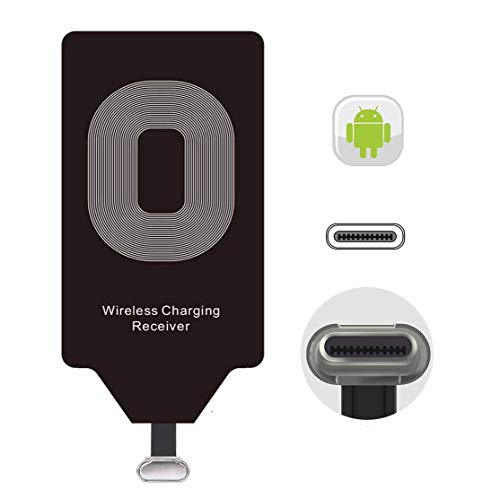
TASUMATO’s receiver supports a wide range of USB‑C Android phones and even outlines compatibility with certain car charging scenarios. The 5V/1000 mA high‑current output is designed to work with charging pads and car mounts, making it useful for in‑car wireless charging setups. The device claims a faster charge with a larger coil area for improved transmission and a design that aims to reduce thermal buildup during use.
Key considerations include ensuring the car charger and charging pad are compatible with QC 3.0 or PD adapters for the best results. The long list of supported phones makes it a versatile option for mixed device households, though actual charge speeds depend on the host charger and pad specifications.
AISHEMI Qi Wireless Charging Receiver (Pixel/Android)

This AISHEMI model emphasizes compatibility with Google Pixel and other USB‑C Android devices, maintaining an ultrathin and lightweight profile similar to its sibling product. The design highlights include a fast, efficient charging experience with a protective IC, minimizing heat and radiation. Like other receivers, setup is straightforward—plug into USB‑C, position on the back, and begin charging on a Qi pad.
Consider the balance between case thickness and signal transmission. The receiver’s ultrathin design helps preserve comfort and aesthetics, but thicker or metal cases can block wireless signals. Users should select a pad that supports standard Qi charging standards and verify device compatibility with their phone model.
XYX Type C Qi Wireless Receiver (Long Version)

XYX’s Type‑C receiver is designed for a broad list of Android devices with USB‑C ports, including many Galaxy, Motorola, Google Pixel, OnePlus, and Huawei models. The long version offers a stable patch coil design intended to improve transmission and support for wireless charging across multiple body cases. The product notes stress avoiding thick or metallic cases, as these can hinder signal transmission and charging speed.
Important considerations include ensuring the solution remains unobtrusive when carried in pockets or bags and confirming that the charging pad and wall adapter support standard fast charging protocols. The XYX option is strong for users who want broad device coverage and a longer receiver profile for stability on irregular surfaces.
Buying Guide: Key Purchase Considerations
Device compatibility: Look for a receiver that explicitly lists your phone models and USB‑C configuration. Some receivers specify “Type‑C” or “USB‑C” compatibility and note limitations with certain cases or metal material.
Case compatibility and thickness: Most receivers require a slim case (typically under 3–5 mm total thickness) or direct attachment to the phone. Metal cases can block wireless signals, so plan accordingly and test with your preferred case.
Charging speed and efficiency: Check efficiency percentages and the presence of protective ICs. While many receivers advertise 72%+ efficiency, actual performance depends on the charging pad, wall adapter, and device compatibility. For fast charging, pair with a QC 3.0 or PD adapter and a capable wireless pad.
Power source and car usage: Some receivers emphasize car charging compatibility. If you plan to use wireless charging in a vehicle, verify the receiver’s compatibility with car chargers and the vehicle’s power output to avoid overload or overheating.
Size and weight: Ultrathin designs minimize added bulk, preserving the phone’s ergonomics. Short or long versions vary in footprint; choose based on how the receiver sits on the back of your phone and whether it sits inside a case without blocking camera or fingerprint sensors.
Reliability and safety: Look for built‑in protective ICs that manage heat and radiation. This can increase longevity and safety during extended charging sessions, especially on warmer days or when using high‑output pads.
Ease of installation: Most receivers simply plug into USB‑C and align to the charging pad. For best results, place the receiver on the back of the phone or inside a slim case with a clean back surface and use a flat, stable charging pad to avoid misalignment.
Value and warranty: Compare the included features against price and consider warranty coverage. A receiver with multiple device compatibility and robust protection ICs is often worth the investment for a multi‑device household.