For networks built around older infrastructure or office environments that still rely on robust, scalable wireless access, selecting the right access point (AP) can restore performance and reliability. This guide focuses on versatile, enterprise-grade options that support modern features like cloud management, seamless roaming, MU-MIMO, and PoE powering, while remaining compatible with older network concepts. The five highlighted APs cover Wi-Fi 6 and Wi-Fi 7 capabilities, enabling a smooth upgrade path for mixed device environments and evolving bandwidth needs.
| Product | Brand | Wireless Standard | Key Features |
|---|---|---|---|
| TP-Link Omada BE5000 (EAP720) | TP-Link | Wi-Fi 7 | Dual-band 5.0 Gbps, 2.5G port, PoE or DC, cloud management, seamless roaming |
| TP-Link EAP650 | TP-Link | Wi-Fi 6 | Omada cloud management, 2976 Mbps, ultra-slim design, remote control |
| NETGEAR WAX210 | NETGEAR | Wi-Fi 6 | AX1800, 1x PoE, up to 128 devices, small footprint |
| TP-Link TL-WA1201 | TP-Link | Wi-Fi 802.11ac Wave 2 | MULTI-MODE: AP/Client/Range Extender, MU-MIMO, PoE |
| NETGEAR WAX210PA | NETGEAR | Wi-Fi 6 | AX1800, PoE, 128 devices, compact |
The selection emphasizes cloud-managed options and robust roaming to suit 2014-era networks transitioning to modern standards. All entries support consolidated management, scalable deployment, and compatibility with mixed-device ecosystems typical of older infrastructure.
TP-Link Omada BE5000 EAP720 Overview

The TP-Link Omada BE5000 combines high-speed performance with centralized remote management. It supports a Dual-Band 4-Stream Wi-Fi 7 network capable of up to 5.0 Gbps total throughput, with 4K-QAM and other modern PHY features that enhance capacity and reliability. The 2.5 Gbps Ethernet port supports future broadband upgrades without hardware changes, and the option for PoE or DC power adds deployment flexibility for existing cabling. Omada Cloud integration enables remote configuration, monitoring, and Zero Touch Provisioning, which simplifies multi-site deployments.
Key specifications and implications include:
– Wi-Fi 7 performance for busy environments with many devices
– 2.5G port supports high-speed uplinks and multi-gig Internet
– Centralized cloud management for scalable networks
– Roaming and reliability enhancements suitable for mixed-device campuses
TP-Link EAP650 Ultra-Slim Overview

The EAP650 is a compact, high-performance Wi-Fi 6 access point designed for easy, cloud-based management. With Omada cloud management included and no extra controller purchases, it enables centralized control across multiple sites. The device delivers up to 2976 Mbps total throughput across both bands, leveraging 1024-QAM and advanced modulation for improved real-world performance. Its slim design makes it ideal for wall-mount installations in offices, hotels, or classrooms, while still supporting seamless roaming for consistent user experiences.
Highlights include:
– Cloud-first management with no additional fees
– High-throughput Wi‑Fi 6 for dense environments
– Space-saving, modern form factor
– Seamless roaming and centralized administration
NETGEAR WAX210 Overview

The NETGEAR WAX210 is a compact Wi-Fi 6 dual-band access point designed for small-to-medium setups. It supports up to 128 devices, making it suitable for retail spaces, lobbies, or small offices. The AX1800 specification provides balanced performance for everyday tasks, with MU-MIMO to optimize simultaneous connections. The deployment is simplified via PoE, though a separate power adapter is sold separately, offering flexibility for different cabling environments. The small footprint ensures minimal visual impact while delivering solid coverage.
Clinical takeaways include:
– Good balance of price and performance for mid-sized deployments
– MU-MIMO and OFDMA features help with device density
– PoE simplifies installation and reduces cable clutter
TP-Link TL-WA1201 Overview
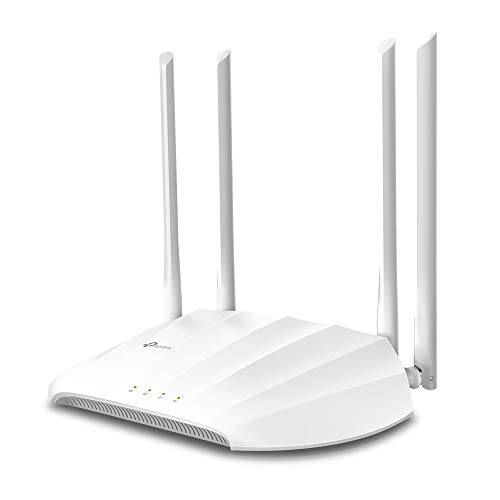
The TL-WA1201 is a versatile MU‑MIMO, dual-band AP that supports four modes, including AP, Client, Range Extender, and Bridge-like operations. Its Passive PoE power supply eases installation by sharing PoE power with compatible devices. The device supports multi-SSID configurations, enabling separate guest and corporate networks without significant hardware complexity. The flexibility makes it suitable for mixed-use environments such as cafes, small offices, or classrooms that require adaptable Wireless coverage.
Section essentials:
– MU-MIMO for concurrent device connections
– Four operation modes for flexible deployment
– Passive PoE compatibility for varied installation options
NETGEAR WAX210PA Overview

The WAX210PA expands on the standard WAX210 with included power adapters for flexible powering options. It continues to deliver Wi-Fi 6 performance with AX1800 speeds and supports up to 128 devices with MU-MIMO and dual-band operation. The compact footprint makes it well-suited for front-desk areas, small stores, or compact offices that require secure, manageable wireless access. As with the other NETGEAR options, PoE simplicity and centralized management via cloud or app controls the deployment experience.
TP-Link EAP225 Omada Overview

The EAP225 is a reliable Wi-Fi 5 (802.11ac Wave 2) access point that integrates with Omada SDN for centralized management. It supports dual-band operation with MU-MIMO, delivering up to 1350 Mbps to multiple devices. Its cloud-enabled architecture allows remote administration and scaling across sites, suitable for businesses that want consistent policy and monitoring without on-site controllers. The product can serve as a gradual upgrade step within a legacy network while enabling future expansions.
ZYXEL NWA50AX Overview
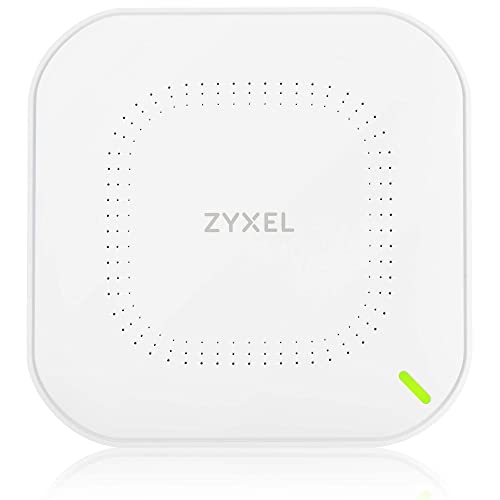
The Zyxel NWA50AX belongs to the Wi‑Fi 6 family with Nebula cloud management, allowing flexible standalone or cloud-based control. It includes Nebula NebulaFlex management for straightforward administration, along with smart mesh capabilities to eliminate dead zones. The device is suitable for environments where cloud management, remote monitoring, and site-wide policy consistency are priorities, especially in setups migrating from older wireless schemes.
TP-Link EAP610 Overview

The EAP610 is a Wi‑Fi 6 AP designed for dense environments, featuring 1024-QAM and advanced OFDMA for efficient spectrum use. It emphasizes a compact form factor and easy remote cloud access via the Omada app. The device is suitable for upgrading a legacy network where centralized control and seamless roaming are critical to user experience across multiple floors or zones.
Buying Guide: Key Considerations For Choosing A Wireless AP
- Network environment and scale: Assess the number of devices, user density, and coverage area. Enterprise-grade APs with cloud management and roaming support are best for multi-site deployments and future growth.
- Wireless standard and performance: Wi-Fi 6 (802.11ax) provides higher efficiency in dense environments; Wi-Fi 7 (802.11be) offers higher raw throughput and capacity for very busy networks. Choose based on current needs and upgrade timelines.
- Power and cabling: PoE simplifies installation by powering devices via Ethernet. If running new cabling is costly, consider devices with DC or adapter options, but plan for PoE where possible.
- Management model: Cloud-based Omada/Nebula platforms reduce on-site hardware and enable centralized policy, monitoring, and firmware updates. Ensure compatibility with existing controllers if any.
- Roaming and coverage: Seamless roaming reduces drops during transitions between APs. Look for features like fast roaming, MU‑MIMO, and careful channel planning to optimize handoffs.
- Security: Prioritize devices with WPA3, robust guest network isolation, and secure cloud access. Regular firmware updates are essential for ongoing protection.
- Device compatibility: If upgrading incrementally, ensure new APs can coexist with older equipment and support mixed-band operations and multi-SSID configurations.
- Budget and deployment model: Consider total cost of ownership, including licenses in cloud platforms, potential on-site controllers, and future expansion needs.
When planning an upgrade, map each AP to its intended site or zone, define SSIDs and security policies, and outline a phased deployment that minimizes downtime. The selected devices above provide a spectrum of Wi-Fi 6 and Wi-Fi 7 capabilities, cloud-based management options, and flexible power choices to fit legacy networks looking for a practical, scalable upgrade path.