Enhance a Windows-based workstation with a docking station that supports multiple displays, fast data transfer, and reliable charging. This guide highlights top options that offer triple or dual monitor support, USB-C and USB-A connectivity, and robust power delivery for laptops. Each pick is suitable for office work, creative tasks, or multitasking across several screens, helping you stay organized and efficient.
Summary of selected products
| Product | Brand | Key Benefit | Display | Ports |
|---|---|---|---|---|
| Anker Laptop Docking Station Dual Monitor | Anker | 8-in-1 versatility with 4K dual HDMI | 2x HDMI | HDMI, USB-A, Ethernet, SD, PD |
| TobenONE 18 in 1 Dock | TobenONE | Largest port selection for complex setups | 4K@60Hz triple/dual | 3x HDMI, USB, Ethernet, SD/microSD |
| Acer Premium 13 in 1 Dock | Acer | Triple monitor support with DP and HDMI | 2x HDMI + DP | PD, Ethernet, SD/TF |
| Baseus Spacemate 11 in 1 | Baseus | Solid triple display with 100W PD | HDMI + DP | 10Gbps USB, PD, Ethernet |
| Plugable USB C Triple Display Dock | Plugable | Enterprise-grade support for multiple displays | 3x HDMI/DP | USB, Ethernet, 100W PD |
The products above were chosen for broad Windows compatibility, strong multi-display capabilities, and solid data and power delivery features. Each option supports different configurations, so you can pick a model that best fits your desk and workflow.
Anker 8-in-1 USB C Docking Station For Windows

The Anker 8-in-1 USB-C hub expands a laptop’s capabilities through a single USB-C port. It includes 2 HDMI outputs for 4K@60Hz dual display, an Ethernet port for reliable wired networking, and SD card support. With charging input, it can manage power delivery to compatible laptops, keeping devices charged while you work. The setup is ideal for users who need a compact station that supports two external monitors and essential peripherals without extra clutter.
TobenONE 18 in 1 Docking Station
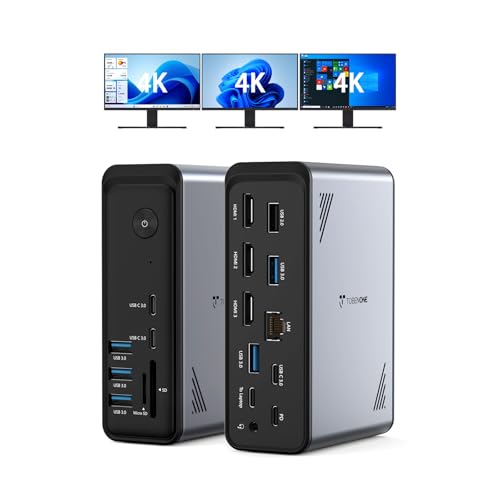
The TobenONE docking station packs 18 ports in one unit, including 3 HDMI outputs and 9 USB ports. It enables 4K@60Hz triple/dual display setups and provides Gigabit Ethernet and SD card readers. This model suits power users who run multiple peripherals and require high bandwidth for video editing, design work, or data-intensive tasks. The broad port array minimizes the need for extra hubs while keeping a tidy desk.
Acer Premium 13 in 1 Docking Station

This Acer docking station offers a robust 13-in-1 design with 2 HDMI outputs and a DisplayPort, enabling triple-monitor configurations on Windows laptops via MST technology. It includes Gigabit Ethernet, SD/TF card readers, and a 110W power adapter to support sustained workloads. It’s a solid choice for professionals who need a reliable all-in-one solution that extends display real estate without sacrificing performance.
Baseus Spacemate 11 in 1

The Baseus 11-in-1 docking station focuses on a triple-display workflow, offering 4K HDMI and DisplayPort connections along with 10Gbps USB-A/C ports and a 100W PD input. It supports triple-monitor output for Windows, with MacOS typically limited to mirror mode. The device is designed to deliver fast data transfer while providing a centralized hub for peripherals and power delivery, useful for professionals who rely on multi-monitor productivity.
Plugable USB C Triple Display Dock

The Plugable triple display dock is engineered for hybrid work environments, supporting up to three HDMI displays (1x 4K@30Hz, 2x 1080p@60Hz) plus DisplayPort options and 100W PD for charging. It’s designed for Windows, macOS, and ChromeOS, making it a versatile solution for mixed-device offices. The dock also includes Ethernet, several USB ports, and audio compatibility for a complete workstation setup.
Buying Guide: Key Considerations For Your Windows Docking Station
How to choose the right docking station depends on your display needs, device compatibility, and workspace constraints. Consider the following factors to compare models effectively:
- Display configuration: If you need triple 4K displays, verify port types (HDMI, DisplayPort) and GPU compatibility. Some docks require MST support and DSC on host laptops.
- Power delivery: Check the maximum PD wattage and ensure it meets your laptop’s charging requirements. Some docks supply 85W or 100W; confirm compatibility with your device’s charging specs.
- Port selection: List essential peripherals (USB-A, USB-C, Ethernet, SD cards, audio). Opt for docks with a balance of USB ports and data speeds (USB 3.0/3.2 Gen 2).
- Mac vs. Windows behavior: macOS users may see mirror-only or limited triple-display support; Windows generally offers broader display-extending capabilities.
- chassis and cooling: A sturdy build with effective heat management helps maintain performance during long sessions.
- Cable management: Look for docks with integrated cable routing or a compact footprint to reduce desk clutter.
Performance considerations include how the dock handles simultaneous charging and data transfer, whether it uses DisplayLink or native Alt-Mode for displays, and how well it scales with existing peripherals. While choosing, compare real-world usage scenarios such as video conferencing, design software, or data analysis to ensure a responsive multi-monitor setup.