Choosing the right wifi trail camera improves property security and wildlife monitoring by combining wireless access, clear imaging, and reliable motion sensing. The following five models stand out for American users seeking remote viewing, straightforward apps, and robust build quality. Each option emphasizes Wi-Fi or cellular connectivity, field durability, and high-resolution captures to inform decisions for security, hunting, or remote surveillance.
Summary Table Of Selected Products
| Product | Brand | Key Strengths | Connectivity | Max Image/Video Specs |
|---|---|---|---|---|
| GardePro E6 Trail Camera | GardePro | Low power Wi-Fi, 48MP/1296P, wide 110° lens | Wi-Fi | 48MP photos; 1296P video |
| MAXDONE Solar Trail Camera (48MP) | MAXDONE | Solar powered with 5200mAh battery | Wi-Fi | 48MP photos; 1296P video |
| MAXDONE Solar Trail Camera (4K 64MP) | MAXDONE | 4K/64MP clarity with long battery life | Wi-Fi | 64MP photos; 4K video |
| GardePro E8 2.0 Pro | GardePro | Very long Wi-Fi range, 4K/64MP | Wi-Fi | 4K video; 64MP photos |
| MRSCRET 4K Trail Camera | MRSCRET | 4K/60MP with night vision | Wi-Fi | 4K video; 60MP photos |
Below you will find detailed profiles of five wifi trail cameras that balance image quality, remote access, and rugged outdoor performance. Each section provides a concise look at what the model does best and how it fits typical security or wildlife-monitoring scenarios.
GardePro E6 Trail Camera — Wi-Fi, 48MP, 1296P

The GardePro E6 uses low-power Wi-Fi and Bluetooth to streamline camera control via the GardePro Mobile app. A dedicated antenna improves signal reliability, reducing disconnects during remote monitoring. It captures high-detail imagery with 48MP stills and 1296P HD video, aided by a wide 110° field of view. Users can preview media quickly thanks to efficient H.264 encoding, which helps store larger files without excessive bandwidth use. This model is suited for property security and wildlife observation where frequent mobile access matters.
Key benefits include: long-range mobile viewing, no monthly fees, and straightforward setup within Wi-Fi range. While not designed for home Wi-Fi networks, it excels when you need direct camera-to-phone access in outdoor zones, hunting camps, or remote properties where cellular or local Wi-Fi links are limited.
MAXDONE Solar Trail Camera — 48MP, 1296P

This solar-powered trail camera pairs a built-in 5200mAh battery with an integrated solar panel, extending operation in remote spots. Its app, TrailCam Go, provides instant media access and transfers without removing the SD card, while staying within a Wi-Fi range of about 55 feet. The camera records in 1296P at 30fps and delivers crisp 48MP images. If you need a self-sustaining option for long-term surveillance where power access is scarce, this device is a strong candidate.
Considerations include the absence of home Wi-Fi support and the dependence on direct camera-to-phone connectivity. The combination of solar power, decent video resolution, and simple remote access makes it a practical choice for cabins, hunting blinds, and property perimeters in sunny climates.
MAXDONE Solar Trail Camera — 4K, 64MP

This MAXDONE model emphasizes higher resolution imagery with 64MP photos and 4K video. It features a detachable solar panel for flexible sun exposure and a 6000mAh rechargeable battery, supporting multiple charging modes to suit different locations. The TrailCamGO app enables direct wireless transfer and remote control within a reasonable distance. It is well-suited for extended outdoor use, remote property monitoring, and wildlife tracking where clarity and battery autonomy are priorities.
Potential drawbacks include the need to stay within the camera’s hotspot range for connectivity and the absence of home Wi‑Fi compatibility. If you want top-tier detail with flexible charging options, this camera is a strong fit for backcountry sites or large properties with intermittent power access.
GardePro E8 2.0 Pro — 4K, 64MP, Dual Antennas
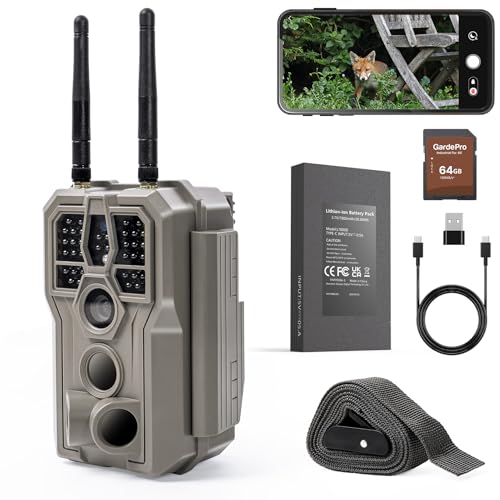
The E8 2.0 Pro pushes connectivity with dual antennas delivering up to 165 feet of Wi-Fi range in open spaces, enhancing remote monitoring performance. It records in 4K Ultra HD with up to 64MP still images, delivering highly detailed footage for security or wildlife surveillance. The camera integrates with the GardePro Mobile App for direct access to photos and videos, setting adjustments, and live view. A strong option when long-distance viewing and high-resolution output are essential, particularly for larger properties or exposed sites.
Note that the model emphasizes local app control and direct camera connectivity rather than home network integration. The combination of extended range, high-resolution capture, and app-based management offers a compelling balance of security and field usability.
MRSCRET WiFi Trail Camera — 4K, 60MP

The MRSCRET trail camera supports 4K video and 60MP images, presenting detailed visuals for daytime and nighttime scenes. It includes a 2.0-inch color LCD for on-device previews and comes with a 32GB SD card. With 75-foot hyper night vision, it uses a 940nm infrared array to minimize disturbance to wildlife while capturing crisp night imagery. The IP66 rating supports rugged outdoor use, and the unit emphasizes long battery life for extended deployments, making it suitable for security perimeters and wildlife monitoring in challenging conditions.
Strengths include a fast 0.1-second trigger, reliable night vision, and a robust waterproof build. For users prioritizing high-resolution capture, immediate mobile access, and tough weather resilience, this MRSCRET model presents a well-rounded option.
Buying Guide: Key Considerations For Wifi Trail Cameras
- Connectivity Type: Evaluate whether you need Wi-Fi for on-site access, or cellular (4G/5G) for remote viewing. Some models create their own hotspot, while others require proximity to a home network.
- Image And Video Quality: Look for higher MP stills and 4K capability when detail matters. If bandwidth is limited, consider cameras with efficient encoding like H.264.
- Power And Endurance: Solar charging, large internal batteries, and low-power modes extend deployment in remote locations. Consider climate and sun exposure when choosing solar-equipped models.
- Field Of View And Range: A wide lens and long Wi-Fi or cellular range improve coverage, especially for larger properties. Dual antennas can enhance reliability in open spaces.
- Durability: IP ratings (IP66 or higher) indicate weather resistance. Cold, moisture, and theft resistance are important for outdoor use.
- App And Data Access: A user-friendly app with real-time previews, easy media transfer, and remote camera management reduces field trips and operational downtime.
- Storage And Local Access: Confirm supported SD card capacity and whether ongoing local storage is adequate for your needs before relying solely on cloud or app access.
- Privacy And Security: Ensure data transmissions are encrypted and that devices support secure pairing to prevent unauthorized access.
In practice, the best option balances image quality, connectivity reliability, and power management for your site. For security-focused setups, prioritize models with long-range connectivity and robust night vision. For wildlife monitoring, emphasis on high-resolution captures and dependable solar power can reduce maintenance frequency. Always consider site layout, probable wildlife activity, and local network availability when selecting a wifi trail camera.