Keep tabs on doors and windows with reliable, easy-to-install WiFi door sensors. This guide highlights five top options suited for American homes, from compact single-sensor units to starter kits that expand as your smart home grows. Each product emphasizes real-time alerts, easy setup, and compatibility with popular voice assistants and automation platforms. Explore how these sensors can improve security, convenience, and energy efficiency without ongoing fees.
Product Overview
| Product | Brand | Key Benefits | Notes |
|---|---|---|---|
| YoLink LoRa Smart Door Sensor Starter Kit | YoLink | Long-range LoRa, 5-year battery life, multi-channel alerts | Hub included; supports 300+ devices |
| Smart WiFi Door Sensor | Gaoducash | No hub required, 2.4GHz WiFi, app alerts | Works with Alexa/Google Assistant |
| SENCKIT WiFi Door Sensor | SENCKIT | 2.4GHz WiFi, Tuya/Smart Life app, voice control | Supports status history |
| Satisure WiFi Door Chime Sensor | Satisure | Real-time alerts, multiple chimes, expandable | Ideal for small business or home use |
| Jinvocloud Smart WiFi Door & Window Sensor | Jinvocloud | Real-time alerts, IFTTT, 2.4GHz WiFi | Voice control via Alexa/Google |
YoLink LoRa Smart Door Sensor Starter Kit

The Yo-Link starter kit provides a robust entry into wireless home security with LoRa technology. It includes one YoLink Hub and four Door Sensors, ready to secure entry points across a home or small business. Batteries are preinstalled and rated for up to five years, reducing maintenance. The system supports hundreds of devices in the Yo-Link ecosystem and can be expanded with additional hubs for larger properties. Setup is straightforward: scan the sensor’s QR code, name it, mount with pre-applied tape, and mount the magnet to the door frame. Alerts are flexible, with SMS, email, and app notifications, plus compatibility with Alexa and IFTTT.
Smart WiFi Door Sensor

This no-hub door sensor delivers instant app alerts via Tuya Smart or Smart Life apps when doors or windows open or close. It operates on 2.4GHz WiFi and supports voice control through Alexa and Google Assistant. The device can trigger automation with other Tuya smart devices, such as turning on lights or switches when a door is opened. It’s a simple, cost-effective option for households seeking direct, app-based monitoring without extra hardware fees.
Senckit WiFi Door Sensor

The SENCKIT door sensor offers dual connectivity with 2.4GHz WiFi and Bluetooth, enabling quick, gateway-free setup. It uses the Tuya/Smart Life apps for real-time alerts and history logs, making it suitable for monitoring entryways, cupboards, or cabinets. Voice control is supported via Alexa and Google Assistant. This model emphasizes straightforward installation with adhesive mounting, plus the ability to integrate the door status into broader smart home routines for automations across devices.
Satisure Door Chime Sensor
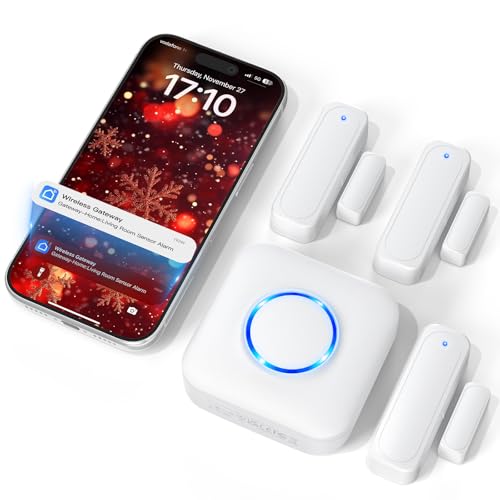
The Satisure kit centers on real-time notifications paired with a programmable chime system. It’s ideal for businesses or households that want audible alerts in addition to mobile push notifications. The device is wire-free and easy to install, with up to 20 sensors supported for broader coverage. The chimes offer multiple volume levels and royalty-free sounds to distinguish different sensor triggers, helping occupants quickly identify which door or window is active without checking the phone.
Jinvocloud Smart WiFi Door & Window Sensor

The Jinvocloud sensor bundle emphasizes real-time open/close status with 2.4GHz WiFi and IFTTT compatibility. The unit supports instant alerts via the accompanying app and is designed to work with Alexa and Google Assistant for voice queries like, “Is the door open?” It’s positioned as a versatile option for comprehensive home security and automation, enabling linked actions such as adjusting lighting or climate controls in response to door/window events.
Buying Guide: Choosing The Right WiFi Door Sensor
When selecting a WiFi door sensor, consider how you plan to deploy it, the size of your space, and your preferred smart home ecosystem. Here are key purchase considerations from multiple perspectives:
- Connectivity: Decide between hub-based systems (longer range, potentially better reliability) and hub-free options (simpler setup, faster to deploy). If you already rely on Tuya/Smart Life or Alexa ecosystems, ensure the sensor integrates smoothly with those apps and assistants.
- Power and maintenance: Look for sensors with long battery life and easy replacement. Start kits that include preinstalled batteries can minimize maintenance concerns in the first years of use.
- Alert style and reach: Consider whether you need push notifications only, or also SMS/email alerts and audible chimes. Range should match your property layout; some systems offer extended ranges suitable for larger homes or multi-dwelling buildings.
- Automation and compatibility: Assess how well the sensor triggers other devices (lights, thermostats, cameras) through platforms like IFTTT, Smart Life, or Home Assistant. This expands value beyond simple door-state monitoring.
- Installation ease: Adhesive mounting and minimal wiring reduce installation time. If you rent or frequently relocate, a non-permanent setup may be advantageous.
- Security and privacy: Examine the data handling practices of the platform, including cloud storage, alert frequency, and device security features to protect your information.
- Scalability: If you anticipate expanding your system, choose sensors and hubs that support additional devices without becoming cost-prohibitive or overly complex.
Across these options, the YoLink LoRa system emphasizes long-range connectivity and a multi-device starter approach, ideal for larger homes or buildings. The Gaoducash and SENCKIT sensors provide straightforward hub-free setups that integrate with common voice assistants. The Satisure and Jinvocloud products focus on immediate notifications and broader automation via IFTTT and Smart Life ecosystems, which can be valuable for small business environments or homes seeking rapid alerts and cross-device actions. Assess your daily routines, privacy considerations, and the ecosystems you already use to pick the most coherent option for your smart home.