Looking for a reliable wifi display dongle to mirror your phone, tablet, or laptop to a TV or projector? This guide highlights the top picks, explaining who each device is best for and why. Each option supports wireless casting, with varying features like 4K decoding, AirPlay, Miracast, and DLNA. Use the quick buyer’s table below to compare at a glance and choose the right dongle for your setup, whether you’re streaming media at home, delivering business presentations, or teaching in a classroom.
| Product | Best For | Key Strength |
|---|---|---|
| SUNMENCO Wireless HDMI Display Dongle | Home theater and education users needing 4K decoding with smooth 2.4G/5G casting | 4K decoding, dual-band, very low latency |
| SmartSee Anycast HD Wireless Display Adapter | Multi-device mirroring without apps or drivers | No app/driver required, multi-platform support |
| AIMIBO iOS Wireless Display Adapter 4K 5G | Direct plug-and-play for iPhone/iPad/macOS users | Direct mode and DLNA, truly plug-and-play |
| NOHZIO Wireless HDMI Display Dongle | Simple, widely compatible screen sharing | AirPlay & Miracast compatibility, 1080p/60Hz |
| Tsemy Wireless Screen Mirroring Adapter | Quick setup for business and home presentations | 4K video, low-latency mirroring |
SUNMENCO Wireless HDMI Display Dongle

The SUNMENCO Wireless HDMI Display Dongle uses 4K decoding with 1080P at 60Hz output, delivering crisp visuals for home entertainment and professional displays. It supports HDMI 1.3 and HDCP 1.2 and offers wireless compatibility with Miracast and AirPlay. This model is best for buyers who want high-resolution streaming from phones or laptops to larger screens without cables, while keeping Netflix or other HDCP-protected apps in mind. It is noted as optimal for personal media, web content, and presentations in small to medium spaces.
Why it’s selected: This dongle provides robust dual-band wireless transmission (2.4G/5G) with a claimed range up to 33 feet and low latency. It is particularly suited for home theater setups, classroom demos, and small business meetings where smooth streaming and quick setup matter. It is less ideal for users who require Netflix or other HDCP-protected app support on certain devices, due to content protection limits.
Who it’s for: Home movie lovers, classroom presenters, and small meeting-room users who want a simple, plug-and-play solution with 4K decoding capability. If you need crisp 4K-enabled streaming and minimal setup, this is a solid pick.
SmartSee Anycast HD Wireless Display Adapter
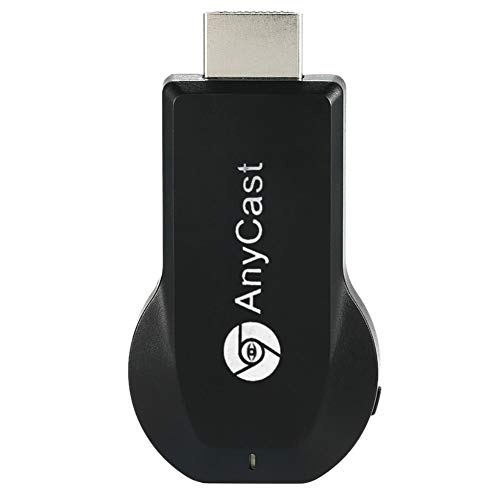
SmartSee offers wireless display mirroring for phones, tablets, laptops, and desktops to TVs, projectors, or monitors. It emphasizes ease of use with no required apps or drivers and supports Miracast, AirPlay, and DLNA. Notably, it excludes support for some encrypted streaming apps, so consider the streaming needs of your content library when selecting this option. It is a good choice for those wanting a straightforward, multi-platform receiver without fiddling with setup processes.
Why it’s selected: This device shines for users who prioritize simplicity—plug in, power, and mirror. Its broad compatibility makes it a flexible option for shared spaces, classrooms, and family rooms where multiple devices may be used across iOS, Android, Windows, and Mac systems.
Who it’s for: Families, educators, and small offices seeking a no-fuss casting device that covers most standard screen-mirroring scenarios without requiring software installation.
AIMIBO iOS Wireless Display Adapter 4K 5G
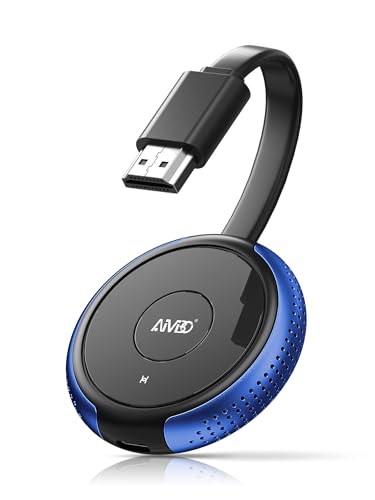
This AIMIBO model emphasizes a no-WiFi setup approach, enabling peer-to-peer mirroring directly to a display. It supports iPhone, iPad, and Mac devices and can mirror content without internet access. It also offers a versatile compatibility set with AirPlay, Miracast, and DLNA, and is designed to work with recent iOS devices. A noted strength is its direct-pair capability, which is useful in environments with restricted network access.
Why it’s selected: Ideal for users who want true plug-and-play mirroring without depending on a home or office WiFi network. It can be especially appealing for presentations in spaces with limited or unreliable network connections, or for users who regularly travel with devices needing quick screen projection.
Who it’s for: Individuals and professionals who value immediate, app-free mirroring for iOS devices and macOS laptops, as well as those who often present using a single, portable solution.
AIMIBO 4K Wireless Display Adapter 5G
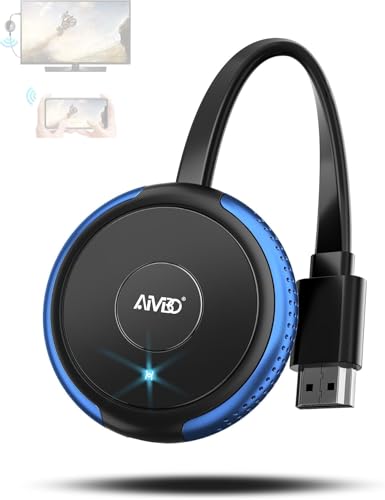
Featuring truly plug-and-play functionality, this AIMIBO model supports two casting modes: Direct (no WiFi) and DLNA. It promises ultra-low latency with 4K output and a built-in dual-band 2.4G/5G WiFi chip. The dual-mode design helps accommodate both quick on-the-go presentations and more traditional WiFi-based casting scenarios. It is a strong pick for users who need flexibility between direct connection and network-based streaming.
Why it’s selected: The dual-mode capability makes this dongle versatile for varied environments—quick stand-alone mirroring for travel or meetings, plus DLNA-based casting for home networks. The 4K capability ensures high-quality visuals for video and presentations.
Who it’s for: Professionals who cycle between conference rooms, home offices, and client sites, and who value the option to switch between direct mirroring and DLNA streaming without changing devices.
NOHZIO Wireless HDMI Display Dongle

NOHZIO emphasizes plug-and-play ease with broad compatibility. It supports AirPlay and Miracast, allowing screen sharing from Apple and Android devices across laptops and mobiles. It streams at 1080p/60Hz for smooth video and audio. A practical note is that some apps with HDCP protection may not work, which can impact streaming from certain services on some devices.
Why it’s selected: This dongle offers straightforward setup and a wide compatibility range, making it a dependable option for classrooms, offices, and living rooms where a simple, universal casting device is desired. It is particularly appealing to users who want reliable 1080p performance without requiring network setup.
Who it’s for: Casual viewers, educators, and office users who want dependable screen mirroring that works with a wide array of devices and OS versions, without network dependencies.
Kezwuna HDMI Wireless Display Dongle

Kezwuna offers a wireless display solution with support for AirPlay, Miracast, and DLNA, enabling cross-platform mirroring to TVs or projectors. It highlights compatibility with iOS, macOS, Android, and Windows devices and emphasizes a simple three-step setup: plug, mirror, and enjoy. It’s best for users who want a broad compatibility profile and a straightforward user experience.
Why it’s selected: The device is positioned as a universal casting receiver, suitable for shared spaces like meeting rooms and classrooms where diverse devices may be used. It’s a good balance between ease of use and wide OS compatibility for general purpose mirroring.
Who it’s for: Multi-device households, educators, and small offices seeking a single dongle that can mirror content from many devices to a larger display with minimal fuss.
Kuiozet HDMI Wireless Display Dongle

Kuiozet’s dongle highlights compatibility with AirPlay, Miracast, and DLNA, supporting iOS, macOS, Android, and Windows devices. It emphasizes a three-step plug-in, automatic IP recognition, and language matching for ease of use. The device is designed for users who want a straightforward wireless display option that can accommodate a wide range of devices and OS versions.
Why it’s selected: It combines broad compatibility with a simple user flow, enabling quick screen mirroring across ecosystems. This makes it a practical pick for shared workspaces and family rooms where devices frequently change.
Who it’s for: Users who prioritize universal compatibility and a hassle-free setup for quick presentations or streaming from mixed-device environments.
Buying Guide: Key Considerations For Choosing A Wifi Display Dongle
- What resolution and framerate do you need? If you regularly view 4K content, prioritize models with 4K decoding and at least 60Hz output. For basic presentations or casual streaming, 1080p/60Hz often suffices.
- Which casting protocols are essential? AirPlay is key for Apple devices; Miracast is common for Android and Windows; DLNA serves broader media sharing. Some dongles support multiple protocols; others are more limited.
- Is WiFi-free mirroring important? Direct peer-to-peer (no WiFi) options are useful for travel or rooms without stable networks, but they may be limited to certain devices or platforms.
- What is the expected setup complexity? Plug-and-play devices that require no apps or drivers are ideal for quick demos, classrooms, and shared spaces. If you require large device variety, a dongle with wide compatibility helps.
- What are the distance and interference considerations? Wireless range varies; a robust dual-band (2.4G/5G) dongle can reduce latency and buffering in busy environments.
- Content protection restrictions: Some dongles may not support streaming from HDCP-protected apps on certain platforms. If you rely on Netflix or similar services, verify compatibility for your devices.
Frequently Asked Questions
- Do wifi display dongles require a WiFi network? Not always. Some models support direct mirroring without a network, while others use your WiFi to cast content.
- Can I cast from iPhone to a projector using these dongles? Yes, many models support AirPlay for iPhone, iPad, and Mac, enabling screen mirroring to HDMI displays.
- Are these dongles easy to set up for non-technical users? Most listed models emphasize plug-and-play or minimal setup, often requiring only plugging in the HDMI port and selecting a mirror option on your device.
- Will all apps mirror with these dongles? Some apps with HDCP protection (like certain streaming services) may be restricted on some devices. Check app compatibility for your needs.
- Do these dongles work with Windows, macOS, Android, and iOS? Many options advertise cross-platform support across these ecosystems, but feature availability (AirPlay, Miracast, DLNA) may vary by device.
- What is the typical latency for these devices? Many advertise low latency (often under a few milliseconds) suitable for video and presentations, but actual performance can vary by network environment and device.