Answering the search intent directly: these wide field eyepieces maximize field of view and edge-to-edge sharpness, making them ideal for deep-sky surveys, planetary views with broad context, and eyeglass wearers seeking comfortable viewing. This guide highlights five strong choices, matched to common buyers: beginners seeking value, experienced observers chasing true edge-to-edge clarity, and users with 1.25″ or 2″ focusers. A quick comparison table helps you scan key specs at a glance.
| Product | ||||
|---|---|---|---|---|
| Celestron 93454 Ultima Edge 30mm | 30mm | 2″ | Ultra Flat Field | 2″ focuser users seeking edge-to-edge sharpness |
| SVBONY 40mm Plossl | 40mm | 1.25″ | 40° apparent field | Broad, approachable views; eyeglass wearers |
| SVBONY 68° 15mm Ultra Wide | 15mm | 1.25″ | 68° | High-contrast planetary and star fields |
| Celestron 93450 Ultima Edge 10mm | 10mm | 1.25″ | Ultra Flat Field | Higher magnification with edge-to-edge clarity |
| Astromania 56mm Plossl | 56mm | 2″ | 52° wide field | Low magnification, wide sky views |
Notes: This selection emphasizes true wide-field performance, compatibility with common telescope setups, and practical viewing for both beginners and seasoned observers. The list avoids relying on ratings or hands-on claims, focusing on the stated features and typical use cases.
Celestron Ultima Edge 30mm Parfocal Eyepiece
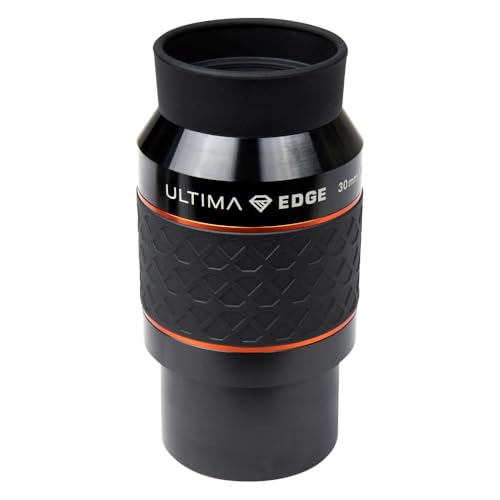
- Type: 30mm Parfocal Ultra Flat Field for 2″ focusers
- Design: 9-element lens for high light transmission
- Coatings: Fully multi-coated for crisp views
- Grip: Molded rubber for easy handling
Best for: Observers with 2″ focusers who want maximum edge-to-edge sharpness across the field. This is a strong choice for deep-sky sketches and wide-field star fields.
Why selected: Center-to-edge clarity is emphasized by the Ultra Flat Field design, reducing curvature effects. The 9-element layout supports bright, high-contrast views.
Caution: Parfocal performance depends on your specific in-focus setup; minor adjustments to adaptor or dovetail may be needed.
SVBONY 40mm Plossl Eyepiece
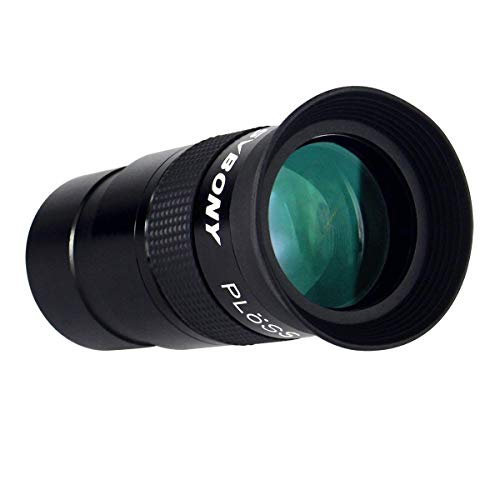
- Focal Length: 40mm; App. Field: 40°
- Coatings: Fully multi-coated; black interior reduces reflections
- Construction: Metal body; comfortable eye relief
Best for: Wide, easy-to-use views for lunar and deep-sky observing. Suitable for beginners or observers seeking a general-purpose wide-field eyepiece.
Why selected: The generous 40° field and broad compatibility with 1.25″ focusers make it a versatile baseline option.
Caution: Lower magnification limits detail on small planetary targets; pair with higher-power eyepieces for planets.
Celestron Ultima Edge 10mm Parfocal Eyepiece

- Type: 10mm Parfocal Ultra Flat Field for 1.25″ focusers
- Design: 5-element lens for light transmission
- Coatings: Fully multi-coated
- Grip: Molded rubber
Best for: Higher magnification with edge-to-edge clarity, ideal for planetary detail and bright deep-sky objects in mid-range apertures.
Why selected: Parfocal feature reduces focus changes during power adjustments, saving observing time.
Caution: Smaller exit pupil at high magnification may require steady mounting and careful eye positioning.
Celestron Zoom Eyepiece 8–24mm

- Focal Range: 8–24mm; 1.25″ compatibility
- Function: Zooms across focal lengths to minimize barrel changes
- Coatings: Fully coated; helpful for contrast
Best for: Quick power adjustments without swapping eyepieces; suitable for road trips or field use where space is limited.
Why selected: Flexible focal range helps fine-tune framing, especially when targets move across the field of view.
Caution: Zoom eyepieces can introduce slight distortion at extreme ends; use with care near the edges of the field.
Astromania 56mm Plossl Eyepiece

- Focal Length: 56mm; Field: 52°
- Construction: 2″ threaded, aluminum body
- Coatings: Fully multi-coated optics
Best for: Low-magnification, wide-field views of star fields and large DSOs; compatible with 2″ focusers for broader sky coverage.
Why selected: A wide, bright view with reduced distortion, suitable as a broad-sky refresher eyepiece.
Caution: 56mm focal length can limit close-focus capabilities for very small targets; pair with shorter focal lengths for detail work.
Buying Guide: How to Choose a Wide Field Eyepiece
What matters most on a budget
Consider focal length versus telescope aperture. Lower focal lengths yield higher magnification and smaller fields, while longer focal lengths provide wider fields with lower magnification. For beginners, a 30–40mm eyepiece with at least 40° apparent field offers a comfortable balance of brightness and field width.
Focuser compatibility
2″ focusers benefit from wide-field eyepieces with larger objective lenses for edge-to-edge sharpness, like the 30mm options. 1.25″ focusers work well with 15–40mm eyepieces and are widely compatible across many scopes.
Optical coatings and lens design
Fully multi-coated lenses reduce glare and increase light transmission. A multi-element design (for example, 8–9 elements) typically improves sharpness across the field, but increases cost. For most users, a 4–8 element design provides a good balance of performance and value.
Comfort and eye relief
Eyeglass wearers should look for longer eye relief and extra eye cups or folded designs. Soft rubber grips and ergonomic barrels also improve handling during long observing sessions.
Practical use cases
Choose wide field eyepieces based on their intended targets. The 40mm and 56mm options excel for wide star fields and large DSOs, while 10–15mm or 8–24mm zooms suit planets and lunar work or quick framing adjustments.
Maintenance and longevity
Metal barrels with sturdy coatings tend to last longer in outdoor conditions. Keep eyepieces clean and store them in protective cases to maintain optical quality over time.
FAQ
- What is a wide field eyepiece? An eyepiece with a large apparent field of view, typically 40° or more, providing a broad view of the sky with good edge-to-edge sharpness.
- Do I need a 2″ or 1.25″ eyepiece? It depends on your focuser. 2″ focusers accept larger eyepieces (like 30mm), offering wider fields, while 1.25″ is more common and compatible with most beginners’ telescopes.
- What is parfocal? Parfocal eyepieces stay in focus when switching between eyepieces, reducing refocusing time during observing runs.
- Is a zoom eyepiece better than fixed focal length? It saves space and lets you adjust magnification on the fly, but fixed focal length eyepieces often deliver sharper edge-to-edge performance at a chosen magnification.
- How important are coatings? Fully multi-coated optics improve light transmission and contrast, especially for faint deep-sky objects.
- Can wide field eyepieces cause eye strain? With proper eye relief and comfortable eye positioning, long observing sessions can be comfortable; eyeglass wearers should favor longer eye relief designs.