If you’re seeking hands-free calling or simple voice control for a cell phone, you’re in the right place. This guide highlights five voice-enabled and senior-friendly options, suitable for people who want easy dialing, quick call ending, or hands-free operation. Each pick is explained with who it’s best for and why, plus a practical caveat. The right choice can depend on carrier compatibility, ease of use, and accessibility features. Use the comparison table below to quickly see who fits your needs, whether you prioritize landline-like simplicity or smartphone-style features with an urgent-assistance button.
| Product | Best For | |
|---|---|---|
| ATS Totally Voice Activated Telephone | Direct, no-hands dialing and answering | Hands free, always on, no activation button |
| Answer, Dial & Hang-Up with Only Your Voice – Home Telephone | Home phone line users seeking constant readiness | Always listening, hands-free, active listening |
| LIVELY Jitterbug Flip2 | Seniors needing a simple flip phone with added service | One-touch speed dial, large buttons, caring support |
| Excelltel Big Button Phone for Seniors | Elderly users wanting big buttons and memory speeds | 9 memory speed-dial, adjustable volume, SOS |
| LIVELY Jitterbug Smart4 | Senior-friendly smartphone with voice calling | Voice calling, real-time captions, Urgent Response |
Note: The table summarizes the core strengths to help you decide which option aligns with your needs, whether you value simplicity, accessibility, or a more capable smartphone experience.
ATS Totally Voice Activated Telephone
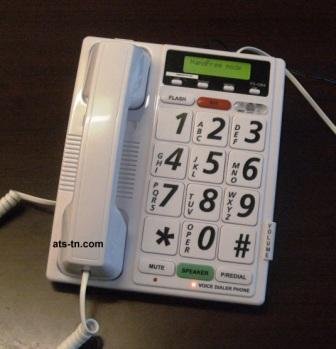
This device focuses on true hands-free operation for dialing, answering, and ending calls without any activation button. It’s best for buyers who want an always-ready voice-activated solution that does not require manual input to initiate a call. The product clearly emphasizes voice control and constant readiness, making it a strong pick for users who prefer quick, hands-free communication and minimal steps to place a call.
Best for: Users who want a straightforward, voice-first landline-like experience without any button presses to activate. This is a solid choice for those who prioritize ease of use over advanced smartphone features.
Caution: If you rely on advanced features or integration with a cellular network rather than a landline, confirm compatibility with your setup before purchasing.
Answer, Dial & Hang-Up with Only Your Voice – Home Telephone

This home telephone emphasizes continuous listening and hands-free operation, using your home phone line. It’s best for buyers who want a ready-to-use voice-activated solution in a fixed location. The “Always Listening For Your Command” feature suggests high accessibility for day-to-day calling with minimal friction.
Best for: Home environments where quick calling is needed without picking up a handset or pressing buttons. Ideal for users who regularly use a landline and prefer a voice-first approach.
Caution: Performance depends on the home network and line compatibility; verify service requirements before purchase.
LIVELY Jitterbug Flip2 – Flip Cell Phone for Seniors

The Jitterbug Flip2 is a dedicated senior flip phone designed for simple use and reliable service. It is best for seniors who want a basic, easy-to-navigate device with large buttons and a powerful speaker. The model’s primary strength is a straightforward interface, combined with a support plan from the provider.
Best for: Seniors who prefer a physical keypad, large display, and a straightforward calling experience. It’s also suitable for those who want access to supportive service from the provider.
Caution: Not compatible with other wireless carriers; activation through the specific carrier is required for service continuity.
Excelltel Big Button Phone for Seniors

This corded landline emphasizes accessibility with 9 memory speed-dial options, adjustable ringtone volume, and hands-free calling. It’s best for seniors or users with vision or hearing considerations who benefit from large buttons and customizable audio settings.
Best for: Elderly users or caregivers seeking a simple, reliability-focused landline with easy one-touch dialing and adjustable audio.
Caution: It’s a landline device, so it must be connected to a traditional phone service; not a cellular option for on-the-go use.
artfone C1+4G Cell Phone for Seniors
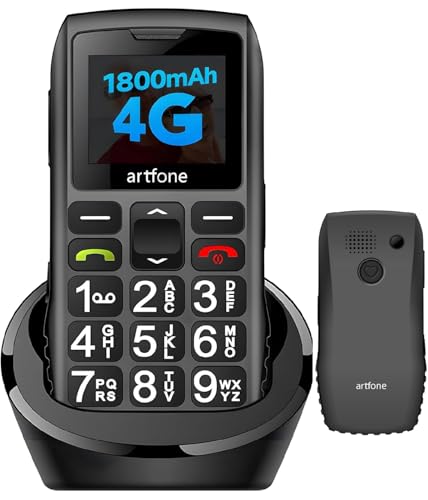
The C1+4G offers a senior-friendly UI with large, backlit buttons and a dedicated SOS function. It’s best for seniors who need a robust voice-enabled phone with simple navigation and a straightforward emergency button. The phone’s compatibility with multiple networks broadens its usability for travelers or caregivers managing different carriers.
Best for: Seniors who want a simple, reliable 4G device with an SOS feature and large, tactile buttons for easier dialing and texting.
Caution: Carrier compatibility notes indicate it works best with T-Mobile and related virtual networks; verify your carrier before purchase.
Easyfone Prime-T6 4G Picture Button Phone

The Prime-T6 focuses on ultra-simple operation with large picture memory buttons and a minimalist UI. It’s best for dementia or Alzheimer’s care scenarios, or for kids who need a simple, reliable calling device. The included charging dock and 1050mAh battery contribute to long standby and easy charging.
Best for: Caregivers seeking a minimal, picture-button phone for users who benefit from visual dialing and straightforward menus.
Caution: While very user-friendly, it is a basic feature phone; it lacks the full capabilities of modern smartphones for power users.
Buying Guide: Key Considerations for Voice Activated and Senior-Friendly Phones
- Accessibility vs. versatility: Do you want a strictly voice-activated device that requires no button presses, or a device with broader features (camera, apps) but still easy to use?
- Carrier compatibility: For cell phones, confirm the carrier support and whether a SIM is required. For landlines, verify compatibility with your service provider.
- Input and output options: Consider large buttons, backlit keys, adjustable volume, and real-time captions or SOS features for emergencies.
- Battery life and charging: Look for devices with reliable battery life and convenient charging methods (dock vs. USB-C).
- Emergency features: An accessible SOS button or urgent response service can be a deciding factor for caregivers and users with health concerns.
- Ease of use vs. simplicity: Some users may benefit from a simple flip phone design; others may prefer a lightweight smartphone with voice calling and captions.
FAQ
- What is the main difference between voice-activated landlines and cell phones?
Answer: Landline-based voice activation often relies on a fixed line and may remain “always on,” while cell phone options rely on cellular networks and often include mobile features and data. - Who should buy a big-button senior phone?
Answer: Best for users with vision or dexterity challenges who benefit from large, tactile buttons and clear audio. - Can I use these devices with any carrier?
Answer: Some devices are carrier-specific or require activation with a particular service; confirm compatibility before purchase. - Do these devices support real-time call captions?
Answer: Some smartphones like the LIVELY Jitterbug Smart4 offer real-time call captioning as part of accessibility features. - Are SOS buttons reliable for emergencies?
Answer: Many senior-focused devices include an SOS function to help caregivers or emergency responders quickly locate or contact the user. - Is there a price difference I should expect?
Answer: Prices vary by device type and features; this guide focuses on functionality and user needs rather than pricing.