Answering the question for shoppers: the best vinyl machines for shirts are heat presses designed for easy, consistent transfers on textiles, with models suited to hobbyists and small businesses alike. This guide highlights five reliable options, explaining who each is best for, and why they stand out for vinyl, sublimation, and heat-transfer projects. If you’re building a small home studio or expanding a boutique operation, you’ll find clear reasons to choose one over another.
Buyer profile overview: who should consider these machines?
- Hobby crafters and beginners seeking straightforward operation and auto features.
- Small business owners needing efficient, reliable presses with ample work area.
- DIY enthusiasts pressing larger items like hoodies or banners and those using multiple heat-transfer media.
| Product | Best For | Key Benefit |
|---|---|---|
| HTVRONT Auto Heat Press Machine for T Shirts (15×15) | Hobbyists and small studios needing auto-release and speed | Fast heat-up, auto-press, and auto-release for hands-off operation |
| AST&T Heat Press Machine 12″ x 10″ | Beginners and portable setups | Compact, versatile for larger T-shirts and multiple fabrics |
| VEVOR 2 in 1 Heat Press (15×15) with Cap Platen | Users needing two platens and fast transfers | 2-in-1 design covers shirts and hats with precise timing |
| Calogy Mini Heat Press | Travel-friendly crafting and tiny projects | Extremely compact with simple 1-button controls |
| HTVRONT Auto Heat Press 2 (15×15) | DTF and larger transfers with adjustable pressure | Adjustable pressure up to 80 kg and higher heating height |
HTVRONT Auto Heat Press Machine for T Shirts
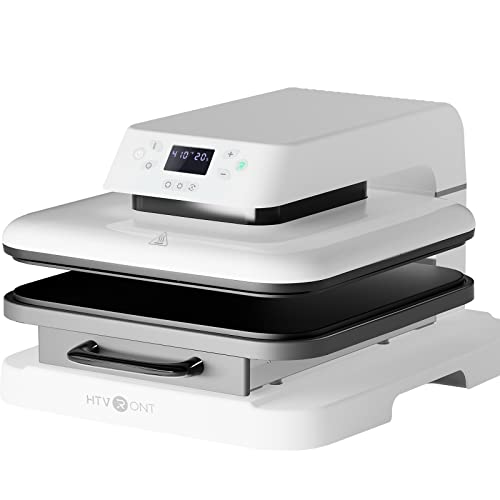
Best for small studios and home crafters who want a hands-free experience. This 15×15 model features auto heat press and auto release, simplifying transfers for vinyl and sublimation projects. It automatically adjusts to material thickness up to 1 inch and starts with a single R-button press, reducing supervision during presses. The unit heats to 320°F (160°C) in about four minutes, and reaches 410°F (210°C) faster than many standard auto presses, thanks to dual heating tubes and an efficient thermistor sensor.
Why chosen: Auto-release minimizes misalignment and scorching, which is ideal for beginners or busy crafters. Best for moderate throughput, light to medium-duty transfers, and activities ranging from name labels on apparel to decorative home goods. One caveat: extended heavy-use sessions may require occasional calibration to maintain even heat across the platen.
AST&T Heat Press Machine 12″ x 10″

Best for beginners and portable setups needing a larger-than-pocket footprint without being bulky. The 12×10 heating plate accommodates bigger T-shirts, jackets, and bags while remaining lightweight at about 8.6 pounds. It supports a broad range of HTV media types, including foil, glitter, holographic, and sublimation papers. The unit uses a PA9T heat-resistant exterior and includes safety shutoff to guard against overheating.
Why chosen: The wide compatibility and restraint against overheating make this a reliable starter option for non-commercial projects. It’s better for those who want a straightforward, versatile press without the extra bulk, though it may be less ideal for repeated heavy-duty production that demands continuous rapid cycling.
VEVOR 2 in 1 Heat Press Machine (15×15)
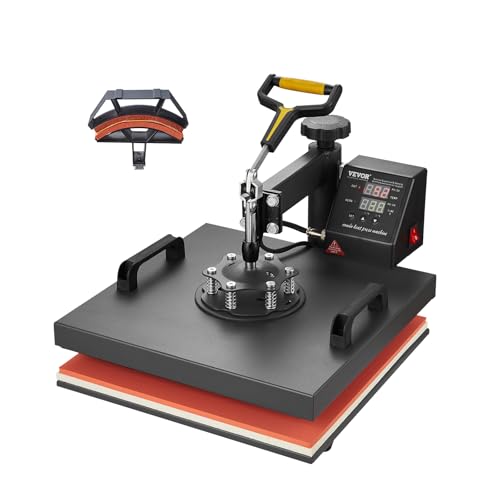
Best for users seeking two platens in one machine. The 15×15 flat platen pairs with a 6×3 inch curved cap platen, enabling transfers on hats and garments with a single device. Features include a precise control panel, automatic alarm when finished, and a foam-insulated interior with Teflon coating to minimize surface heat and reduce sticking. The long-arm swing-away design enhances safety by keeping hands clear of the heating elements.
Why chosen: This model shines for multi-item projects like T-shirts and hats, delivering better control over pressure and timing. A potential limitation is the learning curve for configuring two platens and adjusting cap-pressure for smaller items.
VEVOR Heat Press, 12x10in
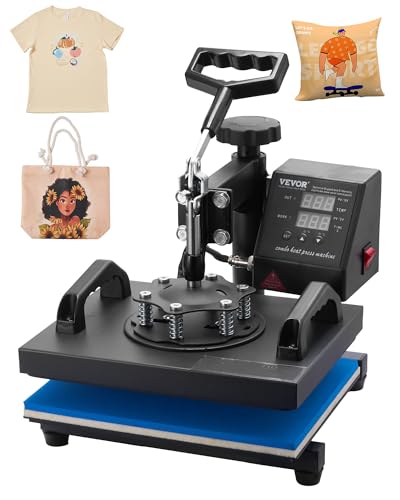
Best for expansive transfer projects on multiple items. This 12x10in press offers a larger surface area with a durable Teflon-coated top and improved heat distribution to minimize fading of designs. The device emphasizes durable construction and consistent heat retention when transferring to T-shirts, pillows, bags, and other items. The ergonomic handle and adjustable pressure help tailor the experience to various fabrics and thicknesses.
Why chosen: Ideal for those who want consistent results across a range of media and fabrics. It may be less suited for very large bulk runs that require larger platen sizes or more automation.
Calogy Mini Heat Press

Best for travel-friendly crafting and compact spaces. The Calogy mini is tiny with a 2.87 x 4.43 inch heating plate and a 4.5 x 2.9 x 5.1 inch overall footprint. It uses a single-button approach to adjust temperature and unit, making it accessible for quick, small transfers on hats, patches, and small crafts. Temperatures available include 284°F, 320°F, and 356°F to cover basic HTV needs.
Why chosen: Its ultraportable form is a clear advantage for on-the-go projects or tiny fabric items. The trade-off is a small transfer area that limits larger designs and higher-volume work.
HTVRONT Auto Heat Press 2

Best for higher-pressure needs and bigger height capacity. The Auto Heat Press 2 improves on its predecessor with adjustable pressure up to 80 kg (170 lb) and a higher heating height up to 4.5 cm (1.77 in). It heats to 410°F in about five and a half minutes, maintaining even heat distribution for reliable transfers. This makes it useful for DTF projects and thicker materials, as well as standard HTV work.
Why chosen: The adjustable pressure and extended clearance enable more complex projects and thicker garments. A limitation could be setup complexity for first-time users, especially when dialing in pressure for different fabrics.
Buying Guide
What matters most in a vinyl shirt press?
Key features to evaluate include platen size, heat-up speed, temperature range, and pressure controls. A larger 15×15 inch platen supports bigger designs, while faster heat-up times reduce wait periods between transfers. Adjustable pressure ensures good adhesion across fabrics and media, including DTF and HTV.
Which press is best for beginners?
Models with auto-release and clear, simple controls are ideal for learners. Look for a unit with auto-release, straightforward start/stop, and a light-weight design you can store easily when not in use.
What about hat presses and curved surfaces?
If you plan to press on hats or curved surfaces, consider a model with a cap platen or a swing-away design. Cap-specific platens help prevent scorching and ensure even transfer on rounded shapes.
Durability and safety considerations
Choose presses with heat-resistant exteriors and safety shutoff features. A longer warranty or robust construction helps with frequent use. Ensure instructions are clear, especially for first-time users handling high temperatures.
Maintenance tips
Regularly check the platen for debris and residue. Keep a clean surface to avoid ghosting of designs. When changing media types, verify time and temperature settings to prevent scorching or incomplete transfers.
Frequently Asked Questions
- What temperature should I use for vinyl transfers? Temperature depends on media; typical HTV ranges are 300–380°F, while sublimation can require up to 400–410°F. Always follow media guidelines.
- Is an auto-release heat press better than a manual one? Auto-release reduces risk of over-pressing and burning, which is helpful for beginners and busy workflows. Manual presses give tactile control but require constant attention.
- Can these machines press on hoodies and thick fabrics? Yes, but choose a model with higher platen height or adjustable pressure to accommodate thicker items.
- Do I need a separate hat press? If you plan frequent hat transfers, a press with a cap platen or a dedicated hat press can improve results and safety.
- Are two-in-one presses worth it? Two-in-one models save space and enable quick switching between flat transfers and cap applications, making them practical for mixed projects.
- How do I avoid scorching or ghosting? Clean surfaces, correct pressure, and appropriate dwell time reduce scorching. Always test on a scrap area before final transfers.