Direct answer: This guide surfaces top video streaming hardware that supports multi‑protocol streaming, high‑quality encoding, and easy setup for creators, educators, and professionals. Each pick is best for a specific need—multi‑platform live streaming, high‑quality HDMI capture, broad IP distribution, USB capture with low latency, or studio lighting support. The top products below are selected for compatibility with common streaming software, ease of use, and flexible outputs. A brief comparison table follows to help you choose quickly.
| Product | Brand | Best For | |
|---|---|---|---|
| URayCoder HEVC/H.265 Encoder | URayCoder | Multi‑platform live streaming with multiple protocols | 4K input/output, multi‑protocol output |
| Audio Express AXHDCAP 4K Capture Card | Audio Express | HDMI to USB 2.0 capture, gaming and teaching | 4K input, 1080P output, ultra‑low latency |
| UNISHEEN 1080P60 Encoder | UNISHEEN | Broad IP distribution and browser setup | H.265/H.264, extensive protocols |
| Acer USB 3.0 Capture Card | Acer | 4K capture with 1080P 60fps output | 4K input, low latency, 1080P output |
| E27 Studio Lamp Holder | yayaboqu | Studio lighting for video and streaming | 360° adjustability, umbrella bracket |
Video streaming hardware product picks
Intro anchor
URayCoder HDMI to IP Encoder For Live Streams
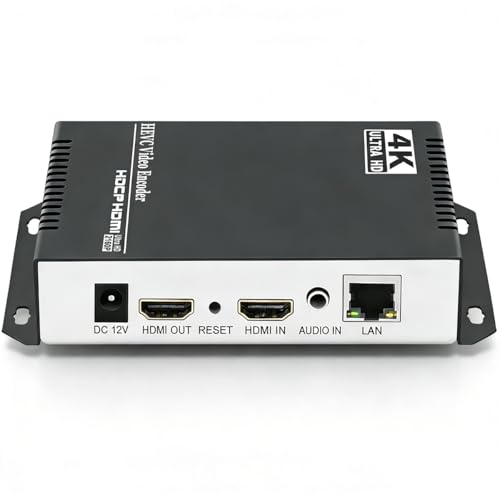
Best for multi‑platform streaming and professional setups. This device combines H.265/H.264 encoding with 4K input and up to 30fps at 4K, and up to 120fps at lower resolutions. It supports RTSP, RTMP(S), SRT, HLS, MP4, WebRTC, TRTC, ICECAST, and more. You can push four streams to different platforms simultaneously. It also allows static text, logos, captions, and timestamps to customize broadcasts. Best for creators who need broad protocol support and brand control without extra gear.
Who this is for: live streamers who broadcast to multiple services at once and value flexible output formats. Limitation: enterprise‑style feature set may require careful network tuning for optimal performance.
Audio Express AXHDCAP 4K HDMI Capture Card

Better for desktop or laptop capture with minimal latency. It supports HDMI input up to 4K 60fps and outputs 1080P at 30fps over USB 2.0, delivering crisp visuals and stereo sound. It excels for gaming, live broadcasts, and teaching on a single PC setup. Caution: USB 2.0 bandwidth may limit some 4K workflows; use when simultaneous 4K input and 1080P output are within needs.
Who this is for: creators needing straightforward HDMI capture to streaming software with low latency; suitable for on‑the‑go setups or classrooms.
UNISHEEN 1080P60 IP Video Encoder

Best for broad IP distribution and browser‑based configuration. This encoder delivers 1080P60 with H.265/H.264, and supports SRT, RTMP, RTSP, RTMPS, UDP, HTTP, HLS, WebRTC, TRTC, ICECAST, SHOUTcast. It’s designed for easy network setup via a web UI, with DHCP by default to avoid IP conflicts. It’s a good fit for CDN integration and IP camera workflows. Caution: feature richness may require initial setup familiarity.
Who this is for: operators needing versatile, network‑centric streaming with minimal software, and straightforward browser configuration.
Acer USB 3.0 4K Capture Card

Best for gaming and versatility on the go. The Acer USB 3.0 capture card supports 4K input with 1080P 60Hz output, enabling high‑quality live streaming from consoles or cameras. It includes a mic input for commentary, which is convenient for streamers who need synchronized audio. Caution: USB 3.0 bandwidth is essential; performance may vary with host hardware and USB hubs.
Who this is for: gamers, educators, and creators who want a simple, plug‑and‑play capture solution with integrated audio input.
E27 Lamp Holder With Umbrella Bracket

Best for studio lighting and enhanced video quality. The E27 lamp holder supports standard bulbs and includes a 360° adjustable head and umbrella/bracket mounting. It helps create soft, diffused or directional light for livestreams or video shoots. Caution: bulb type and wattage should stay within socket ratings to avoid overheating.
Who this is for: content creators and livestreamers seeking flexible, affordable lighting to improve on‑camera appearance and reduce shadows.
Buying Guide: Key Considerations For Video Streaming Hardware
What bandwidth and protocols do you need?
Consider whether you require SRT, RTMP, RTSP, RTMPS, HLS, UDP, or WebRTC. If you publish to multiple platforms at once, choose a device that supports multi‑protocol outputs and simultaneous streams.
What video quality and input format are essential?
Assess whether 4K input with 1080P output matters, and the maximum frame rate you need. Hardware with H.265/H.264 encoding reduces bandwidth for higher quality streams.
Is ease of setup or browser configuration important?
Browser‑based configuration can simplify network settings and avoid driver issues. DHCP support helps prevent IP conflicts on shared networks.
Do you need built‑in editing or branding features?
Some encoders offer on‑screen text, captions, logos, and timestamps. These features help maintain brand identity during streams without extra software.
What about capture for PC, console, or camera setups?
USB capture cards are convenient for laptops and desktops, while HDMI encoders are better for dedicated streaming rigs. Consider latency, portability, and compatibility with your computer OS.
FAQ
- What is the difference between hardware and software encoders? Hardware encoders perform encoding in dedicated circuitry, often with lower latency and steadier performance. Software encoders run on a computer and depend on CPU/GPU resources.
- Can I stream to multiple platforms at once? Yes, many devices support multi‑protocol outputs and simultaneous streams to several platforms without additional hardware.
- Do I need an internet upload speed of a specific level? Higher resolutions and multiple streams require higher upload bandwidth. Check your broadband plan and test throughput before going live.
- Is HDMI to USB capture universal for all devices? Most capture cards support standard HDMI sources, but compatibility may vary with your computer’s USB port version and drivers.
- Can lighting improve streaming quality? Adequate lighting reduces noise and improves image clarity, especially in lower ambient light environments.
- What should I consider when integrating with OBS or other software? Look for devices with clean UIs, stable drivers, and straightforward hotkey or scene switching capabilities to streamline production.