Choosing the right value-driven NAS drive setup means balancing price, capacity, speed, and data protection. The selections below focus on budget-friendly, capable options that deliver solid performance for home offices, small teams, or personal media libraries. Each entry highlights key features to help you compare boxes, bays, RAID options, and integration with existing networks. Read on to find five value-oriented NAS choices that maximize storage and protection without breaking the bank.
Summary of chosen products:
| Product | Brand | Capacity | Type | Notable Features |
|---|---|---|---|---|
| Buffalo TeraStation Essentials 2025 4-Bay 16TB | BUFFALO | 16TB (4x4TB) | 4-Bay Desktop NAS | 256-bit encryption, 2.5GbE native, included drives |
| Buffalo TeraStation Essentials 2025 4-Bay 32TB | BUFFALO | 32TB (4x8TB) | 4-Bay Desktop NAS | Data protection features, fast transfers via 2.5GbE |
| Buffalo LinkStation 210 6TB 1-Bay | BUFFALO | 6TB | 1-Bay NAS | Centralized storage, easy home cloud setup |
| Buffalo LinkStation 220 4TB 2-Bay | BUFFALO | 4TB | 2-Bay NAS | RAID support, shared network storage, home use |
| WD Red 1TB NAS HDD | Western Digital | 1TB | NAS HDD | Optimized for NAS, 24×7 reliability |
Buffalo TeraStation Essentials 2025 4-Bay 16TB

The Buffalo TeraStation Essentials 2025 4-Bay 16TB model is designed for value-conscious buyers who still need robust data protection and reliable performance. This setup ships with four drives pre-installed, offering practical capacity for home offices or small teams. Its 256-bit drive encryption provides strong data protection, and the closed NAS environment minimizes exposure to external threats. A built-in 2.5GbE port allows high-speed local transfers without requiring new cabling, which helps you achieve faster backups and smoother file sharing across devices. RAID options enable flexible data protection strategies, balancing storage efficiency and redundancy. This model targets users who want straightforward setup and reliable daily operation without a premium price tag.
Key considerations for this model include power consumption, physical footprint, and expansion options. While the 4-bay design accommodates a reasonable amount of data, users planning to grow significantly may consider a higher-bay alternative in the same family. The integrated encryption offers peace of mind for sensitive data, and the included drives simplify initial deployment. For small businesses or power users who want a turnkey solution with enterprise-grade thinking at consumer-friendly pricing, this Buffalo NAS delivers solid value with practical for-day use features.
Buffalo TeraStation Essentials 2025 4-Bay 32TB
This 32TB variant expands the same value-focused foundation with larger capacity, ideal for users who accumulate substantial media libraries or back up multiple devices across a small office. The drive set benefits from 256-bit encryption and a closed storage environment, maintaining robust security along with flexible replication options to protect critical files. The native 2.5GbE interface enables rapid data movement during backups or large file transfers, reducing wait times and keeping teams productive. This option fits deployments that require more space without adding complexity or multiple devices to manage.
In evaluating this model, consider your current network bandwidth and potential future upgrades. If you anticipate growing datasets or more simultaneous users, the higher capacity helps reduce immediate expansion pressure. The pre-included drives simplify procurement, but you should monitor drive health and plan for future replacement strategies as with any desktop NAS. For buyers prioritizing both capacity and straightforward administration, this Buffalo system offers credible value with a scalable path forward.
Buffalo LinkStation 210 6TB 1-Bay
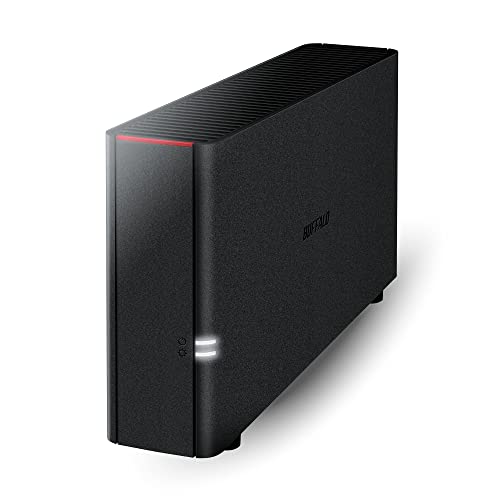
The LinkStation 210 is a value-oriented one-bay NAS that provides straightforward storage for households or small offices seeking centralized file access. With a 6TB drive included, it delivers immediate usable space for backups, media streaming, and shared folders. RAID is not applicable to a single drive, but the unit’s cloud-like features, simple setup, and compatibility with Windows and macOS make it a practical entry point for users new to NAS. Buffalo’s support team offers assistance for installation and ongoing troubleshooting, which helps reduce setup friction for non-technical users. This model suits users who want a no-nonsense, affordable option to start sharing files across devices on a home network.
Performance considerations for the LinkStation 210 center on throughput limits of a single-disk NAS. While not designed for heavy concurrent workloads, it handles typical home usage well, including backups and media streaming to a few devices. If your needs evolve, Buffalo’s lineup includes higher-capacity, multi-disk options with more advanced features. For buyers prioritizing ease of use, built-in drives, and a compact footprint, this model provides a solid value proposition with dependable Buffalo support.
Buffalo LinkStation 220 4TB 2-Bay

The LinkStation 220 4TB two-bay NAS is designed for home users who want shared storage with RAID options and straightforward setup. The added redundancy of a second drive provides protection against drive failure, which is valuable in a home office or personal cloud scenario. This model emphasizes easy network integration, including compatibility with Windows and macOS environments, for seamless file sharing and backups across devices. Buffalo’s 24/7 US-based support supports installation and ongoing use, making it appealing for non-technical users who still want solid data protection and simple cloud-like access to media and documents.
When assessing suitability, consider your archive size, number of users, and backup strategy. While the 2-Bay configuration is compact, it supports RAID 0 or RAID 1 for performance or redundancy, respectively. If you anticipate growing your NAS needs, Buffalo’s tiered lineup offers higher-capacity, multi-drive solutions that still aim to balance cost and capability. This model is a credible option for households or small offices prioritizing value and ease of use without advanced enterprise features.
WD Red 1TB NAS HDD
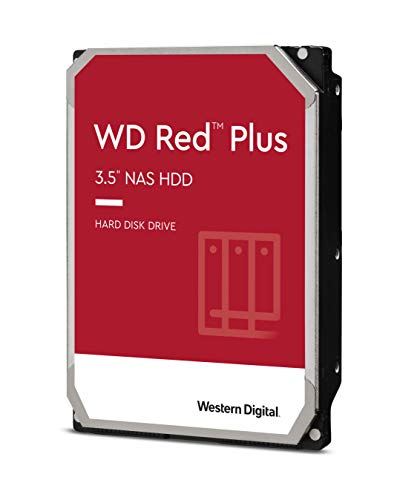
The Western Digital WD Red 1TB NAS hard drive is purpose-built for reliable continuous operation in NAS systems. Designed for up to 24×7 workloads, it prioritizes endurance and consistent performance for home and small business environments. This drive is an excellent choice for expanding storage in existing NAS setups or building a custom NAS with multiple bays. Its 64MB cache and SATA 6 Gb/s interface deliver dependable data transfer rates, while the 3D NAND technology contributes to overall efficiency. For users who want a trusted, upgrade-ready drive option to pair with a NAS enclosure, this WD Red model provides a balance of reliability and cost per gigabyte.
When integrating NAS HDDs, it is wise to pair them with a proper RAID configuration, monitor health with NAS software diagnostics, and maintain timely backups. The WD Red line is widely compatible with various NAS brands and firmware, which helps future-proof purchases. If you’re assembling a budget-conscious NAS build, this drive offers a straightforward, durable storage foundation with recognized NAS-specific optimization.
Buying Guide: Key Purchase Considerations For Value NAS Drives
- Drive count and capacity: More bays enable better RAID options and data protection, but require higher upfront costs. Start with the capacity you need today and plan for future growth with an architecture that supports expansion.
- RAID and data protection: RAID 1 or RAID 5/6 provide redundancy against drive failures. Consider your tolerance for disk rebuild times and the importance of uptime in your use case.
- Network interface: A 1GbE port is common, but 2.5GbE or higher accelerates transfers and backups, especially for multi-user environments or large media libraries.
- Encryption and security: 256-bit encryption and closed-system designs help protect sensitive data at rest. Check for additional features like secure boot and automatic firmware updates.
- Drive durability and NAS optimization: NAS-specific drives (like WD Red) are tuned for 24×7 operation and steady performance. Non-NAS HDDs may underperform or wear faster in continuous-use scenarios.
- Ease of use and ecosystem: Look for products with clear setup guides, responsive support, and software that simplifies backups, cloud access, and file sharing.
- Power and noise: Desktop NAS units vary in power draw and noise. For home offices, a quieter, energy-efficient model improves the working environment.
- Upgrade path: Consider whether you want to keep one brand for all drives or mix brands. Compatibility with your NAS enclosure and firmware can influence long-term reliability.
In sum, value-focused NAS drives aim to deliver dependable storage, reasonable speeds, and practical data protection without premium hardware costs. The chosen models here emphasize pre-installed drives, simple setup, and scalable configurations suitable for homes, dorm rooms, or small teams. When building or upgrading your NAS, align capacity and redundancy with your backup strategy, and select products with robust warranty support and available expansion options to maximize long-term value.