Finding a value-packed home NAS that fits your budget and storage needs is easier with purpose-built options. This guide highlights five solid choices ideal for home users seeking centralized storage, backups, and simple private cloud access. Best for small households, side hustles, or personal media libraries, these models balance cost and features without sacrificing essential protections.
Summary of chosen products:
| Product | Storage | Best For | Key Benefit |
|---|---|---|---|
| BUFFALO TeraStation Essentials 2026 4-Bay 16TB | 16TB (4x4TB) | Budget-conscious households needing RAID-ready storage | 256-bit encryption and fast 2.5GbE transfers |
| BUFFALO TeraStation Essentials 2026 4-Bay 24TB | 24TB (4x6TB) | Growing media libraries and backups | High capacity with same encryption protections |
| BUFFALO LinkStation 210 2TB | 2TB | Basic centralized storage for small households | Value RAID and simple home cloud features |
| ZimaBoard 2 1664 | Customizable with PCIe and dual 2.5GbE | DIY NAS enthusiasts and homelabs | Server-class expansion in a compact form |
| Asustor Drivestor 4 Pro Gen2 AS3304T | 4 bays (diskless option available) | Personal media server and home cloud | 2.5GbE network and RAID flexibility |
BUFFALO TeraStation Essentials 2026 4-Bay 16TB

Name: BUFFALO TeraStation Essentials 2026 4-Bay Value Desktop NAS 16TB (4x4TB) with Hard Drives Included
Best for: Small to medium households needing reliable RAID-protected storage with easy backups.
Why selected: This model offers a cost-effective, purpose-built NAS with hardware-level data protection, a closed system, and 256-bit drive encryption. The native 2.5GbE port supports faster file transfers without extra cabling, making it ideal for households that need reliable daily access to shared files and backups.
Limitations: Pre-populated drives reduce upgrade flexibility; consider future expansion needs if you plan to grow beyond 16TB quickly.
BUFFALO TeraStation Essentials 2026 4-Bay 24TB
Name: BUFFALO TeraStation Essentials 2026 4-Bay Value Desktop NAS 24TB (4x6TB) with Hard Drives Included
Best for: Users needing more storage for media libraries and backups without increasing complexity.
Why selected: Similar encryption and protection features as the 16TB model, but with higher total capacity. This is advantageous for households expanding photo and video libraries or running more automated backups across multiple devices.
Limitations: Higher capacity drives increase initial cost; ensure your network can sustain faster transfers with the included 2.5GbE port.
BUFFALO LinkStation 210 2TB
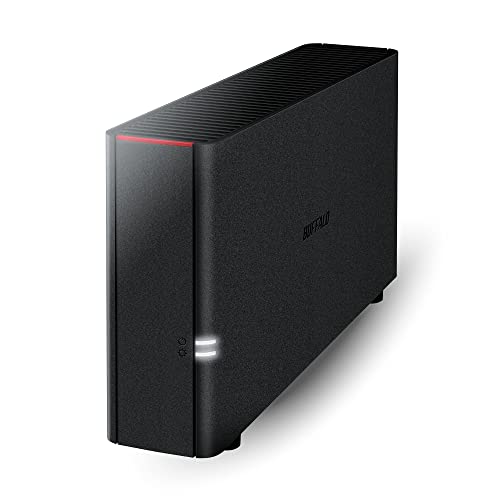
Name: BUFFALO LinkStation 210 2TB 1-Bay NAS Network Attached Storage with HDD Hard Drives Included
Best for: Individuals seeking a simple, affordable networked storage device with easy setup for a home cloud or shared media.
Why selected: Budget-friendly, with RAID value for centralized storage and backups. It’s simple to connect to a router and share across devices, making it a practical starter NAS for small households.
Limitations: Entry-level performance; larger or more data-intensive tasks may benefit from models with more bays or higher network throughput.
ZimaBoard 2 1664 x86 Home Server

Name: ZimaBoard 2 1664 x86 Home Server, Quad-Core N150, 16GB DDR5, 64GB eMMC, Dual 2.5GbE & Dual SATA3.0
Best for: DIY NAS enthusiasts and homelabers who want a compact, expandable server with PCIe expansion and dual 2.5GbE networking.
Why selected: This is a server-class platform that supports real NAS functionality beyond consumer-grade devices. It’s ideal for users who want to customize storage, networking, and services with Docker, VM hosting, or advanced backups.
Limitations: Requires more technical setup compared with ready-made NAS; not a plug-and-play option for non-technical users.
Asustor Drivestor 4 Pro Gen2 AS3304T

Name: Asustor Drivestor 4 Pro Gen2 AS3304T, 4 Bay NAS
Best for: Home users who want a balance of performance and RAID flexibility without breaking the bank.
Why selected: Multi-bay NAS with a 2.5GbE network interface supports faster data transfers, aiding backups and media streaming. It’s a practical choice for those who want a more capable home cloud without paying premium prices.
Limitations: Diskless option means you’ll need to purchase drives separately; ensure compatibility with your preferred drive sizes and RAID setup.
Buying Guide: Key Considerations for Value Home NAS
What will you store and share?
Consider whether your primary needs are backups, media streaming, or a private cloud. If you have many photos, videos, and documents, a multi-bay NAS with RAID provides better protection and scalable storage than a single-disk device.
RAID and data protection
Look for RAID levels supported (0, 1, 5, 6, JBOD) and encryption. RAID can protect against drive failure, while encryption helps secure sensitive files on the NAS.
Network throughput
For fast backups and smooth media streaming, aim for models with at least a 1 GbE port; 2.5GbE or higher ports offer noticeably faster transfer speeds, especially when multiple devices access the NAS simultaneously.
Drive configuration: pre-filled vs. diskless
Pre-filled drives simplify setup and ensure a ready-to-use system, while diskless options allow you to tailor capacity exactly to your needs. If you choose diskless, plan drive compatibility, sizes, and RAID setup upfront.
Ease of use and ecosystem
Consider the vendor’s app ecosystem, mobile access, and cloud features. A straightforward UI and reliable support can save time for non-technical users.
Expansion and future proofing
Choose a NAS that supports larger drives or additional bays if you anticipate storage growth. Check for features like scheduled backups, cloud sync, and remote access to extend usability over time.
Power, noise, and footprint
Home use benefits from compact form factors and quiet operation. Compare power consumption and cooling design to ensure the NAS fits in living spaces without creating noise or heat issues.
FAQ
- What’s the difference between 2.5GbE and 1GbE in NAS devices? A 2.5GbE port provides faster data transfer than a standard 1GbE port, reducing backup and streaming times when multiple devices access the NAS.
- Is a diskless NAS a good choice for beginners? Diskless NAS units offer flexibility for users who want to choose their own drives, but they require planning for drive compatibility and RAID configuration.
- Do I need RAID? RAID improves data protection and redundancy. For most home users, RAID 1 (mirroring) or RAID 5 (parity across drives) offers a good balance of protection and capacity.
- Can I access my NAS from outside my home? Yes, many NAS devices support private cloud access via apps or web interfaces. Ensure you configure secure remote access and consider VPN options.
- Which NAS is easiest for homes with media servers? Models with good media server support and straightforward apps (e.g., Plex or internal media apps) tend to be easiest for streaming media to smart TVs and devices.
- Should I buy pre-filled drives? Pre-filled drives simplify setup and guarantee a matched drive set. If you prefer to customize capacity, diskless options give more control.