Whether you’re live streaming, recording gameplay, or digitizing old tapes, a USB video capture card can simplify your setup. This guide highlights five reliable options that balance input resolution, latency, and compatibility with popular devices and platforms. Each product section provides key features, typical use cases, and practical notes to help you compare at a glance.
| Product | Brand | USB Type | Max Input | Output Resolution | Best For |
|---|---|---|---|---|---|
| Guermok Video Capture Card | Guermok | USB 3.0 / USB-C | 4K@30Hz | 2K@30Hz or 1080p@60Hz | Live streaming and on-the-go recording |
| UGREEN 2K@30Hz Capture Card | UGREEN | USB 3.0 / USB-C | 4K@30Hz | 2K@30Hz / 1080p@60Hz | Multi-device streaming and gaming capture |
| acer USB 3.0 Video Capture Card | acer | USB 3.0 | 4K contention | 1080p@60Hz | Portable, reliable game capture |
| Rybozen Capture Card | Rybozen | USB 3.0 | 4K@30Hz | 1080p@60Hz | Home studio and console streaming |
| VIXLW Video Capture Card | VIXLW | USB 3.0 / USB-C | 4K@30Hz | 1080p@60Hz / 2K@30Hz | Flexible setup with USB-C and HDMI input |
Guermok Video Capture Card Review
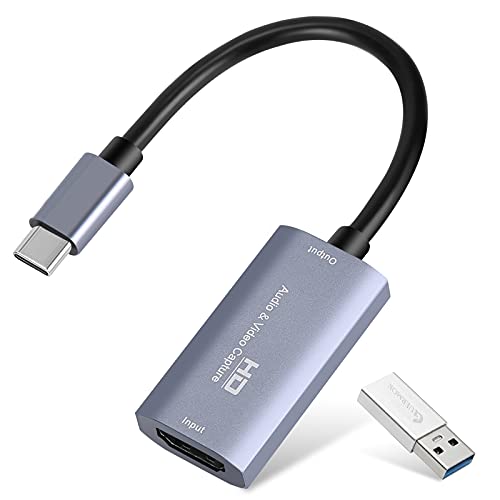
The Guermok HDMI to USB-C capture card supports up to 4K input at 30Hz and provides an output of up to 2K at 30Hz or 1080p at 60Hz. With USB-C and USB-A interfaces, it aims to cover a broad device range, including iPads, Macs, and Windows PCs, as well as gaming consoles. The device emphasizes low latency for real-time recording, streaming, or screen sharing, making it suitable for live streams and virtual meetings. It is designed for “plug and play” use, requiring no extra drivers, though users should note that it’s intended for capture rather than direct display. Built with an aluminum shell, it offers heat dissipation for extended sessions. Portable enough for outdoor streams, this model is targeted at creators who value compatibility and mobility over ultra-high-end resolutions.
Key considerations: verify that your software supports the 4K input at 30Hz and that your output device can handle the desired resolution. If your primary need is 1080p at 60fps, this card delivers reliable performance with many common streaming stacks. Also, check whether you plan to connect via USB-C or USB-A to ensure full compatibility with your computer or tablet setup.
VIXLW USB Video Capture Card Overview

The VIXLW capture card offers 4K HDMI input with up to 4K@30Hz capture and records at 2K@30Hz or 1080p@60Hz. A premium aluminum shell helps with heat dissipation to maintain stable performance in longer sessions. It uses true USB 3.0, enabling ultra-low latency streaming for platforms like Twitch or OBS. It supports USB-C and USB-A connections, increasing compatibility with modern computers, tablets, and even some handheld devices. The card is designed for portable streaming setups and is suitable for gaming, video conferencing, and content creation.
Considerations: ensure your source device can output 4K at 30Hz if you plan to use 4K input. For many users, 1080p@60Hz produces a cleaner stream with broad compatibility. If you rely on USB-C only, confirm compatibility with your host device’s USB-C port and power delivery needs.
UGREEN 2K@30Hz Capture Card Details
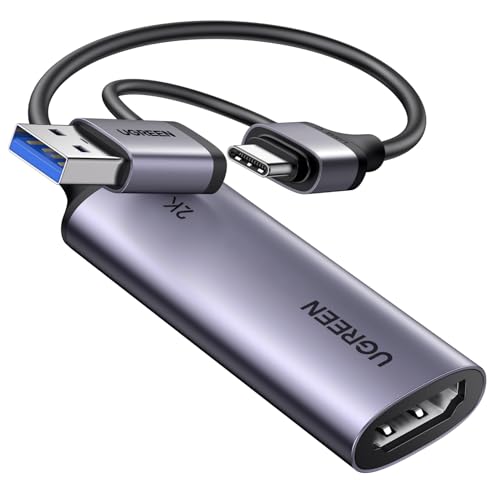
This UGREEN capture card emphasizes versatility with both USB-A and USB-C outputs. It supports 2K at 30Hz input and 2K at 30Hz output, and is backward compatible with 1080p 60fps. The device is designed to preserve original video quality for post-production editing, making it a strong choice for creators who do editing after capture. It’s intended for HDMI input sources and recommends updating iPadOS to newer versions for some devices. The unit is advertised as low-latency and plug-and-play, with no drivers required for basic operation.
Best-use notes: this model shines for multi-device workflows where you want to connect several sources (game console, camera, or computer) to one capture solution. If you frequently need 2K output, check your streaming or editing software’s compatibility with 2K60 or 2K30 workflows and ensure your computer has the bandwidth to handle higher data rates.
acer USB 3.0 Video Capture Card Snapshot

The acer USB 3.0 Video Capture Card supports 4K pass-through input with 1080p 60Hz output, offering YUY2 for improved color depth over MJPEG. It also includes a mic-in jack for on-the-fly commentary, which can be valuable for live streams, gaming broadcasts, or online teaching. The device emphasizes plug-and-play ease and does not require external drivers or power, enabling quick setup for on-the-go creators who need reliable capture without hunting for software.
Usage notes: while the device supports 4K input, the practical capture output tops at 1080p60, so this is a strong choice for broadcasters prioritizing simplicity and portability over 4K capture. The mic-in feature is convenient for commentary, but verify your software’s audio routing to avoid audio drift with video.
Rybozen 4K HDMI Capture Card Overview
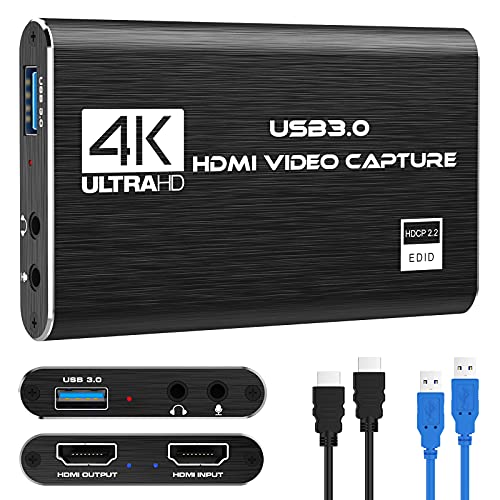
Rybozen’s capture card supports up to 1080p 60fps output and a 1080p input, with claimed compatibility for 4K HDMI sources at input. It’s designed for plug-and-play operation, requiring no extra drivers, and aims to be compatible across Windows and Mac systems. The card is positioned as a practical option for home studios, consoles, and PC gaming streams, providing reliable performance for OBS and other streaming software.
Considerations: ensure your host system can handle the data flow of a 1080p60 capture at the chosen frame rate. If you plan to work with 4K sources, confirm whether the card’s 4K input is useful for your workflow or if you’ll stick to 1080p capture for bandwidth efficiency.
Buying Guide
Key purchase considerations for USB video capture cards include: compatibility with devices and operating systems, supported input/output resolutions, latency performance, and whether you need USB-C or USB-A connectivity. For live streaming, prioritize ultra-low latency and software compatibility with OBS, Twitch, YouTube, and similar platforms. If you plan to digitize old tapes or analog footage, ensure the card provides reliable AV input support (RCA/Composite) and straightforward digitization workflows.
Compare input formats: 4K input is beneficial for future-proofing but may not be necessary if your production runs at 1080p. Check output capabilities to ensure the capture card aligns with your recording or streaming target resolution. Consider whether you need an audio-in jack for on-the-fly commentary or multi-channel audio capture.
Portability and build quality matter for mobile creators. Aluminum shells and compact form factors help with heat management and transport. Finally, read user reviews for real-world latency, driver stability, and compatibility with the specific software you rely on, such as OBS Studio or Zoom.