Sourcing a compact, reliable USB power bank is essential for staying powered during travel, commutes, and daily use. This guide highlights five top-rated models that balance capacity, size, and charging speed, with a close look at what makes each a solid choice for American consumers. The selections cover slim pocketable packs, high-capacity units with built-in cables, and multi-port chargers ideal for households with multiple devices.
| Product | Brand | Capacity | Key Strength | Image |
|---|---|---|---|---|
| Evopow 2 Pack Portable Charger | Evopow | 10000mAh | Slim, lightweight, fast USB-C in/out |  |
| OHOVIV Portable Charger 50000mAh | OHOVIV | 50000mAh | Large capacity with 22.5W PD fast charging | 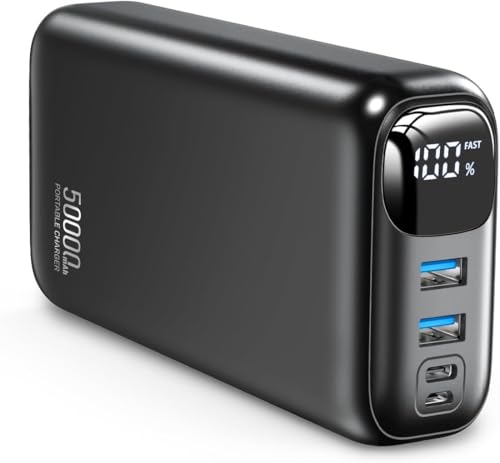 |
| Anker Power Bank PowerCore 10K | Anker | 10000mAh | Compact, reliable PowerIQ fast charging |  |
| INIU Portable Charger 45W PD | INIU | 10000mAh | Ultra-slim with attached USB-C cable |  |
| RGVOTA 38800mAh Power Bank | RGVOTA | 38800mAh | Five outputs, two inputs for multi-device charging |  |
Evopow 10000mAh Slim Power Bank
The Evopow 10000mAh portable charger is designed for everyday carry with a slim profile that fits easily in pockets or small bags. At roughly 14 mm thick and 219 g, it claims enough capacity to top up premium devices like the iPhone 16 and Samsung S23 more than once, while offering three USB outputs and dual input ports. Its USB-C and Micro USB inputs refill the unit quickly, and the 5V/2.4A output helps devices charge efficiently. High-speed charging supports quick boosts for compatible devices, aligning with typical user demands for travel and daily use.
OHOVIV 50000mAh PD Power Bank
The OHOVIV 50000mAh pack targets long trips and heavy usage. It supports 22.5W PD fast charging, with two USB-A outputs and a USB-C input/output, enabling three devices to charge simultaneously. The large capacity backing makes it well-suited for extended camping or travel where power outlets are scarce. Note that airline restrictions may apply to large-capacity power banks. Compatibility spans iPhone models, Android devices, and wearables, making it a versatile option for households with multiple devices.
Anker Power Bank PowerCore 10K
The Anker PowerCore 10K focuses on compact portability with a slim design and sizable charging capacity for its size. It typically delivers multiple full charges for iPhone and Galaxy devices, supported by PowerIQ technology to optimize charging speed for each connected device. The unit combines a lightweight chassis with durability considerations, including scratch resistance and a compact footprint ideal for travel or everyday carry.
INIU 45W PD Portable Charger
INIU’s Slim 10,000mAh bank emphasizes speed and safety with 45W PD fast charging. Marketed as the Safe Fast Charge Pro, it features a high-density cell for a smaller, lighter unit and claims capable charging times such as 60% for certain iPhone models within 25 minutes. Its compact form makes it a strong option for commuters and travelers who want faster top-ups without bulk.
RGVOTA 38,800mAh Power Bank
The RGVOTA 38,800mAh model is a robust outdoor-ready option with five output ports and two inputs. Its high capacity positions it as a reliable solution for road trips, camping, or emergencies. It supports charging multiple devices simultaneously and is described as a trusted power bank pioneer with over a decade of development. The product note highlights that its large size may not be suitable for air travel in some cases.
Buying Guide: Choosing The Right USB Power Bank
- Capacity vs. portability: Higher mAh means more recharges per device, but greater weight and size. For everyday use, 10,000–20,000 mAh strikes a balance; for travel or multiple devices, 30,000–50,000 mAh provides longer runtime at the cost of bulk.
- Output power and ports: Look for USB-C PD or Quick Charge (QC) support to optimize charging speed. Multiple outputs help power several devices at once, but check whether the ports share total wattage to avoid slowdowns when charging multiple devices.
- Input speeds: Fast recharging of the power bank itself reduces downtime between uses. USB-C input and higher amperage inputs (2A–3A) shorten recharge times for most packs.
- Built-in cables vs. cable-free: Built-in cables reduce tangled cords but limit flexibility in connector types. Cable-free models rely on separate cables, which can be swapped for new devices as needed.
- Safety features: Look for overcharge, short-circuit, and temperature protection. Certifications and reputable brands tend to indicate more reliable safety compliance.
- Portability and form factor: Slim, pocketable models are ideal for daily carry, while larger packs suit travel and camping where outlets are scarce. Consider how you plan to carry the power bank (purse, pocket, backpack).
- Air travel considerations: Many high-capacity packs exceed airline limits. If flying is common, verify airline rules and consider a 20,000 mAh or smaller model for compatibility.
- Build quality and durability: Scratch resistance, drop tests, and material quality influence long-term usability, especially for frequent travelers or outdoor enthusiasts.
- Price-to-performance: Compare charging speeds, capacity, and port options relative to budget. A slightly pricier model with faster charging and more ports can offer better value over time.