The best USB DAC and headphone amp combo for you depends on your device type, listening needs, and portability. This guide highlights five top options for American buyers, with clear, objective criteria to help you choose for gaming, home stereo, or everyday use.
Who this is for: gamers may prefer models with loud i/o and microhpone support; desktop listeners benefit from multiple outputs and rich DACs; portable users seek compact, battery-friendly solutions. The table below summarizes the five selections.
| Product | Best For | Key Benefit |
|---|---|---|
| Fosi Audio Q4 DAC Headphone Amp | Budget desktop setups, plug-and-play | Versatile inputs; bass/treble controls |
| AIYIMA DAC-A2 | Immersive gaming and home theater | Independent bass/treble controls; multiple inputs |
| FiiO K11 | High-powered desktop listening | Up to 1400mW; supports 6.35mm and 4.4mm outputs |
| Fosi Audio K7 | All-in-one desktop hub | High-resolution DAC/amp; wide connectivity; mic input |
| Qudelix-5K | Wireless and wired comfort | LDAC/aptX support; dual outputs |
Fosi Audio Q4 DAC Headphone Amp

Best for: budget-conscious desktop listeners needing straightforward upgrading of PCs, TVs, or powered speakers. The Q4 offers USB, Optical, and Coaxial inputs with RCA and 3.5mm outputs. It drives headphones from 16Ω to 200Ω and includes bass/treble controls for quick tuning. The device has no driver requirements, making setup fast. A limitation: volume and gain controls are straightforward but lack advanced memory or multi-channel processing, so it’s best for stereo applications.
Fosi Audio K5 Pro Gaming DAC Headphone Amplifier
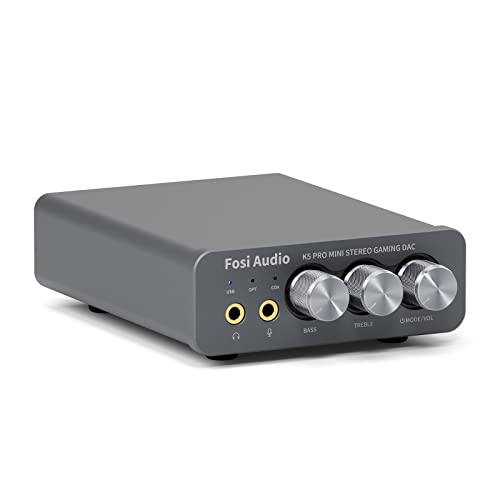
Best for: gamers and home setups seeking a compact external sound card substitute. K5 Pro is a 2-in-1 USB Type C interface with audio input, converting USB/Optical/Coaxial signals to 3.5mm AUX and RCA outputs. It features a Texas Instruments NE5532 op-amp and low-noise design for clean sound. Use caution: the device’s mic and gaming features depend on compatible software and host hardware; check your setup for mic input suitability.
FiiO K11 DAC and Headphone Amplifier

Best for: high-power desktop listening with broad compatibility. K11 delivers up to 1400mW and supports 6.35mm and 4.4mm balanced outputs, plus USB/coaxial/optical inputs. It accommodates high-impedance headphones (8–350 Ω) and provides RCA line-out. Caution: high output power can be overwhelming for sensitive IEMs unless you adjust volume carefully.
Fosi Audio K7 DAC Headphone Amp

Best for: users building a full desktop audio system. K7 uses AK4493S DAC, XMOS XU208 USB processor, and 2100mW output, with USB-C, coaxial, optical, Bluetooth aptX HD/LL, and mic input. Outputs include 4.4mm balanced, 3.5mm, and RCA. Choose this if you want a future-ready hub for headphones, powered speakers, and external amps, but be prepared for a larger footprint than truly compact dongles.
Qudelix-5K Bluetooth USB DAC AMP
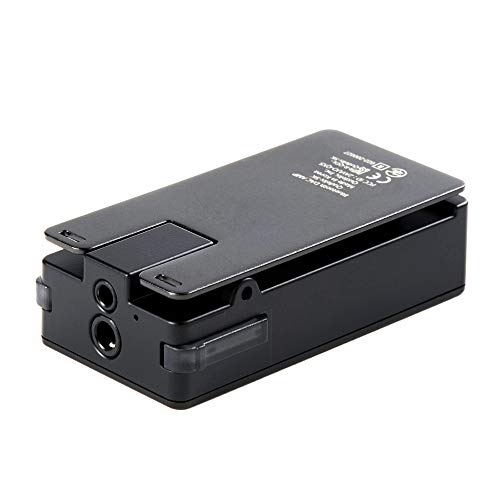
Best for: users seeking wireless flexibility with high-quality wired performance. Qudelix-5K offers LDAC, aptX Adaptive, aptX HD, and AAC, plus dual outputs (2.5mm balanced and 3.5mm unbalanced). It supports USB DAC as well as Bluetooth, with a built-in equalizer. A potential limitation is that Bluetooth performance can vary by device and environment, affecting latency and consistency in gaming scenarios.
Buying Guide
What to look for in a USB DAC/AMP
Output power matters: higher wattage drives demanding headphones more effectively. Consider balanced outputs (4.4mm) for lower impedance noise and higher dynamic range.
Input and output options
Match your devices: USB-C vs USB-A, optical/Coaxial, and whether you need mic input or Bluetooth. If you use a PC and gaming console, multiple inputs simplify switching.
Sound shaping features
Bass and treble controls or built-in EQ help tailor sound to your preferences. An external DAC with analog controls offers quick adjustments during use without software.
Portability vs. desktop setup
Dongles and compact units suit laptops and mobile in one bag, while larger desktop DACs provide more inputs and higher power for multiple headphones and speakers.
Driver and compatibility considerations
Most devices on this list are plug-and-play, requiring no drivers. Check for compatibility with your operating system and whether your headphone impedance matches the device’s driving capability.
Wired vs. wireless balance
Wireless models add convenience but can introduce latency and compression in some situations. For gaming, wired connections typically ensure stable audio.
Usage scenarios to compare
- Gaming: prioritize low-noise operation, mic support, and strong USB/optical inputs.
- Music listening: favor DACs with wide dynamic range, balanced outputs, and low THD.
- Home theater: consider multiple outputs (RCA, optical) and high headroom for multi-channel setups.
Quick comparison snapshot
- Best for budget desktop: Fosi Q4.
- Best for gaming with mic: Fosi K5 Pro.
- Best for high-impedance headphones: FiiO K11.
- Best all-in-one desktop hub: Fosi K7.
- Best wireless option: Qudelix-5K.
FAQ
- What is a USB DAC amp used for?
Answer: It converts digital audio to analog and amplifies it for headphones or speakers, improving clarity and volume. - Do I need a DAC if my computer already has one?
Answer: A dedicated DAC/amp can provide cleaner power and better dynamic range, especially with high-impedance or sensitive headphones. - Can I use Bluetooth DACs with wired headphones?
Answer: Yes, many models offer Bluetooth and wired outputs, but wired connections avoid latency or compression issues. - What impedance should I consider?
Answer: If you use high-impedance headphones (50–350 Ω), choose a model with enough power to drive them without distortion. - Are DACs compatible with game consoles?
Answer: Many are; check input compatibility (USB/Optical/Coaxial) and whether the console supports external DACs via its USB or optical output. - Is balanced output better than single-ended for headphones?
Answer: Balanced (4.4mm) can provide lower noise and higher headroom for some high-end headphones, but benefits depend on the headphone and system.