If you’re filming with a DSLR or mirrorless camera, a sturdy tripod is essential for smooth motion, precise framing, and consistent results. This guide highlights five reliable tripods that balance height, load capacity, and portability for both indoor shoots and outdoor adventures. Each option is suited to different buyers—pros who need height and stability, travelers who prioritize weight, and beginners who want quick setup without sacrificing capability.
Below is a quick buying snapshot to help you compare key features at a glance. The table lists each product’s rough strengths and best-use scenarios to support fast decision-making.
| Product | Best For | Load Capacity | Notable Benefit |
|---|---|---|---|
| VICTIV 74” Camera Tripod | All-around daily shoots | 9.5 lb | Wide height range; strong 3-way head |
| JOILCAN 74″ Tripod | Travelers needing light weight | 15 lb | High stability; travel-friendly design |
| NEEWER 79″/2m Video Tripod | Outdoor and studio versatility | 17.6 lb | Fluids head option; tall and sturdy |
| K&F CONCEPT 64″/163 cm Tripod | Budget-conscious shooters | 17.6 lb | Lightweight; compact folded size |
| K&F CONCEPT 80″ Video Tripod | Layered shooting angles | 17.6 lb | Fluid head; fast lock |
VICTIV 74” Camera Tripod
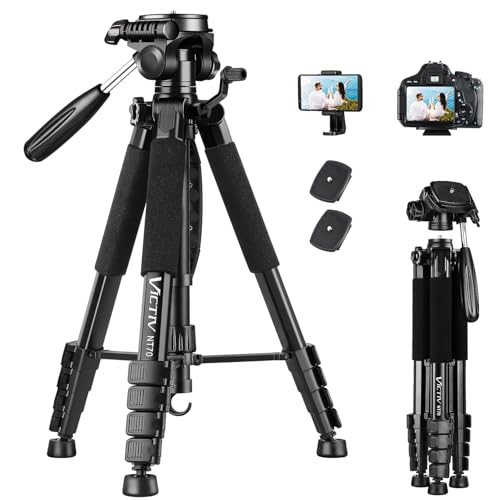
Best for tall shooting setups requiring substantial height without sacrificing stability. The VICTIV tripod extends from 19 to 74 inches and weighs 3.14 pounds, making it usable both indoors and outdoors. It accepts standard 1/4″ screws and is compatible with Canon, Nikon, Fujifilm, Olympus, Panasonic cameras, as well as spotting scopes and compact camcorders. A 360° flat head and a weight hook help you achieve panoramic shots and added stability on windy days. The included carrying bag makes it convenient for field shoots.
Who it’s for: freelance shooters and hobbyists who need a versatile, budget-friendly tall tripod that still supports DSLR and spotting scope workloads. Why selected: the height range, universal mounting, and portable design meet common video and photo needs in a single kit. Limitation: the aluminum construction is solid but not as rigid as some heavier pro models, so finer long-exposure stability might benefit from additional counterweight or a heavier head.
Key specifications in brief:
- Height range: 19″ to 74″
- Load capacity: up to 9.5 lb
- Materials: Aluminum; includes carrying bag
- Head type: 3-way pan head with 360° movement
JOILCAN Tripod Camera Tripods, 74″

Best for travelers who need a lightweight, compact tripod that can grow tall when required. JOILCAN emphasizes a quick height adjustment from 19″ to 74″ with a compact fold, weighing about 3.15 pounds. It supports a wide range of devices via a standard 1/4″ screw and features a stable base and a compact carrying bag for on-the-go filming. The tripod is designed to hold DSLRs, mirrorless cameras, and even heavier phones and accessories via extra plates and mounts.
Who it’s for: budget-minded shooters who still want a tall, stable platform for DSLR or phone video on location. Why selected: good balance of light weight, extendable height, and broad device compatibility. Caution: the included quick-release system and ball head are serviceable, but for critical professional work you may want to pair this with a beefier head or a heavier weight bag for windier environments.
Key notes:
- Folded length keeps it portable for travel
- 181–74″ height range with compact carrying bag
- Standard 1/4″ mounting; compatible with cameras and many accessories
NEEWER 79″/2m Video Tripod

Best for creators seeking a robust, tall tripod with enhanced stability for outdoor shoots and studio setups. The NEEWER 79″ model offers a tall height, an adjustable leg system, and dual screw options (1/4″ and 3/8″). It folds to about 35.8″ and ships with a carrying bag. The 70mm bowl base allows for stable placement on uneven ground, while flip locks keep setup quick and repeatable. A strong choice for Canon, Nikon, Sony, and other DSLRs as well as camcorders.
Who it’s for: outdoor videographers and photographers who need a tall, durable platform that travels well. Why selected: tall maximum height and compatibility with common camera bodies; the included bag adds transport value. Limitation: while sturdy, it’s heavier than entry-level tripods, which could affect long-distance travel days.
At-a-glance features:
- Height: 34.6″/88 cm to 78.7″/200 cm
- Folded length: 35.8″/91 cm
- Load capacity: up to 17.6 lb
K&F CONCEPT 64 Inch Camera Tripod

Best for compact setups that still deliver reliable stability and full 360° head movement. The K&F CONCEPT 64″ features a lightweight design (about 2.53 lb with the ball head) and a 36mm ball head for precise panning. It can extend to 64.1″ and folds to 15.5″ for easy packing into a bag. It handles up to 17.6 lb, making it suitable for DSLRs, micro four thirds, and entry-level cinema cameras. A good pick for vloggers and travel photographers who value portability without sacrificing versatility.
Who it’s for: travel shooters and beginners who want a reliable, budget-friendly option with strong pan functionality. Why selected: excellent balance of weight, height, and 360° ball head for smooth panning. Limitation: the lighter build may vibrate more in windy outdoor shoots; pairing with a sandbag or weight may help stability.
Key points:
- Height range: 20.4″ to 64.1″
- Weight: 2.53 lb
- Load capacity: 17.6 lb
K&F CONCEPT 80″ Video Tripod
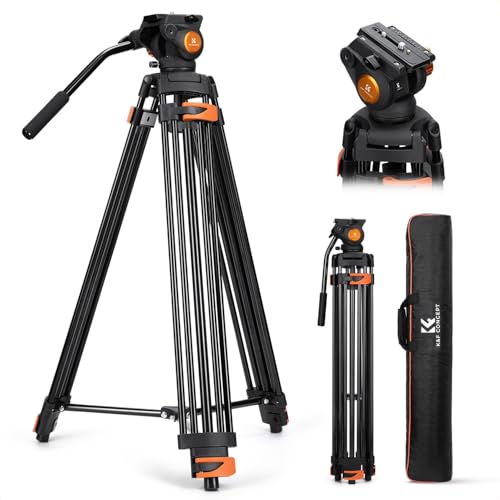
Best for shooters who want a tall, fluid-head capable platform with robust damping for smooth video. The 80″ model offers a fluid head that supports 360° horizontal panning and tilting from -70° to +90°. It uses a sturdy aluminum alloy build and includes a quick-release plate. The system is designed for DSLR, mirrorless, and camcorder use, with a fast-lock mechanism to speed up transitions between angles. This is a strong pick for landscape videography and event shooting where fluid motion matters.
Who it’s for: videographers and livestreamers needing precise, smooth panning and vertical tilt. Why selected: fluid head and fast lock improve workflow for dynamic shoots. Caution: heavier than basic models, so consider transport needs for longer shoots and travel.
Highlights:
- Fluid head with -70° to +90° tilt
- Aluminum tripod with quick-release plate
- Max load: 17.6 lb
NEEWER 79″/2m Video Tripod With Fluid Head

Best for tall setups where a fluid head is beneficial for video work. This NEEWER model uses an aluminum alloy frame with a stable 70mm bowl, adjustable center height, and a fluid head that supports smooth pans and tilts. It folds to a compact length and includes a bubble level for stable setup on uneven ground. The Arca-type QR plate ensures quick transitions between compatible cameras and accessories. It suits tall DSLR rigs for weddings, landscapes, and event videography.
Who it’s for: videographers who need reliable vertical range and a built-in fluid head for motion. Why selected: tall height, fluid control, and Arca compatibility. Limitation: heavier than entry-level tripods; may require a heavier bag for extended travel days.
Practical notes:
- Center column lift for higher angles
- 360° ball head with fluid drag
- Arca-type quick-release plate
Buying Guide: How To Pick The Right DSLR Video Tripod
What load capacity do you need?
Choose a tripod with a load rating above the combined weight of your camera body, lens, and accessories. For most DSLR video setups, a load rating of 15–18 lb is a comfortable buffer. If you use larger telephotos or professional cinema lenses, opt for higher capacity models.
How tall should your tripod be?
Height matters for framing, especially when shooting at eye level or above. If you frequently shoot tall subjects or overhead angles, prefer tripods with a maximum height around 65–80 inches. For tabletop or desk work, a shorter range is fine, but ensure practical headroom for your standard shoots.
Is a fluid head necessary?
A fluid head provides smoother pans and tilts for video. While not strictly required for still photography, it is highly beneficial for video as it minimizes jerkiness and helps achieve cinematic motion.
How portable must it be?
Consider folded length and weight. Travel-focused shooters should favor models that fold compactly and weigh under 4 pounds, while studio-based users may prioritize stability and higher load capacity over portability.
What about versatility and accessories?
Look for common options like 1/4″ screw compatibility, quick-release plates, and phone mounts if you shoot with smartphones as well. Some tripods also support inverted center columns or include a hook for extra weight to improve stability in wind.
Which type of environment will you shoot in?
Outdoor shoots benefit from rugged joints and secure leg locks. Indoor or studio work can prioritize fluid heads and precise adjustments for consistent framing across scenes.
FAQ
Q: Can I use a DSLR with any tripod?
A: Most DSLRs use a standard 1/4″ mounting screw; ensure the tripod has a compatible screw and a plate that fits your camera. Heavier cameras may require a more robust head and stronger legs for stability.
Q: Do I need a carrying bag?
A: A bag helps protect the tripod during transport and simplifies packing for travel or field shoots. It is especially useful for taller or heavier models.
Q: Is a taller tripod always better?
A: Not necessarily. Taller tripods provide flexibility for high-angle shots, but they can be heavier and more cumbersome. Choose a height that’s practical for your typical shooting scenarios.
Q: Should I buy a tripod with a dual monopod option?
A: A 2-in-1 tripod/monopod setup can be advantageous for quick mobility and evolving shot requirements, but it typically adds weight and cost. Consider your primary use case first.
Q: How important is a quick-release plate?
A: A quick-release plate speeds setup and changes between shots. For frequent shot changes, a secure, easy-to-use plate is highly beneficial.
Summary Of Recommended Tripods
The five selected tripods balance height, stability, weight, and compatibility with DSLR video work. They cover a range of use cases from travel-friendly to tall-studio ready, and each includes a practical mix of features to support smooth videography.