For Mars viewing, choose a telescope that offers steady optics, clear contrast, and practical accessories to optimize plansets and surface details. This guide highlights five accessible options suited for beginners, families, students, and curious hobbyists who want reliable Mars viewing without professional gear. Each choice prioritizes ease of use, stable mounting, and features that help reveal Martian features such as polar caps and dark albedo markings. The table below briefly compares the top picks to help you decide which one fits your observing goals.
| Product | Best For | Main Strength |
|---|---|---|
| National Geographic Sky View 70mm Refractor Telescope | Beginners, families | Versatile magnification options |
| MaxUSee Travel Telescope with Backpack | Travelers, outdoor observers | Portability and included accessories |
| Educational Insights GeoSafari Starview Telescope | Kids, classroom use | Beginner-friendly setup and learning aids |
| Astromania Telescope Filter Set (1.25″) | Moon and planet observers | Color filters to boost contrast on Mars and Moon |
| SVBONY Five-Color Filter Kit (1.25″) | Planetary imaging enthusiasts | Comprehensive color range for lunar/planetary viewing |
National Geographic Sky View 70mm Refractor Telescope
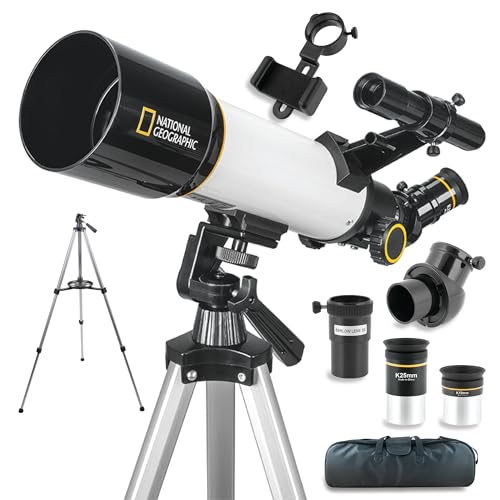
The National Geographic Sky View 70mm refractor offers a practical entry point for Mars viewing with a 70mm aperture and a 400mm focal length. It comes with two eyepieces and a 3x Barlow lens to provide magnifications of 16x, 40x, 48x, and 120x, which helps observers see Martian features such as polar caps and surface albedo variations under good observing conditions. A dedicated smartphone adapter supports simple astrophotography so you can capture lunar and planetary targets. Best for families and casual skywatchers who want a versatile, all-in-one starter telescope.
Best for: Beginners who want multiple magnification options without complexity; families seeking an all-in-one starter kit. Caution: The included accessories may be basic for advanced planetary work; upgrading eyepieces can improve Mars views.
MaxUSee Travel Telescope With Backpack
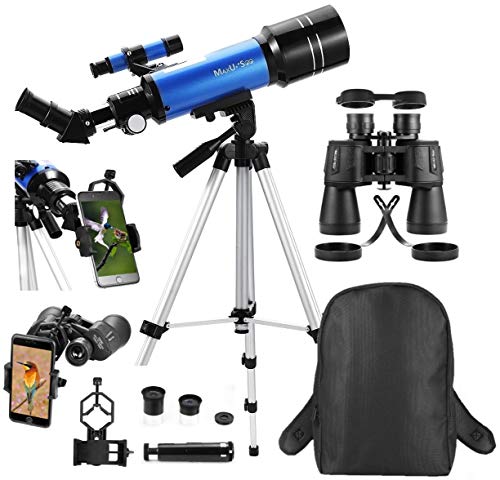
The MaxUSee Travel Telescope blends portability with solid observing capability. Its 70mm aperture yields usable brightness for Mars during opposition and other favorable apparitions, with a 3x Barlow lens expanding magnification to a broad range (up to around 132x, depending on eyepieces). A 10×50 binocular pair is included, offering versatile viewing options when you’re on the go. The kit includes a smartphone adapter for quick lunar and planetary photos. Best for travelers, hikers, and those who need a compact setup for outdoor outings.
Best for: Observers who travel or hike and want a complete, compact setup. Caution: The 70mm aperture limits detail on faint deep-sky objects; Mars details are best during good atmospheric conditions.
Educational Insights GeoSafari Starview Telescope

The GeoSafari Starview is designed for younger learners and beginners. It emphasizes easy setup and quick sky scanning, letting kids switch between 10x and 50x eyepieces for low- to high-power viewing. While it’s built for accessibility, it offers enough capability to observe the Moon and brighter planetary features such as Mars during favorable oppositions. A printed activity journal supports guided exploration, making it a solid classroom or family choice. Best for: Kids and classrooms seeking a straightforward, engaging telescope. Caution: Limited raw optical performance compared to more advanced entry-level systems.
Astromania 1.25 Inch Telescope Diagonal with Amici Erecting Prism

The Astromania 1.25″ Amici erecting prism diagonal improves Mars viewing by delivering upright images with a comfortable 90° viewing angle. The Amici prism corrects image orientation, which aids terrestrial observers and daytime planetary viewing. The multi-coated surfaces increase brightness and clarity, helping you see Martian features more distinctly compared with standard diagonals. Best for: Observers who want comfortable, upright Mars views with reliable image quality. Caution: This is a diagonal accessory; you’ll still need a suitable telescope body to mount it.
SVBONY Five-Color Filter Kit (7PCS) for Moon & Planets

The SVBONY five-color filter kit includes red, orange, yellow, green, and blue filters designed to enhance lunar and planetary views. These filters improve contrast on Mars features, such as polar caps and surface markings, by selectively blocking certain wavelengths. A CPL filter helps reduce glare in photographic imaging of the Moon and planets. Best for: Observers who want targeted color filters to boost Mars and Moon contrast. Caution: Filters require compatible 1.25″ eyepieces and a basic telescope setup to be effective.
Buying Guide: Key Purchase Considerations
- Observing goals: For Mars, prioritize moderate aperture (60–80mm) and stable mounts to maximize contrast and ease of use during opposition windows.
- Portability vs. performance: Travel-friendly kits are great for field observing, but larger apertures deliver brighter Mars views when stationary.
- Accessories that matter: A good diagonal (upright view), a reliable finderscope, and a small set of planetary color filters can significantly improve Mars detail visibility.
- Ease of setup: If you’re new to astronomy, look for telescopes with simple assembly, clear instruction manuals, and included learning materials for beginners.
- Imaging options: If you want to photograph Mars, prefer kits with smartphone adapters or appropriate interfaces for basic astrophotography.
Frequently Asked Questions
- What magnification is best for Mars viewing? Moderate magnifications (20x to 100x depending on aperture and seeing) balance detail and brightness. Too high magnification with poor seeing reduces clarity.
- Do color filters help observe Mars? Yes. Red, orange, and yellow filters can enhance polar caps and surface contrasts by altering the wavelengths reaching the eye or camera.
- Is a 70mm telescope enough for Mars? Yes for basic Mars views, especially during favorable oppositions. It’s a good entry point and portable option.
- Should I buy a reflector or refractor for Mars? Refractors are typically easier to use and low-maintenance for beginners, while reflectors can offer more aperture value at similar prices for advanced observers.
- What else helps Mars viewing besides filters? A stable mount, good collimation (for reflectors), and observing from a dark, pollution-free location improve Mars visibility dramatically.
- Are accessories necessary? Filters, a diagonal, and a finder scope improve usability, but core viewing capability comes from the telescope and mount.