Answering the question “What telescope is best for spying on distant scenery or wildlife?” this guide highlights five compact, high-clarity options. Each pick is suited to different buyers—outdoor enthusiasts, travelers, hobbyists, parents shopping for kids, or gadget lovers seeking a capable monocular. The table below compares core strengths to help quick decisions.
| Product | Main Strength | Best For |
|---|---|---|
| Pankoo 16X52 Monocular | Bright images, solid magnification | Casual outdoor observers |
| ASxmhGo 80×100 Monocular | High magnification with wide daylight view | Bird watchers and hikers |
| Chinshwehaw 2000X24 Monocular | Extreme zoom with phone adapter | Moon and distant landscapes |
| SSZS Pirate Monocular | Portable brass design, good close-range power | Travelers and collectors |
| EACONN 70mm Telescope | Beginner-friendly entry with two eyepieces | Kids and beginners |
Below you’ll find concise product-by-product details, followed by a practical buying guide and a quick FAQ to answer common questions about choosing a monocular or pocket telescope for spying distant scenes.
Pankoo 16X52 Monocular for Outdoors
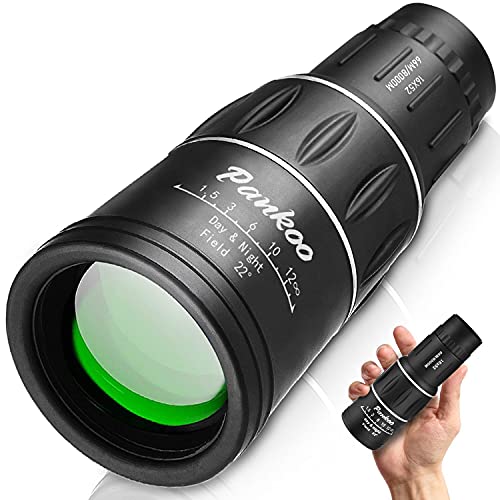
The Pankoo 16X52 Monocular offers 16x magnification with a 52mm objective lens, delivering bright and clear images for general outdoor observation. The BAK-4 prism and multi-coated lens enhance light transmission and reduce distortion, making it a practical choice for hiking, wildlife viewing, and stadium events. It is best for casual observers who want a compact, easy-to-handle optic that fits in a pocket or small bag.
Best for: Outdoor enthusiasts who want a simple, reliable monocular for everyday use. Choose this if you prioritize portability and ease of use over extreme zoom. A potential limitation is the moderate magnification, which may be less effective for very distant targets without a tripod or stabilization.
Key considerations:
- Magnification: 16x
- Objective: 52mm
- Light handling: Good due to larger lens and coated optics
ASxmhGo 80×100 High Power Monocular

This monocular pushes higher magnification with 80×35 magnification and a 100mm objective, designed to minimize shake and maximize image quality. It features a high-quality optical system with BAK-4 prism and up to 99.5% light transmittance, delivering bright, sharp color rendition. The compact body with a strap makes it suitable for hiking, bird watching, games, concerts, or travel.
Best for: Observers who need detailed distant views and occasional phone-attachment capability for sharing photos. Better for: those who can manage slightly larger devices and want better close-range clarity at high zoom. Limitation: Very high magnification can amplify hand shake; a stable stance or tripod is helpful for steady viewing.
Key considerations:
- Magnification: 80x
- Objective: 100mm
- Optical quality: High with low chromatic aberration
Chinshwehaw 2000X24 Monocular With Phone Adapter

The Chinshwehaw monocular advertises a striking 2000x magnification and 24mm objective lens, designed for long-distance viewing and the option to capture images with a smartphone adapter. The device emphasizes a high-contrast, bright image with a focus on reducing shake via stable optics and a compact profile ideal for field use. It supports practical use cases like hiking, astronomy basics, and distant landmark viewing.
Best for: Users who want to push zoom capabilities and capture distant scenes with a phone. Choose this if you’re comfortable with higher magnification and potential stabilization challenges. Caution: Extremely high magnification can exaggerate movement; using a stand or rest can help maintain clarity.
Key considerations:
- Magnification: 2000x
- Objective: 24mm
- Phone synergy: Includes smartphone adapter
SSZS Pirate Monocular 25×30 Zoomable Brass Spyglass
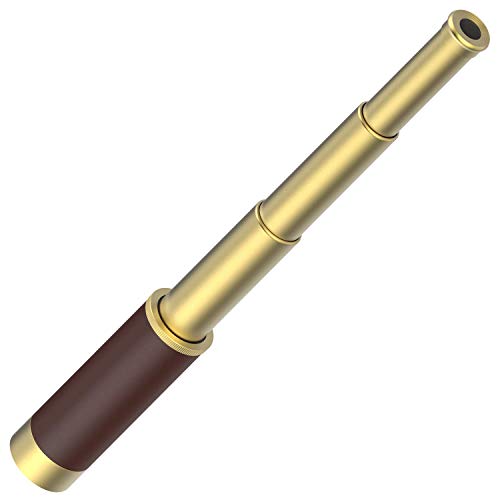
The SSZS Pirate Monocular blends classic brass styling with practical optical performance. It features a 25x30mm magnification that delivers a broad field of view up to 270ft at 1000yd, making it a strong option for travelers, outdoor events, and casual wildlife watching. Its portable collapsible design adds to convenience for pocket carry and on-the-go use.
Best for: Travelers or collectors who appreciate a compact, stylish monocular with solid zoom. Better for: casual long-distance viewing rather than high-precision scientific use. Limitation: Brass aesthetics can be more delicate if not handled carefully in rugged environments.
Key considerations:
- Magnification: 25x
- Field of view: Wide for fast scanning
- Material: Brass with leather accents
EACONN 70mm Refractor Telescope With AZ Mount

The EACONN travel telescope is designed for beginners and junior users. It features a 70mm aperture and 400mm focal length, with two interchangeable eyepieces (12.5mm and 20mm) offering 20x to 32x magnification. The included phone adapter lets users align and capture images of the moon and landscapes. It’s approachable for kids and new hobbyists who want a straightforward viewing experience.
Best for: Parents seeking an introductory telescope for kids or new hobbyists exploring celestial and terrestrial targets. Choose this if you want a complete start-to-use package with easy alignment and camera capture support. Caution: Lower light performance compared with larger-aperture models in dim conditions, which may affect deep-sky use.
Key considerations:
- Objective: 70mm
- Focal Length: 400mm
- Eyepieces: Two options for flexible magnification
Buying Guide: How To Choose A Telescopic Spy Tool
What magnification is right for distant viewing?
Higher magnification helps with distant targets but increases image shake and requires a steadier stance or a tripod. For casual outdoor use, 16x–80x is common. If you plan to photograph or record distant scenes, models with smartphone adapters and stable optics are advantageous.
How important is the lens size and light transmission?
A larger objective lens (the diameter of the front) gathers more light, improving brightness and contrast, especially in dawn or dusk conditions. Look for products that mention BAK-4 prisms and multi-coated lenses for better light transmission and reduced chromatic aberration.
Is it portable enough for travel?
Portability matters for spying on distant scenes while hiking or sightseeing. Consider weight, length when folded, and accessories like a camera clip, strap, or protective pouch. Brass or metal constructions look premium but may be heavier than polymer models.
Should you prioritize beginner-friendly features?
For new users or kids, seek models with easy focusing, simple eye relief, and a stable mount option. Two eyepieces or a built-in phone adapter can facilitate learning and sharing images with friends.
What about durability and weather resistance?
Outdoor observation benefits from weather-sealed or ruggedized builds. Monoculars with rubberized grips and sturdy construction handle occasional moisture and rough handling better than glass-only designs.
Which accessory matters most?
Phone adapters and mounts are useful if you want to capture distant scenes. A carrying bag or neck strap improves usability for field use. If you value quick stow-and-go, consider a compact, collapsible design.
Quick comparison snapshot
- Best for portability: Pankoo 16X52 Monocular
- Best for high detail at moderate range: ASxmhGo 80×100
- Best for extreme zoom and phone integration: Chinshwehaw 2000X24
- Best for travel style and aesthetics: SSZS Pirate Monocular
- Best for beginners and kids: EACONN 70mm Travel Telescope
Frequently Asked Questions
- What is the difference between a monocular and a telescope for spying?
- Can I use these devices for astronomical viewing?
- Will higher magnification imply better images?
- Do these monoculars work well in low light?
- Are these easy for kids to use?
- Is a smartphone adapter essential?
A monocular is a single-lens optical device designed for quick, portable viewing, typically offering magnification in a compact form. A telescope is generally larger with thicker optics designed for higher magnification and longer viewing sessions.
Some models are suitable for basic lunar or terrestrial viewing, especially those with adjustable eyepieces and higher magnification. For advanced stargazing, dedicated astronomic telescopes with stable mounts are better.
Not always. Higher magnification can reveal more detail but also magnify hand shake, lens imperfections, and atmospheric conditions. Balanced magnification with optical quality and stabilization yields better results.
Low-light performance depends on lens size and coating. Larger objective lenses and quality prisms improve brightness, but performance still declines at dusk or dawn compared to daytime viewing.
Entry-level models with simpler focusing and lighter weight are best for kids. Look for two eyepieces, durable build, and safety-friendly handling features.
Smartphone adapters are convenient for capturing distant scenes. If you primarily observe, you can skip the adapter, but it adds value for sharing and documentation.