Moon photography benefits from long focal lengths, stable platforms, and high-quality optics. This guide highlights five telephoto lenses and accessories that help American shooters bring the moon into clear, crisp view—from handheld setups to tripod-stabilized rigs. Each pick offers dramatic reach, solid construction, and dedicated features to optimize lunar detail and contrast.
| Product | Brand | Key Feature |
|---|---|---|
| MIAO LAB 50X HD Ultra Telephoto Lens | MIAO LAB | 50X zoom, tripod, smartphone clip |
| MIAO LAB 20-60X Telephoto Lens | MIAO LAB | 20-60X magnification, high-clarity optics |
| APEXEL 50X Telephoto Lens | APEXEL | 50X zoom, built-in tripod mount |
| Yanuoda 420-800mm Telephoto Lens | Yanuoda | Full-frame compatibility, versatile adapters |
| JINTU 420-800mm Telephoto Lens | JINTU | 420-800mm range, full-metal body |
Note: The recommended products emphasize long focal lengths, stability, and optical clarity to maximize moon detail while minimizing aberrations and flare. Read on to see how each option supports moon photography, plus practical buying considerations.
MIAO LAB 50X HD Ultra Telephoto Lens

The MIAO LAB 50X HD Ultra Telephoto Lens provides substantial reach with a 50X magnification, yielding up to a 1200mm equivalent focal length. It uses a multi-layer coated HD optical design to minimize glare and color fringing, delivering sharp lunar details across the frame. The lens kit includes an aviation-grade aluminum body and a stable tripod with a 360° pan-tilt head. A universal 1/4″-20 mount allows straightforward setup on most tripods, making it ideal for moon viewing and distant landscape shots.
With a focus ring for precise manual adjustment, this lens supports careful composition, reducing chromatic aberration and distortion. Its combination of high magnification, robust build, and tripod stability makes it a practical choice for amateur and enthusiast moon observers seeking clear, edge-to-edge lunar detail.
MIAO LAB 20-60X Telephoto Lens

This versatile 20-60X telephoto lens covers a broad zoom range, allowing quick shifts from wide lunar landscapes to tight crater details. The 13-element/10-group optics deliver high-contrast imagery with good edge sharpness across the zoom range. The kit includes an adjustable tripod and universal phone clip, enabling quick experimentation with smartphone-based moon photography or remote viewing. Its aircraft-grade aluminum construction adds durability for field use.
The 20-60X design balances portability and reach, enabling moon captures from a stable setup or cautious handheld framing. While not as extreme as dedicated camera lenses, it is well-suited for casual stargazers and wildlife observers who want a practical, all-in-one solution for distant subjects including the Moon.
APEXEL 50X Telephoto Lens

The APEXEL 50X Telephoto Lens offers a 1200mm equivalent focal length, enabling significant lunar detail at high magnification. Its optical design features a 55.5mm objective and full multi-layer coatings to minimize flare, distortion, and chromatic aberration, producing crisper lunar textures and crater rims. An integrated tripod ring provides stable, both horizontal and vertical shooting, helping to curb shake at high magnification.
Built for outdoor use, this lens emphasizes portability without sacrificing optical quality. The included stabilizing tripod mount makes it a strong option for moon photography where precise framing and long-exposure stability are beneficial for capturing subtle lunar shading and textures.
Yanuoda 420-800mm Telephoto Lens

The Yanuoda 420-800mm telephoto lens is a multi-mount system designed for Canon EF/EF-S, Nikon F, and Sony E mounts. The manual focus design emphasizes deliberate composition and depth of field, which can enhance lunar texture and crater details when combined with careful exposure settings. The full-frame compatibility ensures broad sensor coverage, with potential APS-C equivalence extending reach for moon photography.
With three mount adapters included, this lens offers flexible camera compatibility and a straightforward path to capturing expansive moon portraits from a comfortable distance. It suits photographers who prefer full manual control over focus and exposure to achieve precise lunar rendering.
JINTU 420-800mm Telephoto Lens
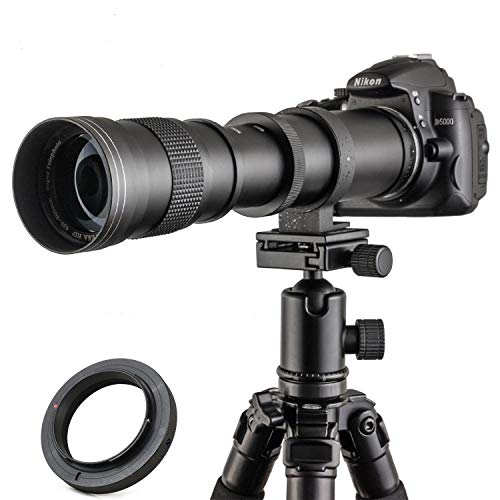
The JINTU 420-800mm telephoto lens features a full-metal body with a practical 420-800mm range, optimized for wildlife and distant subjects, including lunar details. It is designed to fit Canon EOS Rebel series and a broad array of other DSLRs with compatible mounts, and it ships with a free Canon adapter for convenience. The construction emphasizes durability and compact portability for field astronomy and lunar observation alike.
This option is well-suited for photographers who want a traditional telephoto solution with solid mechanical build, reliable manual focus performance, and the ability to pair with a range of cameras via included adapters. Moon photography benefits from its long reach and robust handling during twilight and night sessions.
Buying Guide: Key Considerations For Moon Photography
- Focal Length And Magnification: Longer focal lengths (roughly 600mm+ equivalent) reveal more lunar surface detail, but require sturdy support to minimize shake. Balance magnification with stability and camera compatibility.
- Optical Quality: Look for multi-layer coatings, edge-to-edge sharpness, and minimal chromatic aberration. Glass quality and coating affect craters, mare, and limb shading accuracy.
- Focus System: Manual focus is common on high-zoom lenses and can offer precise lunar control, especially when shooting the Moon against dark skies. Some models include autofocus, but lunar shots often benefit from manual precision.
- Stability and Mounting: A solid tripod with a pan-tilt head or a gimbal-style support improves tracking and framing. A built-in tripod ring or easy adapter compatibility simplifies setup on darker nights.
- Build Quality And Weight: Aviation-grade aluminum and sturdy construction withstand cold weather and prolonged sessions. Weight affects handling, transport, and stability on uneven surfaces.
- Smartphone Versus DSLR Use: Smartphone adapters enable quick Moon captures, but dedicated cameras with large sensors and longer lenses generally yield higher dynamic range and better low-light performance.
- Accessories: Tripods, clamps, and spacing adjustments help manage vibration, wind, and field conditions. A monocular option can be handy for quick Moon observations when not using a full rig.
- Field Conditions: Moon visibility and atmospheric conditions influence results. Plan for clear skies, minimal humidity, and low light pollution to maximize contrast and limb detail.
- Camera Compatibility: Check mount compatibility, available adapters, and whether the lens supports full-frame or APS-C sensors for optimal focal length calculations.
- Budget Versus Performance: While cinema-grade telephotos cost more, many budget-friendly options deliver usable lunar detail with stable platforms and careful technique.
This guide emphasizes practical options for moon photography that balance magnification, optical clarity, and stability. Each listed lens or kit provides a viable path to capturing craters, shading, and lunar rims with better definition, whether you shoot with a smartphone, mirrorless, or DSLR system.