Finding a child-friendly tablet that supports early learning while keeping safety and simplicity in mind is essential for toddlers. This guide compares five popular options built for ages 2 to 6, focusing on bilingual options, parental controls, screen-free experiences, and age-appropriate content. Each entry highlights key features, safety considerations, and what makes it suitable for two-year-olds and beyond.
Summary Of Selected Products
- Qiaojoy Kids Learning Tablet Educational Learning Pad (Bilingual, 2-5) – bilingual English/Spanish with interactive cards and 5 learning modes.
- Amazon Fire HD 10 Kids Pro Tablet – 10.1″ HD, ad-free, parental controls, Kids+ subscription.
- Peacurh Trilingual Learning Toy Tablet (Music & Sound) – tri-language modes, 4 play modes, kid-friendly controls.
- Puzcande Kids Educational Learning Tablet Toy – bilingual, 40 themes, 5 learning modes with language switching.
- ORSEN LCD Doodle Board Tablet – screen-free drawing tablet with dinosaur design and erase/lock features.
Qiaojoy Bilingual Learning Tablet (2-5 Years)

This bilingual learning tablet emphasizes English and Spanish language exposure through interactive cards and sound effects. It offers two volume levels and a language switch button, enabling parents to tailor the experience for a toddler’s listening environment. The device features a talking character on the cards that asks questions, encouraging curiosity and memory development while presenting images in an engaging way. With five learning modes, it supports foundational skills in language, vocabulary, listening, and pronunciation, plus quizzes to reinforce learning.
Key considerations for this model include its age-appropriate content variety and bilingual focus, which can aid early bilingual development. The device’s interactive mode helps a 2-year-old begin word recognition and basic conversation skills. The included language switch and regulated sound levels address safety and usability, ensuring the tablet remains accessible for little hands while avoiding overstimulation.
Pros: Bilingual content, kid-friendly interactions, practical volume controls, multiple learning modes.
Cons: Limited app ecosystem compared to larger tablets; content depth is designed for early toddler years.
Amazon Fire HD 10 Kids Pro Tablet

The Fire HD 10 Kids Pro tablet targets older preschoolers with a 10.1″ high-definition display, a slim kid-friendly case, and extensive parental controls. It includes a one-year subscription to Amazon Kids+, offering an ad-free library of age-appropriate content. The device is built with privacy and security safeguards to prevent malware and unauthorized access. A standout feature is the Parent Dashboard, which enables remote screen-time management and content monitoring. The 13-hour battery life supports long play sessions and learning activities on the go.
Consider this option for households seeking a more robust, app-rich learning environment with strong parental controls. It suits children around age 6 and up or for families who want a larger display and a broader content catalog. After the first year, ongoing access to Kids+ can be managed and canceled anytime via the Parent Dashboard.
Pros: Strong parental controls, large display, ad-free content, long battery life.
Cons: Higher price point; more features may be overwhelming for a 2-year-old without supervision.
Peacurh Trilingual Learning Toy Tablet

This toy tablet focuses on multi-sensory learning with three languages—English, Spanish, and French—plus a suite of modes that promote reading, sound effects, and music. With 39 icons and 5 learning modes (language switching, word learning, sounds, basic games, and advanced games), it emphasizes cognitive development, memory, and articulation. The device’s design and content aim to engage toddlers through interactive play while supporting early bilingualism and pronunciation practice.
It is a valuable option for parents seeking a compact, feature-rich learning toy that can grow with a child from ages 1 to 3, and potentially into early preschool years. The tri-language feature may also benefit households with exposure to multiple languages at home or in daycare settings.
Pros: Tri-language support, varied play modes, compact design.
Cons: Content depth is light compared to full tablets; some features may be better suited for slightly older children.
Puzcande 40-Themed Learning Tablet

Puzcande’s learning tablet emphasizes bilingual experience with 40 learning themes spanning letters, numbers, shapes, animals, dinosaurs, and more. It provides five learning modes, including language switching, word learning, sound effects, basic and advanced games, encouraging development of listening, reading, cognition, and observation. Designed with eco-friendly materials and safety in mind, the bright, well-structured interface fosters attention and curiosity in young learners.
Suitable for toddlers who enjoy exploring a broad range of topics, this device supports incremental learning across core early-literacy and numeracy skills. Language switching helps with bilingual exposure, while the diverse themes keep a child engaged across play sessions and quiet time alike.
Pros: Broad theme library, multi-mode learning, language switching.
Cons: Battery life can vary with mode usage; some content may feel repetitive for older toddlers who crave more interactive features.
ORSEN 8.5 Inch LCD Doodle Board Tablet

The ORSEN doodle board provides a screen-free activity that supports drawing and writing without traditional paper or crayons. Its pressure-sensitive LCD screen allows kids to draw with a stylus, offering a safe alternative that reduces screen exposure while fostering creativity. The device features a one-click erase function and a screen-lock option, helping parents manage art time without mess. The dinosaur motif adds a playful touch that can appeal to young children, especially those who enjoy imaginative play and basic drawing skills.
Ideal for travel, quiet time, and early scribble practice, this tablet prioritizes eye safety, avoiding blue light or radiation. It serves as a complementary tool to screen-based tablets by providing a low-tech option that supports fine motor development and creative expression.
Pros: Screen-free, easy to reset, portable, safe for eyes.
Cons: Limited cognitive content; primarily a drawing tool rather than a learning app portal.
YUBALEER 10-Inch Writing Tablet For Toddlers
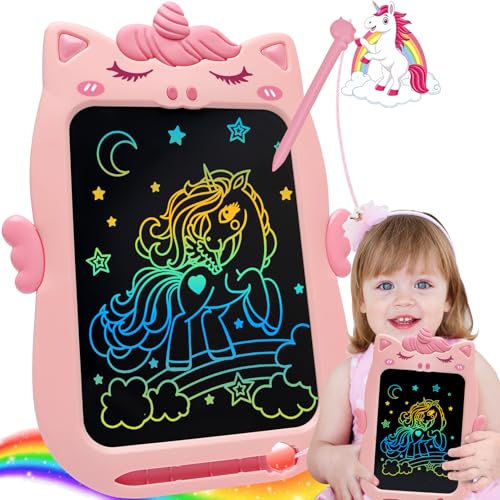
This 10-inch writing tablet emphasizes portability and structured drawing experiences. It is designed to be a frequent travel companion, enabling kids to draw, write, spell, and count on the go. The device uses a one-click erase feature and a back button unlock to ensure repeated reuse without waste. The lightweight design and eye-friendly display help reduce screen fatigue and provide a tactile alternative for toddlers who enjoy hands-on activities during travel or classroom time.
Suitable for toddlers who are transitioning from scribbles to more deliberate drawing and early literacy practice, this tablet supports imaginative play while giving parents a device that travels well and minimizes mess.
Pros: Portable, reusable, easy erasure, light weight.
Cons: Primarily a drawing tool; does not offer extensive app-based learning content.
Qiaojoy Screen-Free Montessori Learning Tablet

This screen-free Montessori-inspired tablet emphasizes hands-on learning with over 2,000 words and games across 40 themes. Designed to protect eyesight, it offers a multi-language approach with English and Spanish, enabling dual-language exposure without screen time. The device’s interactive modes promote language development, pronunciation, memory, and listening skills through thematic play, aligning well with early education goals and autism sensory play or speech therapy considerations where applicable.
Ideal for parents seeking a screen-free option that remains educational and engaging for toddlers, particularly for those who benefit from tactile, concrete learning experiences. The combination of themes and modes makes it adaptable to various ages within the 2-5 year range and beyond as a foundational language tool.
Pros: Screen-free learning, bilingual, extensive word bank and modes.
Cons: Requires hands-on engagement; fewer high-tech features than app-based tablets.
Buying Guide: Key Purchase Considerations
- Age suitability and content depth: For a 2-year-old, prioritize simple interfaces, limited on-device apps, and early literacy themes. For older toddlers, explore broader content and multi-language options.
- Parental controls and safety: Look for configurable screen time limits, content filters, and robust privacy protections to minimize exposure to inappropriate content.
- Learning modalities: A mix of language learning, memory games, basic quizzes, and interactive storytelling supports diverse development areas like vocabulary, listening, and cognitive skills.
- Language options: If bilingual exposure is a goal, assess the number of languages offered and how easily users can switch between them.
- Screen vs. screen-free: A balance between screen-based learning and non-screen activities (like drawing boards) can support healthy development and reduce screen fatigue.
- Hardware durability and portability: A rugged case, compact size, and long battery life are advantageous for toddlers who are curious and frequently on the move.
- Content ecosystem: A large library of kid-safe content and ongoing updates add long-term value, particularly for tablets with subscription services or expandable content.
- Privacy and data security: Prioritize devices with clear privacy safeguards and minimal data collection for young users.
- Value and longevity: Consider whether a device can evolve with a child’s development, offering more advanced features or modes as they grow older.
Overall, the best tablet for a 2-year-old blends gentle intro to digital learning with safety and flexibility. Depending on family preferences—language goals, screen-time balance, and portability—these five options offer a range of approaches from bilingual and content-rich tablets to screen-free drawing tools. Parents should align device choice with their child’s temperament, attention span, and learning pace to maximize educational benefit while maintaining engagement and safety.