Whether you’re building a home studio, layering synths for electronic tracks, or teaching yourself live looping, a compact synth MIDI controller can unlock rapid creativity. The following picks are ideal for producers who want tactile control, velocity-sensitive keys, drum pads, and seamless integration with popular DAWs. Each product is designed to fit with small setups yet deliver features that scale with your projects.
| Product | Key Features |
|---|---|
| Akai MPK Mini MK3 (Black) | 25 mini keys, 8 backlit pads, 8 knobs, NKS integration |
| Akai MPK Mini IV | 25 mini keys, 8 assignable knobs, color display, 8 pads |
| Akai MPK Mini Plus | 37 keys, 8 pads, CV/Gate I/O, MIDI I/O, USB-powered |
| Arturia MiniLab 3 | 25 keys, 8 pads, all-in-one software bundle |
| M-AUDIO Keystation 49 MK3 | 49 full-size keys, assignable controls, bus-powered |
The following sections highlight five synth-focused MIDI controllers that cover a range of needs—from ultra-compact portability to more expressive 49-key layouts—so you can pick the best fit for your workflow.
Akai MPK Mini MK3 25 Key Controller (Black)

The Akai MPK Mini MK3 is a compact USB-powered MIDI keyboard designed for portable studio setups. It features 25 velocity-sensitive mini keys, eight backlit drum pads, and eight assignable knobs, enabling quick beat making and melody crafting on the go. A four-way thumbstick provides dynamic pitch and modulation control, while the built-in arpeggiator offers adjustable resolution, range, and modes. With Native Kontrol Standard (NKS) integration, users can Kontrol compatible virtual instruments directly from the device, streamlining performance and production workflows in Ableton, FL Studio, or Logic Pro.
Akai MPK Mini MK3 (Black) — NKS Version
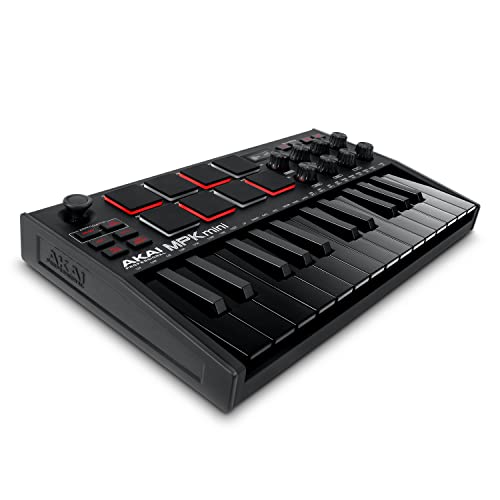
This variant mirrors the MK3 backbone with a sleek black finish. It carries the same 25 mini keys, 8 pads, and 8 knobs, plus the motion of the thumbstick and arpeggiator. NKS compatibility enables a smoother workflow when pairing with Native Instruments software and other NKS-enabled sound libraries. The compact footprint makes it ideal for travelers or desks with limited space, while still offering essential hands-on control for electronic keys, beats, and live tweaks.
Akai MPK Mini IV USB-C MIDI Keyboard Controller

The MPK Mini IV advances the MPK line with a modern USB-C connection and optimized keys for studio or beat production. It integrates 25 mini velocity-sensitive keys, 8 assignable 360° knobs, a vivid full-color screen, and a push/turn encoder for direct access to settings, presets, and DAW functions—no computer-reach required. The 8 RGB-propelled MPC-style pads provide responsive finger drumming with robust visual feedback, making it a versatile choice for performance and production in compact spaces or on the road.
Akai MPK Mini Plus — 37 Key USB MIDI Controller

The MPK Mini Plus expands the keyboard range to 37 mini keys, maintaining the same beat-centric pad layout with eight MPC pads and a range of I/O options, including MIDI/CV/Gate. The device supports USB power and integrates with Native Instruments sound packages via NKS. This model suits producers who want more melodic range without increasing the footprint, enabling lush chord work and more expressive melodic lines while remaining portable for live setups or small studios.
Arturia MiniLab 3 — 25 Keys With All-In-One Software

Arturia MiniLab 3 is a universal MIDI controller designed to integrate smoothly with modern production workflows. It offers 25 velocity-sensitive keys, eight multi-color pads, and an all-in-one software package that includes instrument plugins and effects. The controller emphasizes an intuitive workflow for arranging and manipulating sounds, with tactile knobs and drums pads that adapt to your style. Its compact design suits desk setups or portable studios where hands-on control across software instruments is essential.
Akai MPK Mini MK3 (Grey) — NKS Integration

This grey variant of the MPK Mini MK3 maintains Akai’s core feature set: 25 velocity-sensitive keys, 8 backlit pads, 8 knobs, a four-way thumbstick for pitch/modulation, and an arpeggiator with adjustable settings. It emphasizes portability without sacrificing performance. NKS integration allows direct control of NI and compatible soft synths, making it a robust option for traveling producers who still require deep integration with their software environments.
M-AUDIO Keystation 49 MK3 — Full-Size Keys

The M-AUDIO Keystation 49 MK3 offers a larger 49-key, full-size keyboard experience with assignable controls, pitch and modulation wheels, sustain input, and a straightforward plug-and-play setup. It’s ideal for players who want a more expressive range for melodies and basslines while keeping a simple, reliable interface. The keyboard is bus-powered and compatible with a range of DAWs, supporting quick integration into diverse production pipelines.
Akai APC Key 25 MK2 — Clip Launching with Ableton
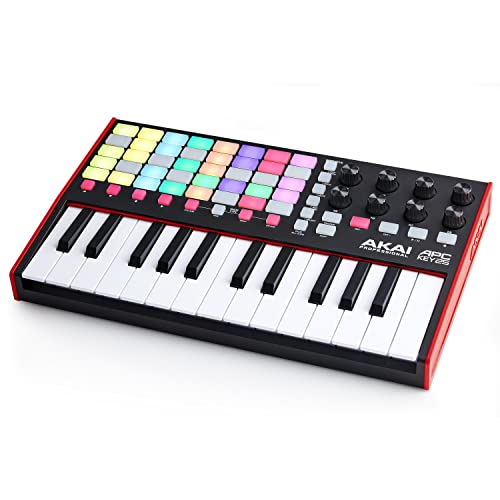
While primarily designed for clip launching in Ableton Live, the APC Key 25 MK2 includes a built-in 25-note synthesizer keyboard with 40 RGB pads and eight rotary knobs. It provides tight Ableton integration and a ready-to-run environment for live performance and ideas capture. The device’s compact footprint and color feedback make it a solid choice for performers and producers who rely on clip-based workflows.
Buying Guide
Key purchase considerations help determine the best synth MIDI controller for your needs:
- Keyboard size and feel: If you primarily play melodies and chords, 37 or 49 keys provide more expressing range than 25 keys. Velocity sensitivity and key action influence your playing style.
- Pads and hands-on control: Pads are essential for beat making and finger drumming. Look for pads that are velocity- and pressure-sensitive for nuanced performance.
- Knobs, faders, and wheels: A mix of assignable knobs, faders, and pitch/mod wheels enables real-time control over synths and DAW parameters without a mouse.
- DAW compatibility and software bundles: NKS or direct DAW integration can streamline workflows. Consider bundled software if you’re starting fresh.
- Connectivity and power: USB-powered units are travel-friendly, while USB-C supports modern devices. Some models offer CV/Gate I/O for modular setups.
- Portability vs. expandability: Smaller controllers fit tight spaces; larger layouts like 49-key keyboards expand melodic capability but take more desk space.
In evaluating these options, consider how you work most often—on a portable setup for gigs or a fixed studio arrangement. For travel-friendly control with robust software integration, Akai MPK Mini MK3 variants stand out. For a slightly larger keyboard with comprehensive software bundles and a user-friendly flow, Arturia MiniLab 3 is compelling. The M-AUDIO Keystation 49 MK3 offers an approachable experience for players prioritizing full-size keys, while the APC Key 25 MK2 provides a clip-launching focus for Ableton Live users. The MPK Mini Plus adds CV/Gate I/O for experimental or modular workflows, broadening expressiveness beyond standard MIDI control.