Finding the right stylus for touch screen monitors means prioritizing precision, comfort, and compatibility. This guide highlights five top options that work well with portable monitors, laptops, tablets, and all-capacitive touch screens. Whether you’re note-taking, sketching, or annotating documents, these styluses are chosen for clarity, responsiveness, and value. Read on to see which is best for students, professionals, artists, or casual users, and how each stacks up against practical buying needs.
Overview of chosen products at a glance:
- Bopomofo Stylus (5 Pcs) – versatile 2-in-1 tips for high accuracy on touch screens. Best for creators who want multiple tip options and affordable multi-pack value.
- DAMRAPT Portable Monitor Touchscreen 15.6″ – a travel-ready touch monitor that supports active stylus input and full lamination for smooth on-screen writing. Best for mobile workers needing a dedicated touch workspace.
- MEKO 3 in 1 Stylus Pens – three-in-one tips with dual rubber tips plus a precise disc tip. Best for multi-taskers who need flexible tip options in one pen.
- ChaoQ Stylus Pen – dual-tip precision with ergonomic aluminum body. Best for general note-taking, drawing, and gaming on multiple devices.
- Magedok Portable Monitor Touchscreen – 15.6″ FHD IPS with a built-in stand and MPP stylus support. Best for students and professionals who want a complete portable display setup.
Bopomofo Stylus 5 Pcs – 2-in-1 Precision Pack

The Bopomofo Stylus set includes five color options and two tip styles, designed to replace finger input with higher sensitivity on touch screens. The kit uses a lightweight alloy body, requires no charging, and offers a comfortable grip for long writing or drawing sessions. The disc tip provides accurate marks, while the rubber tip offers a softer touch for navigation. Best for artists and doodlers who want multiple tips in one affordable package. Limitations may include tip wear with heavy use on rough surfaces.
DAMRAPT Portable Monitor Touchscreen – 15.6″ FHD

This 15.6″ travel monitor supports 10-point touch for smooth gestures and works well with active stylus input. Its full-lamination tempered glass and high-transmittance screen provide bright, accurate visuals for writing or drawing. The monitor is designed for macOS and Windows with plug-and-play simplicity, making it a practical choice for mobile professionals who need a secondary touch-enabled screen. A potential limitation is the need for compatible ports and external power in some setups.
MEKO 3 in 1 Stylus Pens – Dual Tips Plus Disc Tip
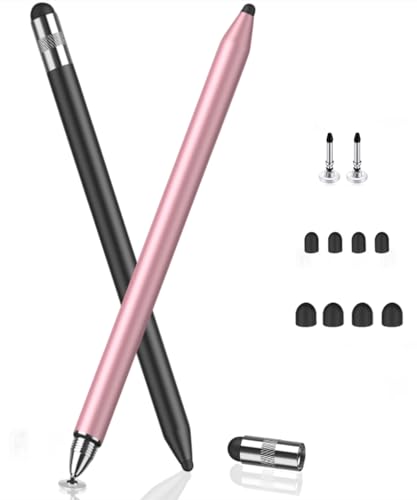
MEKO’s 3-in-1 stylus combines two rubber tip sizes with a transparent disc tip, plus a protective cap. It aims for precise, lag-free input and comfortable writing angles up to 180 degrees. The disc tip enhances visibility of contact points for accurate drawing, while the larger rubber tip is easier for broad navigation. Best for artists and note-takers who want flexibility without carrying multiple tools. A limitation is the potential for tip wear with heavy use on coarse screens.
ChaoQ Stylus Pen – Dual-Tip Precision

ChaoQ’s stylus provides two rubber tips in different sizes for precise control and smooth interaction across devices. It emphasizes ergonomic design for extended use and claims to work with iPads, iPhones, Android devices, and more. This makes it a versatile pick for users who switch between tablets and phones. Best for casual writers and students who want dependable performance without extra features. The absence of a disc tip may slightly limit fine-detail work on small screens.
Magedok Portable Monitor Touchscreen – Built-In Stand

The Magedok monitor pairs a 15.6″ FHD IPS panel with 100% sRGB color and a built-in stand, making it a strong choice for students and remote workers who need a compact, complete display with touch support. It highlights a smooth touch surface with a full-laminated screen and a 6H tempered glass top for protection. Best for those who want a ready-to-use portable workstation. A potential trade-off is weight and battery dependency when used without external power, depending on the setup.
Buying Guide: Key Considerations for Stylus and Touch Monitors
- Touch technology compatibility: Ensure the stylus works with capacitive screens and, if needed, supports active stylus input on compatible devices. A disc tip often improves precision on glass surfaces.
- Tip variety and replacement availability: If you draw or annotate frequently, consider sets with multiple tips and easy replacement options.
- Ergonomics and grip: Look for a slim, balanced body with a comfortable grip for long writing sessions. Weight distribution matters for fatigue.
- Portability versus feature set: Portable monitors with built-in stands and full-lamination screens are great for mobile work, but check weight, battery requirements, and port compatibility.
- Screen protection and durability: Tempered glass and scratch resistance extend the life of both the monitor and its touch experience.
- Device ecosystem compatibility: Verify compatibility with the operating systems you use (Windows, macOS, Android, iPadOS) and the specific devices in your workflow.
FAQ: Quick Answers for Buyers
- What is the main advantage of a 2-in-1 stylus with disc tip? Often higher precision and clearer contact cues, which helps with accurate drawing.
- Do portable monitor touchscreens require special stylus pens? Some styluses work on standard capacitive screens; others are designed for active stylus input on compatible devices. Check the product details.
- Can I use any stylus on all tablets and phones? Not always. Some devices support specific active stylus technologies; generic capacitive styluses are more universally compatible but may lack pressure sensitivity.
- Which features matter most for note-taking on a portable monitor? Look for responsive touch, disc-tip precision, comfortable grip, and a screen with good color and brightness for legible writing.
- Is a built-in stand on a portable monitor worth it? Yes, it improves ergonomics and typing posture, making long sessions more comfortable.
- What should I avoid when selecting a stylus? Avoid styluses with weak tips, poor build quality, or compatibility gaps with your primary devices.