Choosing the right studio power amplifier is essential for achieving clean dynamics, solid headroom, and dependable performance across recording, post-production, and live environments. The following selections emphasize wattage flexibility, input/output options, protection features, and ease of integration with standard studio monitors and PA systems. Each model is evaluated for compatibility with common studio workflows, from compact control rooms to larger monitoring rigs. Use this guide to compare power, versatility, and cooling features that keep your audio faithful and uninterrupted.
| Product | Brand | Watts | Key Strengths |
|---|---|---|---|
| Behringer A800 Professional 800 Watt | Behringer | 800 (8 ohms) / 2 x 400 (4 ohms) | Bridged mono, ultra-low impedance, studio/HiFi ready |
| Pyle PTA1000 Bluetooth Power Amplifier | Pyle | 1000 | Bluetooth streaming, safety turn-on delay |
| Gemini XGA-3000 | Gemini Sound | 3000W peak / 2 x 200W RMS @ 4Ω | Multiple inputs, bridge mode, protection suite |
| Rockville RPA5 | Rockville | 200W RMS @ 4Ω / 1000W peak | Built-in crossover, stereo/mono switch |
| Gemini XGA-2000 | Gemini Sound | 2000W peak / 2 x 125W RMS @ 4Ω | Wide input/output options, protection |
Behringer A800 Professional 800 Watt Power Amplifier

The Behringer A800 is a reference-class power amplifier designed for studio and post-production environments as well as live sound and HiFi applications. It offers 2 x 400 watts into 4 ohms and 800 watts into 8 ohms in bridged mono operation, enabling flexible speaker configurations. Its ultra-low impedance design supports virtually any passive speaker, including typical studio monitors. This model provides robust headroom and reliable performance in demanding monitoring and mixing consoles, while maintaining efficient cooling and protection features essential for daily usage in professional studios.
Pyle PTA1000 Professional Bluetooth Power Amplifier

The Pyle PTA1000 is a two-channel, rack-mountable bridgeable power amplifier with built-in Bluetooth streaming. It features LED indicators for channel operation and a safety-conscious power switch with a three-second delay to minimize turn-on transients, protecting connected speakers. This amplifier suits studio control rooms and small venues where wireless playback and straightforward monitoring are priorities. The device emphasizes ease of use, with clear status indicators and reliable performance across typical studio speaker systems.
Gemini XGA-3000 3000W 2-Channel Power Amplifier
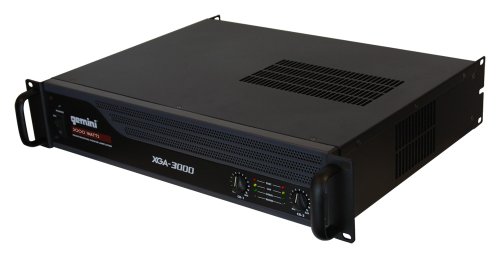
The Gemini XGA-3000 provides high peak power with 2 x 200W RMS at 4Ω stereo and 400W RMS bridged, making it suitable for DJs, PA systems, and live sound in studio-adjacent environments. It supports multiple input formats, including balanced XLR, 1/4″ TRS, and RCA jacks, and offers Speakon and binding post outputs. A comprehensive protection suite, including a limiter, DC output protection, and short-circuit protection, helps maintain speaker safety and consistent audio quality during high-demand sessions.
Rockville RPA5 2-Channel Power Amplifier
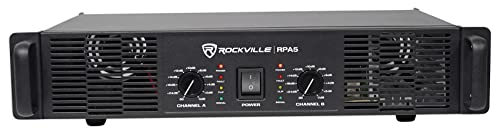
The Rockville RPA5 delivers 200W RMS per channel at 4 ohms or 400W RMS bridged at 8 ohms, with a peak output reaching 1000W. It includes a built-in crossover and a stereo/mono switch for flexibility with subwoofers and full-range monitors. Dual quiet cooling fans and IC-controlled protection circuitry provide reliable operation in compact studios or live-mound setups where space is at a premium and consistent noise performance matters.
Gemini XGA-2000 2000W Power Amplifier

The Gemini XGA-2000 provides up to 2000W peak power with 2 x 125W RMS at 4Ω stereo and 250W RMS bridged. It offers XLR and RCA inputs, Speakon outputs, and multiple protection features to maintain system integrity in busy studio environments. The unit’s compact, lightweight design makes it suitable for rack installations in homes and commercial studios where space efficiency and robust output are important.
Buying Guide: Key Considerations For Studio Power Amplifiers
- Power rating and headroom: Choose amplifiers with enough continuous wattage (RMS) for your monitor speakers and room size. Bridged mono modes can help drive high-demand loads, but ensure compatibility with your speakers’ impedance.
- Impedance and speaker compatibility: Verify that the amplifier supports your monitor or cabinet impedance (commonly 4 or 8 ohms). Ultra-low impedance or high headroom models reduce risk of clipping and tonal changes during loud passages.
- Input/output flexibility: Look for multiple input options (XLR, TRS, RCA) and outputs (Speakon, binding posts) to match your gear, including subwoofers, control rooms, and field rigs.
- Protection features: Key protections include DC offset, short-circuit, thermal protection, and limiter circuits. These features help prevent loudspeaker damage and extend amplifier life in busy studios.
- Cooling and noise: Cooling fans and heatsinks affect both performance and room noise. Consider fanless designs for quiet control rooms or units with variable-speed cooling for balancing heat and sound.
- Bluetooth and convenience features: Some models offer Bluetooth streaming and user-friendly front-panel indicators. Useful for quick DAW playback in small spaces but may be secondary to core amplification performance.
- Rack compatibility and form factor: Ensure the unit fits your rack space and aligns with your current rack gear, power distribution, and cable management strategy.
- Reliability and protection: Look for built-in protection, thermal handling, and reputable brands with service networks to minimize downtime in critical sessions.
The selections above cover a range of studio and pro-audio needs, from compact control-room setups to larger monitoring arrays and live environments. When evaluating, weigh the balance between power, connectivity, protection features, and physical footprint to ensure stable, clean amplification that preserves your mix integrity across the project workflow.