Find the right studio condenser microphone to elevate home recording, streaming, podcasts, and music productions. This guide compares five top-rated USB/XLR condensers, highlighting sound quality, noise handling, and ease of use for beginners and pros alike. Each pick balances price and performance to help you capture clear, present vocals and instrument tones in a project or home studio.
Summary Table Of Chosen Products
| Product | Brand | Connection | Best For |
|---|---|---|---|
| Audio-Technica AT2020 | Audio-Technica | XLR | Project/home studios, versatile vocal capture |
| RØDE NT1 5th Gen | RØDE | XLR/USB | Low-noise vocals, instruments, podcasts |
| MAONO PM320S | MAONO | XLR | Streaming, podcasting, voiceover |
| AKG Pro Audio P120 | AKG | XLR | Clear vocals and instruments, budget-friendly |
| Mackie EM-91C | Mackie | XLR | Professional-sounding home studios |
Audio-Technica AT2020 Cardioid Condenser Microphone
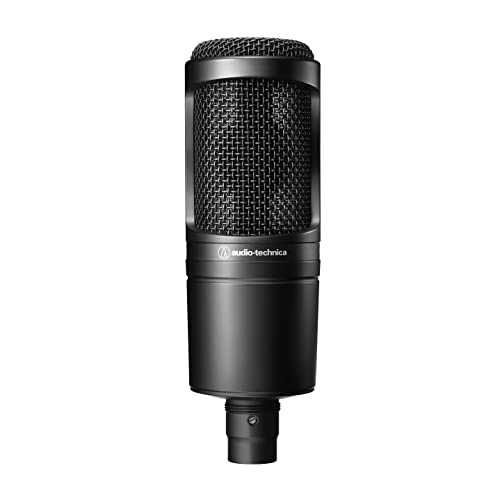
The Audio-Technica AT2020 is a budget-friendly studio condenser with a cardioid pattern designed for project and home studios. It offers a robust price/performance balance and a wide dynamic range, enabling clean vocal capture and instrument recording. Its cardioid pickup minimizes room bleed for focused performances, while its rugged construction supports long-term use in compact spaces.
RØDE NT1 5th Gen Studio Condenser Microphone

The RØDE NT1 5th Gen is a high-sensitivity large-diaphragm condenser known for ultra-low self-noise and a warm, classic sound signature. It supports both XLR connectivity for studio interfaces and USB for quick computer recording, making it suitable for vocals, acoustic guitar, piano, and podcasting. Its low-noise performance helps preserve subtle details in professional vocal takes.
MAONO PM320S XLR Condenser Microphone

The MAONO PM320S delivers a professional cardioid condenser voice with 48V phantom power support. It includes a shock mount and windscreen, reducing handling and wind noise. Designed for streaming, podcasting, and vocal recording, it offers solid transient response and wide dynamic range for a balanced, studio-ready sound in home environments.
AKG Pro Audio P120 Condenser Microphone

The AKG P120 provides a versatile and affordable option for clear vocal and instrument recording. Its low-mass diaphragm delivers accurate detail, with high SPL handling up to 150 dB, enabling clean takes of loud sources. It’s well-suited for project studios seeking dependable, general-purpose condenser performance.
MA-67 Studio Condenser Microphone

The MA-67 uses a 34mm gold capsule designed for rich vocal detail and warmth. It’s a dedicated condenser with phantom power requirements and includes a hydro pop filter, shock mount, and standard XLR connectivity. This bundle aims at home studios and small production setups seeking a refined vocal tone.
MAONO A04 Gen2 USB/XLR Condenser

This MAONO model combines USB and XLR connectivity for flexible workflow. It delivers a studio-quality signal with a 192kHz/24-bit capture rate and software control for voice, podcasting, and music. The dual-mode design supports easy plug-and-play recording or professional interface use with phantom power when needed.
FIFINE Studio Condenser USB Microphone Kit

The FIFINE T669-style kit provides a USB condenser microphone with an adjustable boom arm and shock mount, making it a complete recording setup for vocals, streaming, and YouTube content. Its cardioid pattern helps isolate the voice from ambient noise, while the included accessories support a straightforward desktop arrangement.
Mackie EM-Series EM-91C

The Mackie EM-91C is a versatile large-diaphragm condenser designed for professional-sounding home studios. It emphasizes durable construction and reliable performance for vocal tracking, acoustic instruments, and podcasts, offering a balanced response suitable for varied recording scenarios.
Buying Guide: Key Purchase Considerations
Consider the microphone’s intended use, room acoustics, and your recording chain to pick the best fit. Here are essential factors to compare:
- Connection type: XLR mics deliver higher-quality, expandable setups with audio interfaces; USB mics are plug-and-play for quick recordings.
- Polar pattern: Cardioid mics focus on the source in front of the mic and reduce room noise; multi-pattern mics offer more versatility but are typically pricier.
- Self-noise and SPL handling: Lower self-noise suits quiet vocal work; higher SPL tolerance suits loud sources or percussion without distortion.
- Diaphragm size: Large-diaphragm capsules emphasize warmth and fullness, often preferred for vocals; small-diaphragm mics capture transient detail for instruments.
- Phantom power: Ensure your audio interface or mixer provides 48V phantom power if required by the mic.
- Included accessories: Shock mounts, pop filters, and stands improve sound isolation and reduce plosive distortion.
- Software and workflow: USB/XLR dual-mode mics offer flexibility, while some models include software that helps tailor tone and noise reduction.
- Room treatment: Even budget mics benefit from proper acoustic treatment, mic placement, and a treated recording space.
When selecting a microphone, align features with your primary tasks, such as voiceover work, singing, podcasting, or instrument capture. For beginners, a reliable cardioid condenser with a straightforward USB or XLR path can cover many uses. For more advanced setups, investing in a microphone with low self-noise and robust build quality may deliver longer-term value and better results across varied projects.