Discover the best stand-alone digital multitrack recorders for home studios, classrooms, or on-the-go performances. This guide highlights top models, who they’re best for, and what to consider before you buy. Whether you need simple one-button recording or a full 24-track workstation, these options cover diverse needs—from beginners seeking easy workflows to professionals pursuing studio-ready capabilities.
Buyer profiles at a glance:
– Beginners and hobbyists: easy interfaces, built-in effects, and reliable playback.
– Live performers and bands: multiple inputs, direct SD recording, flexible monitor mixes.
– Small studios: better integration with DAWs and analog-to-digital workflows.
– Students and educators: compact, portable, and affordable options for lectures and field work.
| Product | Best For | |
|---|---|---|
| Boss BR-600 | 8 playback tracks, 64 V-Tracks, built-in guitar/vocal effects | Songwriters and performers needing built-in effects |
| Zoom LiveTrak L-20 | 22-channel, 6 independent monitor mixes, USB audio interface | Live bands and multi-track projects with personalized monitor mixes |
| TASCAM Studio Bridge | 24-track onboard recorder, USB audio interface, SDXC | Studio-centric tracking with DAW or DAWless setups |
| Tonfarb 64GB Voice Recorder | 64GB internal memory, long battery life, simple one-button operation | Classroom, field recordings, interviews on the go |
| Sony ICD-PX370 | MP3 recording, USB transfer, long battery life | Everyday note-takers and students needing reliable portability |
Boss BR-600 Digital Multitrack Recorder

Best for solo artists and bedroom studios that value built-in processing. The Boss BR-600 provides 8 simultaneous playback tracks with 64 V-Tracks for organization and project management. It includes a CompactFlash memory slot for recording media and ships with a 128MB card, making it practical right out of the box. Its guitar and vocal effects, including pitch correction, help shape ideas quickly without needing external processors.
Who it’s best for: solo singers, guitarist-songwriters, and small studios seeking an all-in-one device with integrated effects. Why selected: it combines straightforward multitrack recording with Boss-sourced effects, reducing the need for external gear in simple projects. Caution: limited onboard track count for complex projects, so consider a workflow that favors compact demos rather than large-scale sessions.
Zoom LiveTrak L-20 Mixer/Multitrack Recorder
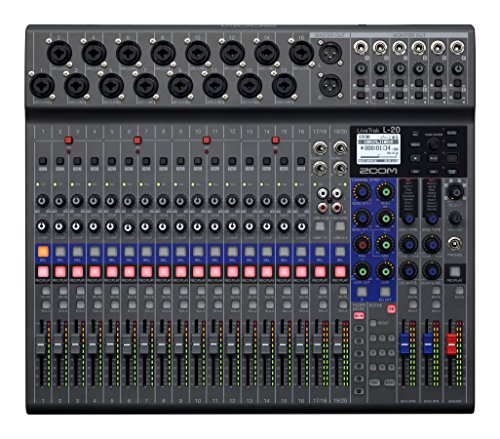
The LiveTrak L-20 is designed for live bands and larger rehearsals. It records up to 22 tracks at 24-bit/96kHz directly to an SD card and offers six independent monitor mixes. This makes it possible for each performer to have a personalized feed during rehearsals and performances. It also includes twenty onboard effects, and -128 dBu EIN preamps with up to +60 dB of gain, ensuring clean, versatile signal handling across all channels.
Who it’s best for: mid-sized ensembles, live sound crews, and venues needing flexible monitoring. Why selected: the combination of multi-track live recording and individual monitor control supports both performance and pre/post-production work. Caution: the unit’s feature set can be overwhelming for beginners due to the broad routing options; consider a step-by-step setup guide.
TASCAM Studio Bridge 24-Channel

The Studio Bridge acts as a bridge between analog or hybrid setups and digital recording. It offers a 24-track onboard multitrack recorder with SDXC media and double as a 24-in/24-out USB audio interface. This makes it ideal for studios maintaining analog consoles while tracking to a DAW or the on-board recorder. Tracks recorded onboard can be returned to an analog mixer for final summing, enabling warm, hybrid productions.
Who it’s best for: studios that want a seamless analog-to-digital workflow and flexible routing. Why selected: it preserves analog tonal qualities while providing robust digital recording options. Caution: if you primarily need compact portability, this device is larger and heavier than pocket-friendly recorders.
Tonfarb 64GB Digital Voice Recorder

Tonfarb offers a portable and high-capacity option for field work, lectures, and interviews. With 64GB of internal memory and long-lasting battery life, this device supports up to 4,600 hours of recordings and USB connectivity for easy file transfers. It features PCM recording with automatic noise reduction to improve clarity in challenging environments.
Who it’s best for: students, journalists, and professionals needing a reliable, easy-to-use recorder on the go. Why selected: strong battery life and large internal storage simplify long sessions without frequent file management. Caution: it is more focused on voice capture than music production, so not ideal for full-band multitrack projects.
Sony ICD-PX370 Mono Digital Voice Recorder

The Sony ICD-PX370 offers reliable MP3 recording with long battery life and a built-in USB transfer method. It is compact and easy to carry, making it a suitable everyday recorder for quick notes, classroom lectures, or personal interviews.
Who it’s best for: students, field reporters, and anyone needing a dependable pocket recorder. Why selected: simplicity and endurance make it a dependable backup option in everyday workflows. Caution: mono recording limits stereo capture when used for music projects or interview scenarios requiring spatial detail.
Zoom Q8 Digital Multitrack Recorder

The Zoom Q8 combines video and audio capture capabilities for compact multimedia projects. It is suitable for field recording, vlogs, and small-scale productions where both audio and video are needed. Note that some listings mention limited warranty or regional version considerations, which can affect support in particular regions.
Who it’s best for: content creators who require a portable all-in-one device for audio and video. Why selected: versatile form factor and in-device recording options. Caution: ensure compatibility with your preferred post-production setup if you rely on specific plug-ins or DAWs, as some regional restrictions may apply.
Buying Guide
Key considerations when choosing a stand-alone digital multitrack recorder:
- Track count and routing: Decide how many simultaneous tracks you need and whether you require multiple monitor mixes or direct USB/DAW integration.
- Storage and media: Look for built-in memory or media card support that fits your project length and workflow. Offload speed matters for smooth recording.
- Onboard effects and preamps: If you want quick demos or live tweaks without external gear, prioritize devices with usable built-in effects and preamps with adequate gain.
- Portability and footprint: For fieldwork or on-the-go use, lighter units with long battery life are advantageous; for home studios, a larger unit with more I/O may be preferable.
- DAW integration: If you plan to transfer tracks to a computer, ensure reliable USB or SD transfer, driver compatibility, and straightforward file formats.
- Workflows for live vs. studio: Live recording often requires independent monitor mixes and low-latency monitoring, whereas studio sessions may focus on precision editing and high track counts.
- Quality vs. simplicity: Beginners benefit from intuitive interfaces, while professionals may prioritize expandability, routing flexibility, and higher-end converters.
FAQ
- What is a stand-alone digital multitrack recorder?
A: It is a portable or desktop device that records multiple audio tracks internally or to removable media without needing a computer. - Do I need built-in effects to use these devices effectively?
A: Not strictly, but built-in effects can speed up demo creation and provide immediate sound shaping without extra gear. - Is USB audio interface functionality important?
A: Yes for projects that require transferring multitrack files to a computer or integrating with a DAW during production. - What should I consider for live performances?
A: Independent monitor mixes, reliable preamps, and stable SD card recording are important for on-stage use. - Can I use these recorders for field interviews?
A: Yes, especially models with long battery life and high storage capacity designed for voice capture. - Are higher track counts always better?
A: Not necessarily; higher track counts are beneficial for complex sessions but increase setup and workflow complexity.