Answering the needs of synthesizer players, producers, and home studio hobbyists, these five speakers provide clear, accurate sound across various budgets and setups. Choose this list if you want near-field accuracy, versatile inputs, and easy desktop integration. The top picks cover compact powered monitors, Bluetooth-enabled bookshelf options, and PA-style speakers for broader performance environments.
Buyer quick reference table:
| Product | Best For | Key Benefit |
|---|---|---|
| PreSonus Eris 3.5 | Near-field music production | Compact 50W Class AB with tight bass |
| Ortizan C7 | Budget studio monitoring | 24-bit DAC, multiple inputs, clear mids |
| OHAYO 60W | Desktop gaming and music | 30W x 2, MDF enclosure, sub depth |
| Saiyin 40W x 2 | Home theater and TV/listening | Subwoofer out, Bluetooth, optical/aux |
| Mackie CR3.5 | All-around desktop use | Tone knob, TRS/RCA/3.5mm inputs |
PreSonus Eris 3.5 Studio Monitors, Pair

Best for near-field music production and desktop listening, the PreSonus Eris 3.5 delivers honest, studio-quality sound with a tight low end. Its 50-watt dual amplification (25W per speaker) maintains balance without sacrificing detail, making it ideal for synthesizers, sample work, and multimedia references. The woven-composite woofer design contributes to a clean overall sound with a noticeable but controlled bass presence.
Who it’s best for: compact producers and keyboard players who need accurate monitoring in a small desk setup. Why selected: its combination of accuracy, modest footprint, and affordable power makes it a strong baseline for synth-driven projects. Caution: as a near-field monitor, it is optimized for close listening; in larger rooms, bass confidence may feel limited compared to larger monitors.
Coolmusic DM20 20W Personal Monitor Amplifier
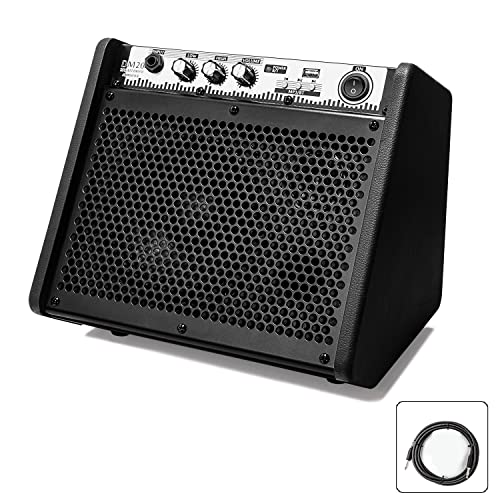
Best for portable practice and small gigs with Bluetooth-enabled ease, the Coolmusic DM20 pairs a 6.5-inch woofer and 2-inch tweeter with Bluetooth and a compact footprint. It’s useful when a synth player needs a simple, active system for rehearsal spaces or portable setups, with USB interface-friendly operation and easy device pairing.
Who it’s best for: players seeking a self-contained practice amp with Bluetooth and USB connectivity. Why selected: its simple, all-in-one design reduces the need for extra gear. Caution: power and bass impact are moderate; not ideal for critical studio monitoring or large rooms.
Ortizan C7 Dual-Mode 2.0 Studio Monitors

Best for versatile listening with wired and wireless options, Ortizan C7 offers multiple inputs, including RCA and Bluetooth 5.3, plus a 24-bit DAC via USB. Its 3.5-inch woofer and 0.75-inch silk-dome tweeter aim for clear mids and shimmering highs, with a design that supports precise audio monitoring and flexible device pairing.
Who it’s best for: project studios and multimedia rooms needing flexible input options. Why selected: the blend of wired and wireless connectivity paired with a DAC makes it a practical all-around choice. Caution: compact drivers may limit deep bass compared with larger monitors in bass-heavy genres.
OHAYO 60W Computer Speakers

Best for desktop gaming and music alike, the OHAYO system offers 60W total power, a 0.75-inch carbon fiber silk dome tweeter, and a 3-inch full-range driver. The rear bass port enhances low-end response, while an integrated sound card provides smooth, detailed playback for mixed-media use on desktops or laptops.
Who it’s best for: users who want a larger desktop sound without external subwoofers. Why selected: strong on-density sound and easy front-panel volume control. Caution: integrated sound card varies in performance with source quality; better with clean digital sources.
Saiyin Bluetooth Bookshelf Speakers

Best for home theater and multimedia listening, the Saiyin 40W x 2 system combines Bluetooth 5.3 with a 4-inch woofer and a 0.5-inch silk dome tweeter. Subwoofer out supports adding deeper bass, and optical/aux inputs provide flexible connections to TVs and turntables with DAC-enabled setups.
Who it’s best for: users wanting wireless streaming with additional subwoofer options for a fuller room experience. Why selected: strong feature set at a reasonable price for Bluetooth-enabled bookshelf speakers. Caution: Bluetooth latency may be a consideration for video syncing; wired connections are more reliable for precise timing.
Mackie CR3.5 Creative Reference Monitors

Best for all-around desktop use, the Mackie CR3.5 combines studio-grade sound with a tone knob to tailor the response for gaming, casual listening, or music production. It offers TRS and RCA connectivity, plus a built-in headphone output for silent listening or late-night sessions. The tone knob allows a quick bass boost or extra high-end sparkle as needed.
Who it’s best for: users who want an easy, adjustable, all-in-one desktop monitor setup. Why selected: versatile inputs and a dedicated tone control help adapt to multiple tasks. Caution: not as compact or precise as dedicated near-field monitors for critical mixing; more suited to casual monitoring and multimedia use.
Buying Guide
What to consider when choosing a speaker for a synthesizer setup:
- Room size and listening distance: Near-field monitors shine in small rooms or close distances; larger rooms benefit from higher power or dedicated subs.
- Input and connectivity: Check for your preferred links (TRS, RCA, optical, Bluetooth, USB). A DAC or USB input improves digital reliability for computer-based synth work.
- Frequency response and bass extension: If you work with bass-heavy synths or sub-bass patches, look for larger woofer sizes or speakers with subwoofer outputs.
- Tonality adjustment: Some monitors include a tone knob or EQ controls; these help tailor the sound to your room acoustics or personal taste.
- Portability vs. accuracy: Small desktop monitors are convenient but may sacrifice deep bass and low-end authority. Consider a model with a sub-out if you anticipate growing your setup.
- Budget and future-proofing: A mid-range pair with solid DACs and multiple inputs often offers the best balance between performance and future expandability.
Frequently Asked Questions
- What is near-field monitoring, and why is it important for synthesizers? Near-field monitors are designed to be listened to from a short distance, reducing the influence of room reflections and enabling more accurate patching of synths and effects.
- Do I need a subwoofer with these monitors? If your synth patches include substantial low-end content, adding a subwoofer can extend bass beyond the monitors’ capabilities.
- Can Bluetooth speakers be used for studio monitoring? Bluetooth speakers are convenient, but wired monitors typically offer lower latency and more accurate timing, which is important for precise synth work.
- Is a DAC necessary for USB inputs? A built-in DAC is beneficial for digital sources, ensuring clean signal conversion from your computer or audio interface to the speakers.
- What should I consider when pairing different speakers with a synthesizer? Match the speaker’s frequency response to your room and ensure input compatibility with your synth’s outputs or your audio interface.
- Are these speakers suitable for gaming or multimedia beyond music? Several models offer strong general-purpose performance for gaming, movies, and casual listening, thanks to flexible inputs and enhanced bass profiles.