If you’re assembling a compact, budget-friendly setup for podcasts, live streams, karaoke, or on-the-go recordings, a small mixing console can be the core of your workflow. This guide highlights five compact mixers that balance portability, connectivity, and practical features. Each selection supports multi-device inputs, USB/Bluetooth options, and essential effects or recording capabilities to fit small spaces without sacrificing sound quality.
Summary of chosen products:
| Product | Brand | Channels | Key Features | Image |
|---|---|---|---|---|
| 6 Channel Audio Interface Sound Board Mixing Console | Riworal | 6 | Built-in Bluetooth, 48V phantom, DSP reverb, USB, U drive playback |  |
| Aveek Audio Mixer 4 Channel | Aveek | 4 | USB drive playback, Bluetooth, PC recording chip |  |
| Aveek Professional Audio Mixer 5 Channel | Aveek | 5 | 48V phantom power, USB/Bluetooth, USB recording |  |
| Pyle Professional 6 Channel Mixer | Pyle | 6 | USB/MP3, Bluetooth streaming, 48V phantom, 3-band EQ | 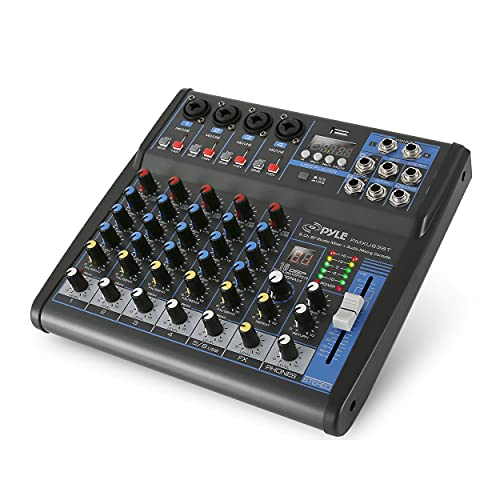 |
| Depusheng M4 Portable 4-Channel Mixer | Depusheng | 4 | Bluetooth, USB audio interface, 48V phantom | 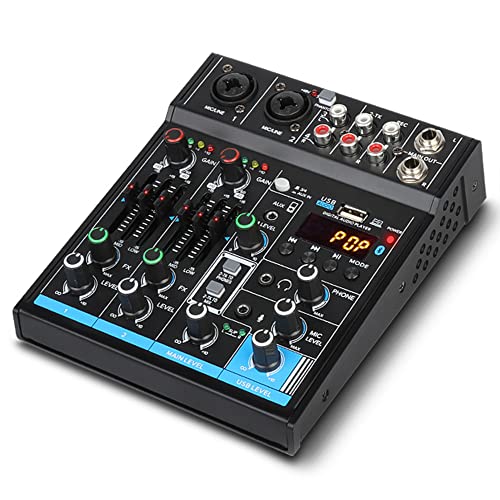 |
Riworal 6 Channel Bluetooth Mixing Console
The Riworal 6-channel mixer combines analog input flexibility with modern digital features. It includes built-in Bluetooth for wireless playback, DSP reverberation to add space to vocal tracks, and a USB interface for simple computer or recorder connections. A 48V phantom power option supports condenser microphones on XLR inputs, expanding its use in home studios and live performances. This compact unit is designed for karaoke, studio streaming, and quick setups where traditional analog reliability remains essential.
Aveek 4 Channel USB/Bluetooth Mixer
This Aveek model focuses on compact, PC-friendly recording with a built-in DSP and a plug-and-play workflow. It supports two XLR/6.35mm inputs plus stereo line connections, making it suitable for small home studios, podcasts, and on-the-go recording setups. USB drive compatibility enables direct MP3 playback and recording, while Bluetooth offers wireless music streaming for background tracks or inspiration during sessions.
Aveek 5 Channel Digital USB/Bluetooth Mixer
The Aveek 5-channel mixer adds a dedicated digital workflow with a built-in 48V phantom power option for condenser mics. It emphasizes flexibility for recording, streaming, and live performances, with USB and Bluetooth connectivity to mix audio from multiple sources. The device supports simple plug-and-play recording to a computer or USB drive, making it a practical choice for podcasters and streamers who need a small, reliable console.
Pyle 6 Channel Bluetooth DJ Mixer
The Pyle PMXU63BT mixer emphasizes wireless streaming and MP3 compatibility in a compact package. It supports USB/flash drive inputs for media playback, plus microphone and stereo line inputs with +48V phantom power on select channels. Its integrated 3-band EQ across channels helps tailor the sound for live performances, small venues, or home studios where space is at a premium.
Depusheng M4 Portable 4-Channel Mixer
The Depusheng M4 delivers a compact, portable solution with four channels, Bluetooth wireless streaming, and USB audio interface capabilities for direct PC recording. It includes 48V phantom power to support condenser mics and a straightforward layout designed for quick setups, making it suitable for small podcasts, live webcasts, and home studios where portability matters most.
Buying Guide: Key Purchase Considerations
Channel count and inputs: Decide how many microphones and line sources you need. Look for models with XLR inputs for mics, 1/4-inch line jacks for guitars or keyboards, and RCA or Bluetooth options for consumer devices. For future growth, consider mixers with at least four channels and phantom power on dedicated inputs.
Connectivity and workflow: USB interfaces enable direct PC recording, while Bluetooth supports wireless playback. USB drive compatibility is a plus for quick MP3 playback and simple archiving. Ensure the mixer’s output configuration matches your speakers or interface (main outs, monitor outs, and headphone jack).
Built-in effects and DSP: DSP reverb, EQ per channel, and master EQ help shape tone without needing extra outboard gear. If you perform live or in podcasts, effects can enhance vocal presence and overall mix clarity.
Portability and build: For on-the-go usage, prioritize compact form factors and all-metal or rugged housings. Battery-powered or small-footprint options can simplify travel and small-space setups.
Ease of use and compatibility: Plug-and-play recording and straightforward control layouts reduce setup time. Check operating system compatibility, software integration (DAWs like Logic Pro X or Audacity), and whether the mixer supports your preferred workflow.
Budget and value: Balance features against cost. A 4- to 6-channel mixer with USB/Bluetooth, phantom power, and basic effects often delivers the best value for home studios and streaming setups without overpaying for features you won’t use.
Use-case alignment: If you primarily stream or record podcasts, prioritize USB recording, talk-focused EQ, and reliable mic input purity. For music production, emphasize higher headroom, wider input compatibility, and flexible routing for monitors and headphones.