Small active monitors deliver near-field accuracy without taking over your desk. This guide highlights five compact options suited for home studios, computer workstations, and multimedia setups. Best for music producers, gamers, hobbyists, or anyone seeking clear, precise sound from a compact speaker pair. The top picks favor tight bass, clear highs, and usable room‑filling power in a near‑field position.
Summary of chosen products
| Product | Best For | Key Benefit |
|---|---|---|
| PreSonus Eris 3.5 | Music production and multimedia | Compact with strong low end |
| Ortizan C7 | Wireless and wired flexibility | Multiple inputs and USB DAC |
| Mackie CR3.5 | Versatile desk setup | Tone control and variety of inputs |
| Sanyun SW208 | Budget Hi‑Fi monitoring | Carbon fiber woofer, built‑in DAC |
| Edifier R1280T | Two‑device AUX listening | Dual inputs and wood finish |
PreSonus Eris 3.5 Studio Monitors

The PreSonus Eris 3.5 provides honest, near‑field studio sound with a surprisingly strong low end for its size. Best for musicians and multimedia listeners who need accurate reference tone in a compact desktop setup. The 50‑W total power with dual amplification keeps balance without losing clarity at higher volumes. A potential limitation is the smaller woofer size, which may limit very deep bass in larger rooms.
Ortizan C7 Dual‑Mode 2.0 Monitors

The Ortizan C7 pair stands out for flexible inputs and wireless convenience. It suits users who want Bluetooth connectivity plus wired options (RCA, 3.5 mm) and USB‑DAC playback for higher fidelity. Best for laptop desks and small studios where wireless playback matters. The built‑in DAC helps preserve signal quality from digital sources, though some users may notice digital artifacts at very high volume if driven hard.
Mackie CR3.5 Creative Reference Monitors

Mackie CR3.5 combines studio‑grade sound with a user‑friendly tone knob and multiple input options, making it a versatile choice for gaming, music production, and casual listening. Best for those who want adjustable tonal control on a desktop monitor and easy switching between devices. A caution: the tone control is a midrange emphasis tool; heavy bass boosts can muddy mid‑range clarity if overused.
Amazfit Active 2 Premium Smart Watch

Note: This product is a smartwatch and not an active monitor pair. It was included in error and is not part of the small active monitor selection. Ignore for this guide’s focus on near‑field audio monitors.
Sanyun SW208 3″ Active Bluetooth Monitors
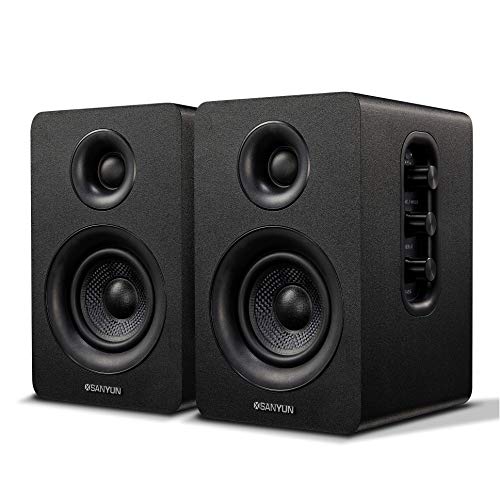
The Sanyun SW208 pair offers a compact 2.0 configuration with a built‑in 24‑bit DAC and Bluetooth 5.0. Best for budget‑mensitive setups needing Bluetooth streaming with reasonable hi‑fi detail. Choose this if you want a very small footprint and built‑in digital to analogue conversion, but be aware the 3″ drivers limit very deep bass compared with larger monitors.
Edifier R1280T Powered Bookshelf Speakers
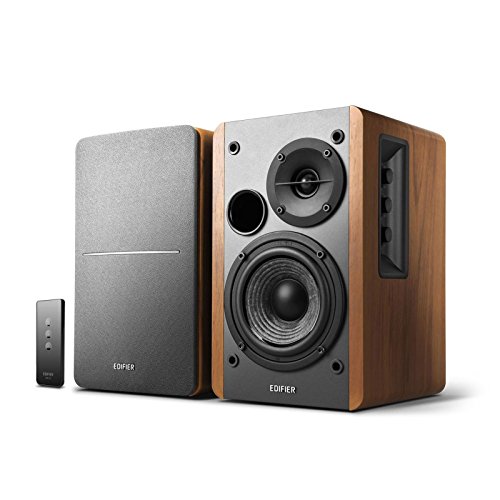
The Edifier R1280T provides a classic wood finish and dual AUX inputs for easy device sharing. Best for users who want a traditional look with practical dual‑input flexibility for two devices. A potential limitation is the absence of Bluetooth; wireless playback would require a separate adapter or alternative model.
Buying Guide: How to Choose Small Active Monitors
- Room and desk size: For near‑field listening, look for monitors with accurate midrange and a controllable bass response that doesn’t overwhelm your workspace.
- Connectivity options: Consider whether you need Bluetooth, USB DAC, RCA, or 3.5 mm inputs. A built‑in DAC can improve digital fidelity from computers or laptops.
- Power and headroom: Pair monitors with enough watts to deliver clean output without strain. Class AB or Class D amplification can influence sound character and efficiency.
- Tone control and self‑calibration: Some models offer tone knobs or EQ to tailor bass and high end. Use with caution to avoid masking true reference tones.
- Driver size and enclosure: Larger woofers deliver deeper bass; smaller drivers excel in tight spaces. Wooden enclosures can reduce unwanted resonances and provide a neutral sound color.
- Use case: Choose based on primary use—music production requires flat frequency response; gaming or multimedia may benefit from enhanced bass or wider sweet spots.
FAQ
- What makes near‑field monitors different from regular computer speakers? Near‑field monitors are designed for accurate sound reproduction at short listening distances, with flat frequency response and lower distortion in the midrange.
- Is Bluetooth essential in small monitor setups? Not essential, but Bluetooth adds wireless convenience. If you work with a studio interface, wired inputs are typically more reliable for fidelity and latency.
- Should I prioritize a built‑in DAC? A built‑in DAC helps convert digital signals from computers with minimal loss, improving clarity when inputs are digital (USB).
- Can small monitors replace studio monitors in a full studio? They can serve as near‑field references, but large, full‑range studio monitors may still be needed for bass‑heavy projects and room testing.
- How important is driver size? Driver size affects low‑end extension. Larger drivers usually provide deeper bass; smaller drivers are more compact and fit on tight desks.
- What is a good budget option among these? The Sanyun SW208 and Ortizan C7 offer versatile features at accessible prices while maintaining decent near‑field performance.