Farms require reliable surveillance that works in remote locations, runs on solar or cellular power, and delivers clear day and night footage. The following five cameras are among the top choices for agricultural properties, offering solar power, 4G LTE data plans, color night vision, motion alerts, and weatherproof durability. This guide compares key features to help you decide which system best fits your farm’s layout and security goals.
| Product | Brand | Power & Connectivity | Night Vision | Special Features |
|---|---|---|---|---|
| Gianteye 2K Solar Security Cameras Wireless Outdoor | Gianteye | Solar & Battery | Color Night Vision | Human detection, 360° coverage, IP65 |
| 4G LTE SeeVision Cellular Security Camera | SeeVision | 4G LTE (SIM), Solar | Color Night Vision | 360° PTZ, siren & two-way audio |
| ELYSOO 4G LTE Cellular Security Cameras Outdoor | ELYSOO | 4G LTE with SIM | 2K Color Night Vision | 2-pack, 360° view, IP65 |
| Oculview Cellular Trail Cameras | Oculview | 4G LTE with built-in SIM | 2K Live Night Vision | 360° live feed, solar power |
| Tefrio No WiFi Security Camera | Tefrio | 4G LTE with SIM | Color Night Vision | 360° live view, unlimited data options |
The following sections highlight five top options tailored for farm security. Each entry includes a brief overview, key strengths, and practical considerations to help you compare coverage, power needs, data plans, and installation flexibility.
Gianteye 2K Solar Security Cameras

The Gianteye system delivers crisp 2304x1296p 2K video with color night vision enhanced by motion-triggered spotlight technology. It runs on solar power with an included panel and a built-in backup battery to maintain 24/7 protection during cloudy spells or storms. Remote pan, tilt, and digital zoom through a user app enable wide-area monitoring. IP65 weather resistance makes it suitable for year-round outdoor use, including rain, snow, and dust. This setup is ideal for large paddocks, outbuildings, and perimeter fencing where cable runs are impractical.
4G LTE SeeVision Cellular Security Camera

SeeVision combines a 3MP 2K HD color night vision with a 360° pan and tilt to maximize farm coverage. It operates without WiFi, powered by solar with a built-in 10,000mAh battery, and a 5W solar panel. Its IP66 waterproof rating helps it withstand harsh weather, making it suitable for barns, ranches, and remote storage facilities. The camera also features two-way audio and a multi-siren alert system, enabling real-time deterrence and communication with workers or visitors on site.
ELYSOO 4G LTE Cellular Security Cameras Outdoor
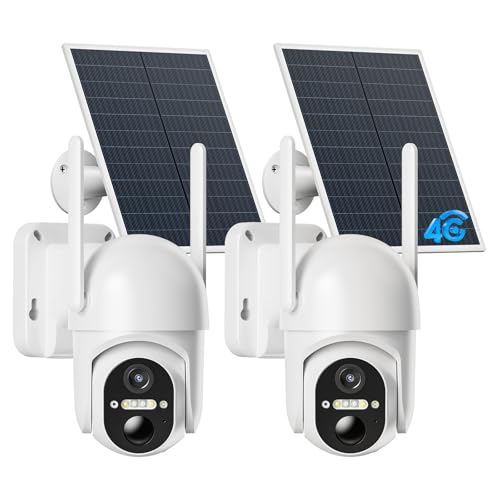
ELYSOO provides a 2-pack of 4G LTE security cameras with 2K color night vision and a full 360° viewing capability. Includes a SIM card option and supports Verizon, AT&T, and T-Mobile networks. Solar power and a rechargeable battery ensure reliable operation in off-grid locations such as pastures, machine houses, or remote storage areas. IP65-rated construction supports all-season performance, while the dual-camera package offers broader field coverage for larger properties.
Oculview Cellular Trail Cameras

Oculview emphasizes unlimited 4G LTE data via built-in SIM, with a solar-assisted power setup that facilitates continuous remote monitoring. It streams 2K live video to a mobile app, enabling real-time checks from anywhere. The 360° live feed is particularly useful for monitoring large fields, fences, and entry points without frequent site visits. The combination of cellular connectivity and solar power makes it a dependable option for remote farms and job sites.
Tefrio No WiFi Security Camera

Tefrio blends 4G LTE connectivity with a built-in SIM, delivering 2K color night vision and a 360° live view. Its no-WiFi design makes it ideal for farms, barns, and other remote facilities where network access may be spotty. The camera supports unlimited data options via a plan, and a solar-powered setup ensures continued operation, even during power outages or weather-related disruptions. The 360° rotation and real-time alerts provide broad situational awareness across large outdoor perimeters.
Buying Guide: Key Purchase Considerations And Comparisons
- Power source and location: Solar-powered cameras are ideal for remote farms without reliable electricity. Look for built-in batteries, solar panels, and low power consumption to maximize uptime during cloudy periods.
- Connectivity: Determine whether a WiFi-based system or a cellular (4G LTE/5G) system best fits your site. Cellular models avoid reliance on local networks and can cover outlying fields or barns with limited WiFi.
- Video resolution and night vision: For security and livestock monitoring, 2K or higher resolution with color night vision provides clearer footage and easier identification of people, vehicles, and animals after dark.
- Weather resistance: Farms expose cameras to dust, rain, and temperature extremes. An IP65 or IP66 rating ensures continued operation in harsh conditions.
- Storage options: Free cloud storage can be appealing, but check limits and data retention. Local SD cards offer offline backups, ensuring access to footage even if connectivity is interrupted.
- Field of view and coverage: 360° PTZ (pan, tilt, zoom) provides broad coverage of perimeters and entry points. Consider the number of cameras needed to cover critical zones such as gates, pens, and driveways.
- Two-way audio and deterrence features: Some models include sirens, spotlights, and two-way talk to deter intruders and communicate with workers on-site.
- Data plans and costs: Cellular devices often require ongoing data plans. Review per-camera monthly or annual costs and any trial data included with the purchase.
- Installation practicality: Consider mounting options, cable runs, and weight. Solar-powered units with wall or pole mounting are typically straightforward to install in barns or near outbuildings.
- Maintenance and updates: Check whether the camera supports firmware updates and remote diagnostics to ensure long-term security and compatibility with new features.
When selecting, assess your farm’s layout, perimeter vulnerabilities, and whether continuous solar power or mobile data access better aligns with your security objectives. For larger properties, combining two or more cameras with wide coverage and different vantage points can create a robust surveillance network without excessive wiring or ongoing maintenance.