Looking for the best scanner for 35mm slides to digitize your photo archives? This guide highlights five reliable models that balance ease of use, image quality, and value. Each option targets different buyer needs—family archivists, hobbyists, travelers, or people building digital archives—so you can choose confidently. Below you’ll find quick comparisons, what each scanner does best, and practical buying tips to help you decide without guesswork.
Summary table of selected products:
- KODAK Slide N Scan: Best for users who want a built-in LCD and direct SD/HDMI outputs for quick viewing and sharing.
- KODAK Slide N Scan Max: Best for fast, continuous scanning with a large tiltable display and direct SD saving.
- Magnasonic All-in-One: Best for those needing a larger display, HDMI output, and broad film support.
- DigitConvert Mobile Film Scanner: Best for travelers and on-the-go scanning with smartphone app support.
- DigitPro Film And Slide Scanner: Best for a balanced all-in-one device with easy one-touch scanning.
KODAK Slide N Scan Film & Slide Scanner
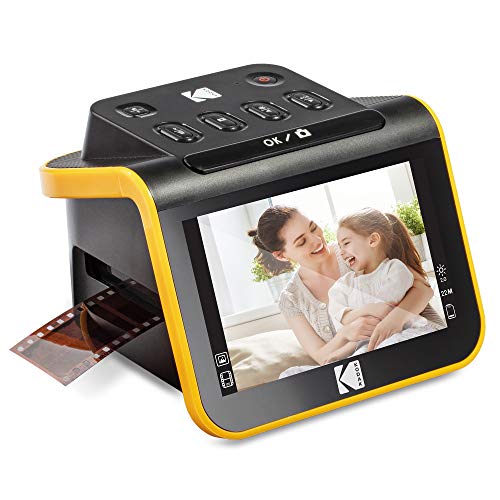
The KODAK Slide N Scan is designed for quick digitization of color and black-and-white negatives (135, 110, 126) and slides. It features a 5” LCD display for immediate preview, making it easier to edit and share memories. This model is best for casual users who want a self-contained scanner with a built-in screen and straightforward workflow. It includes a 50mm slide holder and adapters for multiple film formats.
Who it’s best for: families or hobbyists who want an all-in-one device with a large display for on-site viewing and simple operation. Why chosen: the built-in LCD and gallery mode simplify editing and previewing before saving. Limitation: SD card storage is not included, so you’ll need to prepare compatible memory separately.
KODAK Slide N Scan Max Digital Film Scanner

The KODAK Slide N Scan Max emphasizes speed with a quick-feeding tray that supports continuous scanning. It saves directly to SD/SDHC cards (up to 32GB) and handles 135mm, 110mm, and 126mm formats. This option is best for users who digitize large batches of slides and want a portable, computer-free workflow. It’s ideal for creating a home archive with minimal setup.
Who it’s best for: households converting large slide collections quickly. Why chosen: the continuous scanning capability and direct SD saving streamline workflows. Limitation: benefits rely on SD card capacity, so plan for storage ahead of time.
Magnasonic All-in-One 24MP Film Scanner

The Magnasonic scanner offers 24MP digital output with a 5-inch display and HDMI output for viewing on a larger screen. It supports 35mm, 126, 110 film, Super 8, and slides, with built-in 128MB memory and SD card expansion up to 128GB. This model suits users who want a high-resolution standalone device that can double as a digital picture frame when idle.
Who it’s best for: users who want a high-resolution, all-in-one unit with flexible viewing options. Why chosen: a larger display and HDMI compatibility improve the viewing experience. Limitation: built-in memory is modest, so memory cards are often necessary for bigger archives.
DigitConvert Mobile Film Scanner for 35mm Slides & Negatives

DigitConvert focuses on portability and simplicity. It digitizes 35mm slides and 135 negatives, includes a free scanning app, and runs on a battery for travel-friendly use. This option is best for travelers or casual users who want a compact device that works with smartphone apps for easy sharing. It’s a straightforward, pocket-friendly choice for quick scans.
Who it’s best for: on-the-go archivers and travelers. Why chosen: compact design and app-enabled workflow make sharing and transferring simple. Limitation: battery life and app performance can vary by device, and some users may prefer a larger built-in display for reviews.
DigitPro Film And Slide Scanner

The DigitPro all-in-one scanner supports 35mm, 126, and 110 negatives, plus 50mm slides, with a 5” LCD for live preview. It records to built-in memory or an SD card (up to 64GB, FAT32/EXFAT). This option is well-suited for users seeking a balanced feature set with easy one-touch scanning and real-time preview, making it easy to digitize an assortment of film formats in one device.
Who it’s best for: mixed-format archives and home users who want a single device for slides and negatives. Why chosen: one-touch scanning and cross-format support simplify workflow. Limitation: external memory options may be needed for larger collections.
Buying Guide
- Display and preview: A larger LCD (5 inches or more) helps verify scans before saving. If you plan frequent edits or sharing, a viewable gallery mode adds clarity.
- Media format support: Ensure the scanner covers your film formats (35mm, 126, 110, slides, Super 8). Mixed collections benefit from universal support.
- Output options: Look for models with SD card saving or direct USB/HDMI outputs. Direct SD saving is convenient for quick back-ups; HDMI is useful for viewing on a TV or monitor.
- Storage capacity: Consider internal memory vs. expandable SD cards. For large archives, plan cards with ample space (e.g., 32GB or more).
- Ease of use: One-touch scanning and simple navigation help minimize learning curves, especially for casual users.
- Portability: If you travel or work in multiple locations, choose a compact, battery-powered model or a lightweight unit with a long battery life.
- App and software: Some scanners rely on companion apps for processing. Check compatibility with your smartphone’s OS and the ease of editing before saving.
FAQ
- What’s the best scanner for 35mm slides if I want fast batch scanning? – A model with a quick-feeding tray and continuous scanning is ideal for large slide collections.
- Do these scanners require a computer to save files? – Many offer direct SD card saving, but some still connect to a computer for transfer or editing.
- Can I view scans on a TV? – Yes, models with HDMI output allow playback on compatible TVs or monitors.
- Is built-in memory important? – Built-in memory helps immediate playback, but most scanners rely on SD cards for long-term storage.
- Are 5″ displays sufficient for editing? – A 5″ display provides a convenient preview, but larger displays can improve detail when adjusting color or brightness.
- Should I buy a universal-format scanner or one specialized for 35mm? – If you have a broad mix of formats, a universal-format scanner saves time and reduces the need for multiple devices.