For professional drone operators, reliable RTK modules deliver centimeter-level positioning to improve surveying, mapping, inspection, and data collection. This guide highlights five top RTK-ready modules, comparing compatibility, accuracy, and reliability to help you choose the right system for your drone platform and mission requirements.
| Brand | Product | Key Benefit |
|---|---|---|
| Autel Robotics | RTK Module for EVO II Enterprise V2/V3 | 1.5cm vertical / 1cm horizontal precision, broad compatibility |
| Wuden | LC29HEA High Centimeter-Level RTK Module | Dual-band, multi-constellation, strong anti-interference |
| Radiolink | F9P Centimeter RTK Module | Ublox F9P core, low-loss antenna path, built-in geomagnetic chip |
| Ruko | R111S Remote ID/RTK-ready Module | FAA-compliant RID integration, lightweight and versatile |
| Bwine | B112S Remote ID Broadcast Module | FAA-compliant RID, buzzer for quick locate, precise GPS |
Product Highlights
Autel Robotics RTK Module for EVO II Enterprise V2 and V3 Series Drone
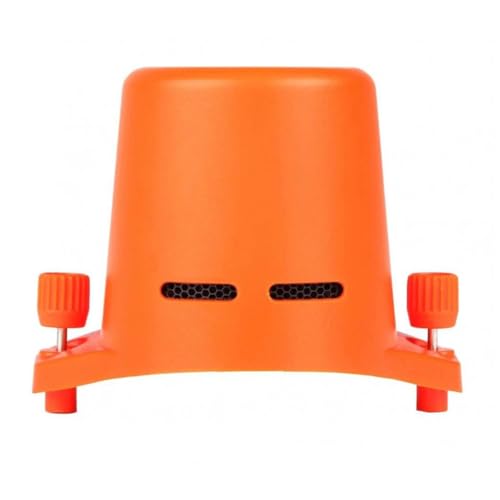
Designed to integrate with the EVO II Enterprise line, this RTK module delivers precise positioning for data-heavy flights. Features include 1.5cm vertical and 1cm horizontal accuracy, plus robust GPS, BeiDou, and Galileo satellite coverage for stability across environments. Its broad compatibility ensures reliable performance in professional missions that require tight geolocation and repeatable results.
Autel RTK Module for EVO II Enterprise
Key features include enhanced precision with centimeter-level horizontal accuracy, broad compatibility with EVO II Enterprise V2 and V3, and a robust global positioning system that stacks GPS, BeiDou, and Galileo to improve satellite coverage. This module is suitable for mapping, inspection, and data collection where consistency and repeatability are critical.
Wuden LC29HEA High Centimeter Level RTK Module 10HZ

The LC29H series supports multiple GNSS constellations with dual-frequency capability, enabling higher accuracy in challenging environments. It offers enhanced sensitivity through an internal LNA and SAW filter, and is designed to deliver around 1 m autonomous accuracy with centimeter-level RTK-capable variants. This makes it a strong option for urban, canyon, or signal-weak areas where precise positioning matters.
Radiolink RTK F9P Centimeter GPS Drone Module

Equipped with the Ublox F9P module, this option emphasizes high-precision RTK performance suitable for agriculture, surveying, and mapping. A zero-loss PCB antenna feeder minimizes signal loss, while a built-in geomagnetic chip adds stability to flight control. The combination supports reliable centimeter-level positioning in demanding missions.
Ruko R111S RC Aircraft GPS Tracker with Beeper

While primarily a remote ID and tracking module, the R111S enhances flight safety with a built-in beeper and dual-positioning capabilities, offering reliable tracking within 500-1000 meters. It is designed to help meet FAA RID requirements and supports a broad range of drone models, enhancing regulatory compliance and situational awareness for complex missions.
Bwine B112S New Buzzer FAA Compliant Remote ID Module

The B112S delivers FAA-compliant RID with a built-in buzzer for quick locate, plus precise GPS tracking and a 800m data transmission range. It is suitable for a wide range of drones and helps ensure regulatory compliance while delivering reliable real-time position data for mission planning and post-flight analysis.
Buying Guide
Key considerations when selecting an RTK module for drones include accuracy targets, drone compatibility, satellite coverage, and additional safety features. Here are important factors to compare:
- Accuracy and latency: Look for centimeter-level horizontal and vertical accuracy, and low-latency updates (e.g., 10 Hz or higher) to support dynamic flight paths and precise data capture.
- Compatibility and integration: Confirm the module supports your drone model and flight controller, including power requirements, connector types, and firmware compatibility.
- Constellations and frequency bands: Multi-constellation support (GPS, BeiDou, GLONASS, Galileo) improves reliability in challenging environments and urban areas with multipath effects.
- Signal robustness: Features such as internal LNAs, SAW filters, and anti-interference designs help maintain lock in weak signals or near interference sources.
- Remote ID and regulatory compliance: RID capabilities simplify compliance with aviation authority regulations and enhance mission safety and traceability.
- Physical form factor and weight: Lighter, compact modules reduce impact on flight time and center-of-gravity considerations for smaller drones.
- Power and interface options: Ensure adequate power budgets and compatible data interfaces (serial, I2C, USB) for seamless integration into your flight stack.
- Documentation and support: Access to clear installation guides, APIs, and responsive vendor support can shorten integration timelines and troubleshooting.
Practical considerations vary by use case. For mapping or surveying, prioritize centimeter-level RTK accuracy and stable satellite tracking in open fields or obstructed environments. For industrial inspections, emphasize low latency, rugged construction, and seamless RID integration. For hobbyist or regulatory-focused flight, RID features and ease of setup may take precedence over ultimate precision.