Choosing a router that can handle multiple devices without lag is essential for households with smartphones, laptops, smart TVs, and home assistants. The following selections emphasize high capacity, robust coverage, and smart features like VPN support, Mesh compatibility, and advanced Wi-Fi standards. Each product below offers unique strengths for multi-device environments, from Wi‑Fi 6 to Wi‑Fi 7 and even Wi‑Fi 6E capabilities. Use this guide to compare performance, scalability, and security features across popular brands.
| Product | Brand | Key Strength | Connectivity | Coverage |
|---|---|---|---|---|
| TP-Link AX1800 Archer AX21 | TP-Link | Solid dual-band Wi‑Fi 6 with VPN server | Wi‑Fi 6 | Good for small to mid homes |
| TP-Link Archer BE6500 / BE400 | TP-Link | Wi‑Fi 7 with strong multi-device handling | Wi‑Fi 7 | Up to 2,400 sq ft |
| TP-Link AX3000 Archer AX55 | TP-Link | OFDMA and MU‑MIMO for multiple clients | Wi‑Fi 6 | Versatile family use |
| NETGEAR Nighthawk RS90 | NETGEAR | Wi‑Fi 7 with high throughput | Wi‑Fi 7 | Large homes with many devices |
| TP-Link BE550 / BE9300 | TP-Link | Wi‑Fi 7 with 2.5G ports and EasyMesh | Wi‑Fi 7 | Wide coverage, mesh-ready |
Across these options, you’ll find a mix of routers designed for households with streaming, gaming, remote work, and smart devices. If your network sees many simultaneous connections, prioritizing multi-user performance, channel management, and security features like VPN support can help maintain smooth experiences. The models listed here span more traditional dual-band Wi‑Fi 6 to cutting-edge Wi‑Fi 7 and Wi‑Fi 6E architectures, offering choices based on your budget, home size, and future-proofing needs.
TP-Link AX1800 Archer AX21 Review

The Archer AX21 is a compact Wi‑Fi 6 router that delivers up to 1.8 Gbps combined bandwidth. It provides dual‑band coverage suitable for small to mid-sized homes and supports OpenVPN and PPTP VPN servers for remote access. While it excels in basic multi-device streaming and light gaming, its strength lies in reliable everyday connectivity with straightforward setup. The device emphasizes easy mesh compatibility, making it a practical entry point for households starting to expand beyond a single router.
TP-Link Archer BE6500 Dual-Band Wi‑Fi 7 Router

The BE6500 (Archer BE400) leverages Wi‑Fi 7 with features like Multi-Link Operation and 6.5 Gbps total bandwidth. It’s designed to support up to 90 devices across a sizable home, backed by a quad-core CPU and HomeShield security. With 2.5 Gbps ports and USB 3.0, this model targets power users who juggle multiple 4K streams, online gaming, and smart home hubs. Beamforming and broad coverage help minimize dead zones, while advanced QoS keeps important devices prioritized during peak times.
TP-Link AX3000 Archer AX55: Wi-Fi 6 Power
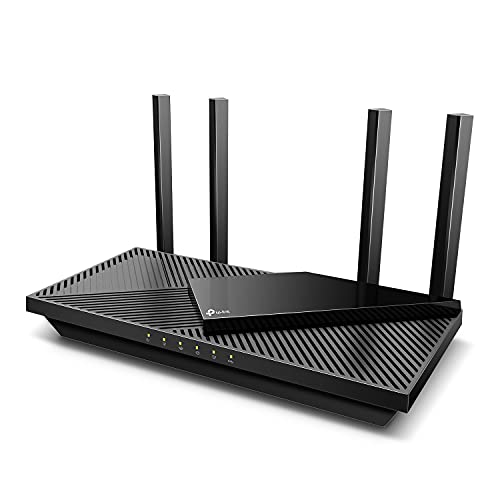
The AX55 delivers robust Wi‑Fi 6 performance with 2.4 GHz and 5 GHz bands and supports VPN server and client. Its OFDMA and MU‑MIMO capabilities help manage multiple devices concurrently, reducing latency and jitter. Four external antennas and beamforming help expand coverage across typical home layouts, making it a versatile choice for households with many streaming devices and work-from-home setups.
NETGEAR Nighthawk RS90 WiFi 7 Router

The RS90 is a high-throughput Wi‑Fi 7 router aimed at power users. It emphasizes gaming and fast streaming for large households, with claims of top speeds reaching multi‑gigabit ranges. It is a router, not a modem, and requires a separate modem to access internet service. This model suits users who want peak performance in busy networks and can pair with a compatible modem for a solid home‑office and entertainment ecosystem.
TP-Link BE550 / BE9300 Tri‑Band WiFi 7

The BE9300 BE550 family uses tri‑band WiFi 7 with 2.5G ports and multiple EasyMesh options. This lineup is designed for expansive homes with many devices, offering strong coverage and easy expansion through mesh devices. It targets households that want a future‑proof network capable of handling high bandwidth demands from multiple rooms and devices while maintaining stable performance.
Buying Guide: Key Purchase Considerations
- Coverage and layout: Measure your home’s square footage and consider wall materials. For large homes, look for tri‑band or Wi‑Fi 7 with strong beamforming and multiple antennas to reduce dead zones.
- Device density: If you have many devices simultaneously streaming, gaming, or conferencing, prioritize OFDMA, MU‑MIMO, and QoS features that allocate bandwidth efficiently.
- Wi‑Fi standard and future-proofing: Wi‑Fi 6 is solid for most homes, while Wi‑Fi 6E and Wi‑Fi 7 provide headroom for many devices and future upgrades. Consider a model with EasyMesh for expansion.
- Security and VPN: VPN server/client support and HomeShield or similar security features enhance privacy and control, especially for remote work and smart home ecosystems.
- Ports and wired options: Look for 2.5G ports and USB 3.0 if you plan to connect NAS devices, game consoles, or hubs directly for lower latency and stable speeds.
- Mesh compatibility: If you anticipate range issues, choose a router that supports EasyMesh or a matching mesh system to extend coverage without compromising performance.
- ISP compatibility and setup: Remember that many routers require a modem from your ISP or a separate gateway. Ensure compatibility and consider potential rental costs versus owning a router.
In multi-device environments, balancing coverage, throughput, and security is key. The models above provide various configurations—from compact Wi‑Fi 6 options suitable for smaller homes to expansive Wi‑Fi 7 and 6E systems designed for large households with many simultaneous activities. Evaluate your current internet plan, device count, and layout to select a router that keeps all devices connected with minimal lag and robust security.