This article highlights top RFID lock options designed for doors, cabinets, and lockers. Each pick combines ease of use, robust security, and flexible access management suitable for homes, offices, and shared spaces. Below are five highly relevant products with key features to consider when selecting an RFID-based access solution for wooden or mixed-framed environments.
| Product | Brand | Key Feature |
|---|---|---|
| WOOCH RFID Lock Electronic Cabinet Lock (2 Pack) | WOOCH | One key for multiple locks; wood-friendly, durable |
| AGPTEK RFID Door Access Control System Kit | AGPTEK | Proximity card access; 280 kg magnet lock; versatile power |
| ETEKJOY RFID Electronic Cabinet Lock | ETEKJOY | Programmable with 13.56MHz cards; DIY installation |
| Evanshow Smart Door Lock | Evanshow | App-based management; biometric and multiple entry methods |
| HARFO Fingerprint Door Lock | HARFO | All-in-one with app, fingerprint, keypad; voice assistant ready |
WOOCH RFID Lock: 2 Pack for Wood Cabinets

The WOOCH 2-pack RFID cabinet locks provide programmable access with a single key card or fob for multiple locks. They are designed for wooden panels up to 1.5 inches thick, making them suitable for cabinets, lockers, cupboards, and data racks. The metal latch and mortise construction offer durable security, and the system supports non-contact operation. Ideal for households seeking a compact, child-safe locking solution without visible hardware on doors.
Key considerations include how many locks you plan to control with one card, the thickness of doors in your space, and the ease of programming. WOOCH supplies instructional videos to assist with setup and testing before installation, which helps ensure reliable operation across several locks.
AGPTEK RFID Door Access System Kit
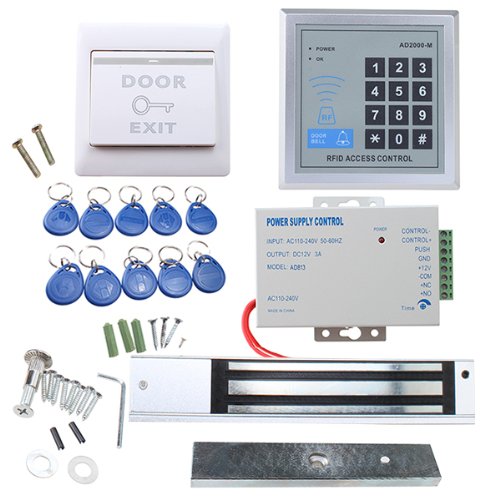
AGPTEK’s system kit is a modern proximity-based access control solution, featuring a high-capacity magnetic lock and a 110-240V AC to 12V DC power supply. It supports proximity cards, passwords, or a hybrid approach, enabling flexible entry options for homes and small offices. The kit’s CPU and integrated circuits are designed to minimize data loss during power fluctuations, which can improve reliability in busy spaces.
When evaluating this option, consider the scale of your entry points, the preferred method of access (cards vs. codes), and whether you need remote management or integration with other smart devices in the future.
ETEKJOY RFID Cabinet Lock: DIY Kit

ETEKJOY’s cabinet lock is programmable and designed for wooden cabinets, drawers, and boxes. The kit includes 5 IC cards/tags and emphasizes DIY installation with no drilling required. It uses 13.56MHz IC cards for improved sensitivity and security over common 125kHz access, and it supports both swinging and sliding doors. It is not intended for metal doors, but is well-suited to wooden furniture and storage units.
Consider whether you need multiple locks to operate with one card, how easily you can train users to manage cards, and the installation method that minimizes modifications to furniture or cabinetry.
WOOCH RFID Lock: Single Pack for Wood Cabinets

This single-pack WOOCH model mirrors the two-pack’s core benefits, offering programmable access for multiple locks with one key card or fob. It fits wooden doors up to 1.2 inches thick and leverages a compact, durable design to secure drawers, cupboards, lockers, and small storage boxes. Using a single lock can simplify deployment where only a few access points are needed.
Think about future expansion: if you plan to scale to more doors or need a shared access scheme, ensure you can add more locks to the same system or easily manage additional credentials with existing programming.
Evanshow Smart Door Lock

Evanshow offers a smart door lock that integrates with Tuya-based apps, providing keyless entry via fingerprint, keypad, NFC card, and mechanical backup keys. The fingerprint capability enables quick unlocks with user-friendly biometric verification. The app management allows permanent or temporary access for family, guests, or deliveries, along with entry logs and privacy-focused features such as silent mode for discreet use.
Key considerations include app reliability, compatibility with other smart home ecosystems (Alexa/Google), and the availability of firmware updates or gateway devices necessary for remote operation and log monitoring.
HARFO Fingerprint Door Lock

HARFO’s all-in-one entry solution combines APP control with fingerprint, keypad, IC cards, and backup keys. It supports voice assistant integration (Alexa and Google, via gateway) and remote control through a dedicated app. The lock structure includes a reversible handle suitable for both left- and right-handed doors, and the kit is designed for standard US wooden doors with thickness compatibility in the 1 3/8 inch to 2 3/16 inch range.
When selecting this option, assess whether you want hands-free or remote operation, how many users you need to manage, and the reliability of biometric authentication in daily use, especially in varying environmental conditions.
Buying Guide: Key Purchase Considerations
- Door and cabinet compatibility: Check door thickness, material (wood vs metal), and whether the lock supports swing or slide mechanisms. Some models are specifically designed for wooden doors and may not work well with metal frames.
- Access methods: Decide between cards, fobs, fingerprints, keypads, or app-based control. Multi-method locks offer flexibility but may add complexity and cost.
- Power and connectivity: Consider whether the lock uses batteries, a wired supply, or a power adapter. Evaluate whether you need Wi-Fi/Bluetooth/app access or gateway integrations for remote management.
- Security features: Look for encryption standards in RFID systems, anti-tamper protections, and reliable read ranges. Ensure the system supports easy credential updates without hardware changes.
- Scalability: If you plan to expand beyond a few locks, ensure you can manage all credentials from a single interface and add locks without reconfiguring entire systems.
- Installation and maintenance: Assess DIY installation feasibility, required tools, and whether the manufacturer offers setup videos or customer support for programming and troubleshooting.
- Privacy and compliance: For shared spaces, prioritize devices with access logs, temporary guest codes, and privacy-friendly operation to minimize unauthorized access.
- Budget vs value: Weigh the upfront costs against long-term security benefits and the potential need for gateways, hubs, or cloud subscriptions for advanced features.
The listed options cover a range of use cases—from simple cabinet locking to full door access control with biometrics. Each product emphasizes programmable access, compatibility with wooden structures, and straightforward setup, making them suitable for homes, small offices, and shared environments. When choosing, align features with your security goals, installation constraints, and future expansion plans.