Finding a reliable voice recorder for lectures, meetings, and interviews can streamline note-taking and ensure you don’t miss critical details. This guide compares top options with strong playback, noise reduction, long battery life, and easy transfer to computers. Each pick is designed for classroom use, interviews, or fieldwork, offering a mix of plain recording and smart features like voice activation and transcription-ready formats. Below are five models that stand out for lecture capture, with a quick reference to their strengths.
| Product | Key Strength |
|---|---|
| Tonfarb 136GB Digital Voice Recorder | High capacity, noise reduction, one-click recording |
| EVISTR L357 64GB Digital Voice Recorder | 360° pickup, multiple recording gains, A-B playback |
| EVIDA 128GB Digital Voice Recorder | Long hours, PCM quality, voice-activated with playback |
| Wucotc 264GB Studio-Grade Recorder | AI noise cancellation, password protection, extensive capacity |
| Plaud Note AI Voice Recorder | AI transcription and summarization, multilingual |
Tonfarb 136GB Digital Voice Recorder

The Tonfarb device combines PCM recording at up to 1536 kbps with automatic noise reduction. It uses dual microphones to capture clear speech in busy environments and supports long sessions with 136GB of memory via included 128GB TF card plus 8GB onboard storage. A built-in 1100mAh battery enables up to 68 hours of continuous recording on a single charge, ideal for back-to-back lectures or multi-hour interviews. One-click start-and-save controls simplify capturing information, and USB-C ensures fast, secure file transfer to a computer.
EVISTR L357 64GB Digital Voice Recorder

The EVISTR L357 focuses on ease of use and flexible recording quality. It delivers 1536kbps stereo sound with 360° pickup and seven adjustable gain levels. The 64GB capacity supports thousands of hours of audio, and the device ships with a Type-C USB cable for quick transfers. Its two-button operation (record and save) makes it approachable for students and professionals alike, while playback supports A-B repeat, variable speed, and multiple formats, including WAV and MP3.
EVIDA 128GB Digital Voice Recorder
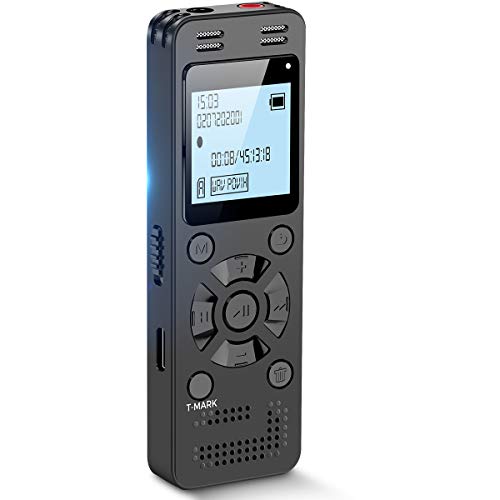
The EVIDA unit emphasizes clear PCM recording and long-term storage, with up to 9296 hours of audio at lower bitrates and 40,000 songs worth of capacity. It supports up to 1536kbps and offers a voice-activated mode with playback. The device is designed for lectures and meetings, providing a straightforward interface and password protection. Users can preset formats (MP3 128kbps, 192kbps, or WAV 1536kbps) and enjoy reliable, high-quality capture with an emphasis on legibility and ease of access.
Wucotc 264GB Digital Voice Recorder

The Wucotc recorder targets professional environments with an advanced AI-based noise cancellation system and an expansive memory blend of 8GB onboard plus a pre-installed 256GB TF card, totaling around 264GB. It features a comprehensive suite of functions, including A-B repeat, fast forward/rewind, a 3.5mm headphone jack, password protection, and a dedicated playback mode. The device is designed for classrooms, conferences, and fieldwork where long sessions and pristine playback are critical.
Plaud Note AI Voice Recorder

Plaud Note AI integrates transcription and summarization features through an app, enabling fast conversion of speech to text and generation of meeting notes. It supports 112 languages and offers data privacy with local encryption and cloud storage options. The device is targeted at users who want quick transcripts and organized summaries, making it suitable for lectures, meetings, and collaborative projects. While transcription features are highlighted, users should assess the quality of AI-generated outputs in practice based on language and jargon used in their field.
Buying Guide
When choosing a recorder for lectures, consider five core areas to match your needs:
- Storage and battery life: Look for models with ample memory and long-lasting batteries to handle long classes or multi-day conferences without frequent recharging.
- Microphone quality and noise reduction: Dual or multiple microphones with noise suppression improve clarity in busy environments like classrooms and hallways. A-B repeat and variable speed playback help review tricky sections.
- Recording formats and transmission: MP3, WAV, and PCM support affect sound quality and editing options. USB-C or direct USB transfer simplifies file management on a computer.
- Voice activation vs. continuous recording: Voice-activated modes save space and time but test sensitivity to avoid missing softer phrases during lectures.
- Transcription and AI features: AI transcription and summaries can save time, but verify accuracy for specific jargon or accents. Privacy and data handling are important for institutional use.
In practice, the Tonfarb, EVISTR L357, EVIDA, Wucotc, and Plaud Note AI options offer a mix of capacity, ease of use, and advanced features. For study-heavy users, the combination of long battery life and strong playback, plus transcription capabilities, can be decisive. For researchers or journalists, models with robust noise suppression and extended storage support richer, cleaner audio archives. When evaluating, you may prioritize AI-powered transcription if your workflow relies on quickly turning audio into notes or reports.
Additional considerations include durability for fieldwork, password protection for sensitive interviews, and compatibility with your preferred devices and software. Evaluate real-world performance in lecture-like environments, and consider order-of-use scenarios—one-record sessions versus multi-hour events—to select the best fit.