The guitar pedal world echoes with classic tones inspired by the iconic RAT distortion. This guide highlights five accessible RAT-style pedals that clone or approximate that signature crunch, delivering a versatile range from vintage grit to aggressive modern punch. Whether you’re chasing a warm, chewy drive or a raw, saturated wall of sound, these options offer dependable performance for practice spaces, studios, and live rigs.
| Product | Brand | Notes |
|---|---|---|
| Black Rat Distortion Guitar Effect Pedal | B Baosity | Classic RAT-like distortion with stable footing |
| JOYO Distortion Pedal SPLINTER JF-21 | JOYO | FAT clipping, MOSFET/stock chip options |
| Mosky Audio King Rat Distortion | Generic | 4-mode knob; classic RAT flavor with options |
| Donner Dark Mouse Distortion Pedal | Donner | Two modes: Classic and Hyper; sturdy build |
| Nobsound Little Bear RAT Tack | Nobsound | Three modes: Dirty/Turbo/Vintage; value option |
Black Rat Distortion Pedal From B Baosity

The Black Rat Distortion pedal from B Baosity aims to deliver the classic RAT texture while providing practical features for stage and studio use. Its core is a straightforward distortion circuit designed to yield the warm, gritty character RAT enthusiasts expect. A notable design detail is the rubber pads on the backside, which improve stability on pedalboards and reduce friction during stomping. This makes it a reliable choice for players who value consistent feel and placement during performances or practice sessions.
Key considerations include how the pedal responds to pickup types and volume control. Players often pair RAT-like pedals with medium-to-hot output pickups for the most balanced, concert-ready drive. The Baosity model emphasizes a sturdy chassis and accessible tone shaping, making it suitable for players who want a dependable, no-nonsense RAT clone without extra frills.
JOYO Splinter JF-21 Distortion Pedal
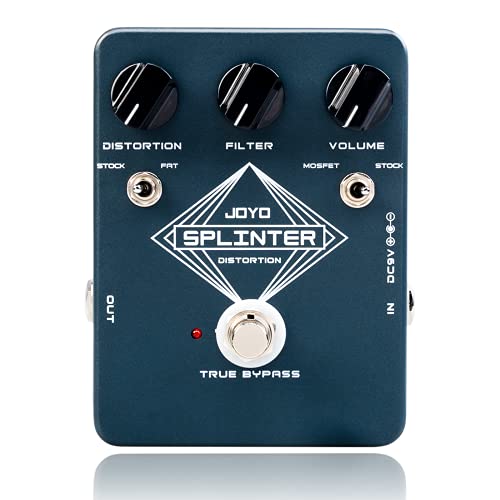
The JOYO Splinter JF-21 Distortion pedal offers a versatile option with MOSFET and FAT clipping modes that help sculpt a thicker, more aggressive RAT-like tone. Its three-knob control layout—DISTORTION, FILTER, and VOLUME—provides credible access to both classic and thicker tonal options. The circuit also supports a switch between stock OP07DP and other popular chips, giving tone-shaping flexibility for players who want to explore variations on the standard RAT DNA. A noise-reduction powered approach helps keep the signal clean in busy pedalboards.
As a clone-inspired unit, JF-21’s appeal lies in the balance between affordability and tone versatility. It is well-suited for players who enjoy swapping drivers mid-set, or who require a compact pedal that can dial in from subtle edge to biting aggression without sacrificing note articulation.
Mosky Audio King Rat Distortion

Mosky’s King Rat Distortion emphasizes the characteristic RAT tone with a four-mode knob offering Dirty, Vintage, Turbo, and Fat options. This layout mirrors a desire to provide players with multiple textures in a single pedal, from the smooth, punchy vintage RAT to heavier, saturated sounds. The dual-option toggle mechanism adds a bit of flexibility for players who want to quickly switch between core RAT-inspired gains while maintaining tight control over midrange presence and overall drive.
In practical use, the King Rat’s modes can support both lead work and rhythm parts, as each setting preserves note separation even at higher gain. It’s a compact solution for those seeking a credible RAT clone without breaking the budget, suitable for practice rooms, home studios, and gigging rigs with compact pedalboards.
Donner Dark Mouse Distortion Pedal

The Donner Dark Mouse Distortion focuses on delivering a classic RAT-ish distortion with an added hyper mode for more aggressive tone. Its dual-mode design aims to mirror two distinct character curves: a warm, classic distortion and a tighter, more aggressive edge for higher gain contexts. The aluminum-alloy build contributes to durability, and clearly labeled indicators help players confirm pedal state at a glance. This makes it a predictable option for players who want straightforward, dependable RAT-like performance in a compact package.
From a tonal perspective, Classic mode prioritizes a smoother sustain while Hyper mode emphasizes bite and snap in the low-to-mid frequencies. The result is a versatile platform for players exploring rock and blues textures, allowing easy transition between nuanced rhythm parts and aggressive lead lines while maintaining note clarity through chords.
Nobsound Little Bear 3 RAT Tack

The Nobsound Little Bear RAT Tack provides a compact RAT clone option with three modes—Dirty, Turbo, and Vintage—delivering a spectrum from smooth vintage drive to aggressive modern crunch. This unit emphasizes value, offering a range of tonal possibilities at an accessible price point. Each pedal is described as handmade and tested for reliable sound output, which can translate to consistent stage performance and reliable studio tracking, particularly for players who want to experiment with different RAT-inspired tones without a high cost of entry.
Buying Guide: Key Purchase Considerations
When evaluating RAT-style pedals, consider how the device interacts with your rig. Core questions include whether you need a single-purpose pedal or a versatile option with multiple modes, how it handles gain staging with your guitar and amp, and whether you require true-bypass switching for maximum signal integrity on a crowded pedalboard.
Tone shaping: Look for pedals that offer a clear, defined midrange and the ability to push into saturation without turning overly muddy. Modes or clipping options (e.g., FAT, MOSFET, or vintage/ turbo) can expand your tonal palette from warm, classic crunch to aggressive, present distortion.
Build quality: Durable housings, stable footswitches, and secure jacks reduce the risk of noise or failure during use. Rubber feet or pad features help preserve pedalboard stability, preventing unwanted movement during performance.
Power and compatibility: Check whether the pedal uses standard 9V DC power, and ensure it can co-exist with other pedals in your chain without introducing hum or noise. Noise-reduction features or quality power supplies can improve overall performance on busy signals.
Value and support: For players on a budget, clones that faithfully reproduce RAT tones can offer excellent value. Look for customer feedback and warranty information to gauge long-term reliability and compatibility with future gear upgrades.
Testing approach: If possible, try to align your choice with the guitar’s pickup setup, amp preferences, and playing style. Clean test signals across gain ranges help reveal how each clone handles string articulation, chord clarity, and note separation when driven hard.
In summary, the five pedals covered here provide a representative snapshot of RAT clone options, ranging from budget-friendly to feature-flexible. Each model aims to deliver the core RAT essence—punchy attack, warm sustain, and musical distortion—while offering its own unique take on tone shaping and usability.