If you’re looking to ditch monthly cable fees and still watch local channels, indoor rabbit ears antennas are a practical option. This guide highlights 5 reliable models ideal for U.S. households, with clear guidance on who benefits most from each. The top picks cover a range from compact, low-profile designs to extended-dipole models that reach farther. Use the included buying guide to compare by range, signal type (VHF/UHF), and setup ease, so you can choose the best antenna for your living space and viewing habits.
| Product | Best For | Key Benefit |
|---|---|---|
| Philips SDV8201B/27 | Compact living rooms | VHF/UHF reception with 4K readiness |
| GE 33675 Modern Loop | Medium-range, versatile setup | 15-inch extendable dipoles for flexible reception |
| Bwxsyws (HDTV Antenna) | Budget-friendly indoors | 4K/1080p support with long, 9.8 ft cable |
| HIDB Rabbit Ears | Simple plug-and-scan | Free HD channels with easy installation |
| GE 33676 Traditional Rabbit Ears | Classic design with modern compatibility | Balanced dipoles and loop for VHF/UHF |
Philips Rabbit Ears Black Indoor TV Antenna

This Philips model is designed for broad spectrum reception with VHF and UHF signals, making it suitable for many local channels in Full HD. It comes with a 5-foot coaxial cable for flexible placement and a weighted base to keep the unit stable on a table or shelf. Best for apartments or small living spaces where discreet, stable performance matters.
- Best for readers who want a simple, all-in-one indoor antenna with 4K-ready capability.
- Protection and stability are emphasized by a weighted base and rubber feet.
- Caution: The performance depends on local signal quality and may require repositioning for optimal channels.
GE Modern Loop Rabbit Ears Indoor TV Antenna
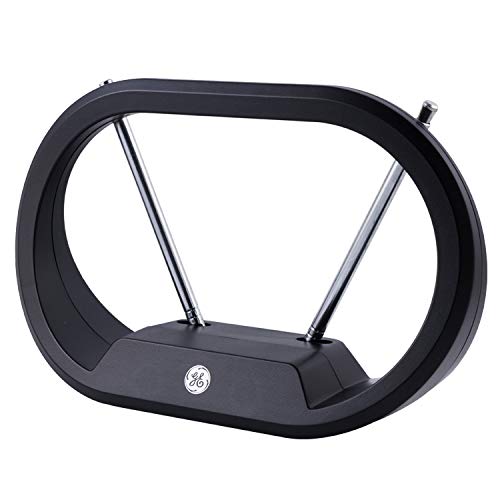
GE’s 15-inch extendable dipoles provide flexible reception for both VHF and UHF channels, with a claim of up to 30 miles from the broadcast source. It’s ideal for viewers who want a straightforward, plug-and-scan setup without complex adjustments. The design supports 4K Ultra HD readiness for future-proof viewing, and the antenna works well with multiple brands and smart TVs.
- Best for: households with a clear line of sight to local towers and a desire for easy setup.
- Better for: those who need a larger dipole area to pull in more channels at the same time.
- Caution: Actual range varies by location and building materials.
TV Antennas, HD Digital Antenna For Smart TV Indoor

This model emphasizes 4K/1080p readiness and an extended 9.8-foot digital cable, making placement flexible across larger rooms. It targets viewers who want crisp HD and broad compatibility with smart TVs, with emphasis on 4K Ultra HD readiness and easy setup. It’s a practical choice for those who need a longer cable to find the best reception spot.
- Best for: larger rooms or rooms with shelves far from the TV.
- Better for: users who want to minimize repositioning while scanning for channels.
- Caution: Compatibility may depend on tuner availability and local signal conditions.
HIDB TV Antenna — Rabbit Ears

HIDB emphasizes free HD channels with a compact, plug-and-play design. It includes features like a sure-grip suction cup and double-sided tape for quick installation on windows or shelves. It’s best for small spaces where minimal setup is preferred and users want a simple way to access local channels without ongoing fees.
- Best for: renters or dorm residents needing a discreet antenna.
- Better for: quick repositioning to optimize VHF/UHF reception after a move.
- Caution: Smaller size may limit long-range reception in some locations.
GE Traditional Rabbit Ears Indoor Black TV Antenna

This GE model combines a traditional loop and rabbit ear design with dipoles for VHF reception, offering compatibility with a range of HDTVs. It’s a solid pick for viewers who prefer a classic look and straightforward performance, especially in homes where a simple, reliable indoor antenna is desired.
- Best for: fans of classic antenna design with reliable reception.
- Better for: users who value a compact footprint without sacrificing VHF performance.
- Caution: Signal performance still depends on local broadcast conditions and building layout.
Buying Guide: How To Choose The Right Indoor Rabbit Ears Antenna
- Signal coverage: Check if the model supports both VHF and UHF, and consider your proximity to local broadcast towers. Antennas with extended dipoles generally catch more channels in mid-range homes.
- Placement flexibility: Look for antennas with long coax cables or a compact, low-profile design. A longer cable helps you place the antenna near a window or high shelf for better reception.
- Ease of use: If you prefer plug-and-scan, choose models with simple setup and stable mounting options, such as suction cups or adhesive bases.
- Build and stability: A weighted base or rubber feet reduce movement, while a small footprint helps in compact spaces like bedrooms and apartments.
- Future-proof features: 4K/1080p readiness ensures compatibility with newer TVs and broadcasting standards, though local signal quality remains the primary factor for clarity.
- Compatibility: Most indoor antennas work with a wide range of smart TVs and HDTVs. Verify whether your TV has a built-in ATSC tuner for best results.
Frequently Asked Questions
- Do indoor rabbit ears antennas really improve local channel reception? Yes, for many users they provide access to local broadcast channels without monthly fees, depending on location and tower proximity.
- What should I consider if I live in a high-rise apartment? Look for compact antennas with a longer coax cable and the option to position near a window for better line-of-sight to towers.
- Can these antennas pick up 4K channels? They can be 4K-capable in the sense of being ready for future broadcasts, but 4K availability depends on local broadcasters and compatibility with your TV tuner.
- How do I know which antenna is best for my home? Consider range needs, space for placement, and whether you prefer a traditional or modern design. A trial-and-adjust approach—placing in several spots—often yields the best results.
- Is monthly support or installation required? Most indoor antennas are plug-and-play, with no ongoing fees beyond your electricity usage and TV service plan.
- What if I don’t see channels after installation? Run a full channel scan on your TV after repositioning. Some models also require a re-scan after moving the antenna.