Answering the question “Which processors are best for gaming?” with a clear guide helps you choose a CPU that delivers high frame rates, smooth gameplay, and future-proofing. This article highlights five strong options and explains who they are best for. Whether you’re chasing high IPC, multi-core efficiency, or a compact handheld gaming experience, these picks cover desktop CPUs and processor-powered devices. Below is a quick summary table of the selected products to compare at a glance.
| Product | Brand | Key Strength | Best For |
|---|---|---|---|
| AMD Ryzen 7 9800X3D 8‑Core | AMD | Zen5 + 3D V-Cache for maximum gaming IPC | High-end gamers seeking top performance |
| AMD Ryzen 5 5500 6‑Core | AMD | Unlocked overclocking with strong 100+ FPS potential | Mainstream gamers who overclock |
| Intel Core i9‑14900K | Intel | 24 cores, 32 threads with up to 6.0 GHz | Multitasking and extreme gaming |
| AMD Ryzen 5 9600X 6‑Core | AMD | Zen5 architecture with 5.4 GHz boost | Cost-conscious gamers needing solid perf |
| ASUS ROG Xbox Ally – 7” Handheld | ASUS | Ryzen Z2 A CPU in a handheld gaming form | Gamers seeking portable PC-like play |
AMD Ryzen 7 9800X3D 8-Core Processor
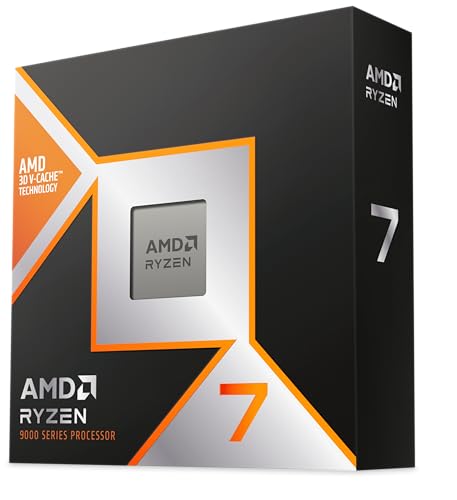
The AMD Ryzen 7 9800X3D is a desktop processor built on Zen5 technology with 3D V-Cache. It features 8 cores and 16 threads, delivering an IPC uplift and improved thermal performance, enabling higher clock speeds up to 5.2GHz. This makes it a strong choice for titles that benefit from high single-thread performance and efficiency in extended gaming sessions. Best for: gamers who want top-tier raw performance and energy efficiency in a flagship desktop setup. Limitation: availability and power requirements may matter for compact builds.
AMD Ryzen 5 5500 6‑Core Desktop Processor

The Ryzen 5 5500 offers 6 cores and 12 threads with a strong base for 100+ FPS in popular games, and it comes unlocked for overclocking. It pairs well with mid-range GPUs and DDR4 memory, providing solid performance without a premium price tag. Best for: mainstream gamers who want capable gaming speed with future upgrade flexibility. Caution: discrete GPU and cooling must be suitable for sustained boosts.
Intel Core i9‑14900K Desktop Processor

The Intel i9-14900K delivers high gaming and multitasking performance with 24 cores (8 P-cores + 16 E-cores) and 32 threads. A top max clock of up to 6.0 GHz supports smoother gameplay at high frame rates. Best for: gamers who require peak performance for demanding titles and heavy multitasking. Caution: higher power consumption and heat output may require robust cooling and a capable motherboard.
AMD Ryzen 5 9600X 6‑Core Processor

The Ryzen 5 9600X is a solid Zen5-based option with 6 cores and 12 threads, offering up to a 5.4 GHz max boost and DDR5-5600 support. It suits gamers who want strong performance without paying top-tier pricing. Best for: budget-conscious gamers seeking reliable high-frequency gaming. Limitation: may not match the all-core efficiency of higher-end models in very multithreaded workloads.
ASUS ROG Xbox Ally – 7” Handheld

The ASUS ROG Xbox Ally is a handheld device powered by a Ryzen Z2 A processor in a compact form factor. It runs Windows 11 and provides access to Xbox Game Pass, Steam, and other platforms, delivering portable PC-like gaming. Best for: gamers who want a portable, console-like experience with PC game access. Caution: handheld form factor may limit cooling and maximum sustained performance compared to desktop setups.
Buying Guide: Key Considerations For Game-Ready Processors
- Performance target: If you want the highest frame rates in competitive titles, prioritize CPUs with strong single-thread performance and high boost clocks (e.g., 5+ GHz range) and favorable IPC, such as the top-tier Ryzen or Intel options.
- Core count and multitasking: For streaming, content creation, and multitasking while gaming, consider CPUs with more cores/threads (16+, like some high-end models).
- Power and cooling: Higher performance CPUs typically require robust cooling and a capable motherboard. Ensure your case airflow and cooling solution match the CPU’s thermal demands.
- Platform compatibility: Check motherboard socket type, PCIe support, and RAM generation (DDR4 vs DDR5) to match your build or upgrade path.
- Overclocking potential: If you plan to push clocks, ensure the CPU, motherboard, and memory all support stable overclocking and that you’re comfortable tuning parameters.
- Portability vs. performance: For handheld or laptop-style gaming devices, consider mobile-class CPUs or integrated solutions designed for efficiency and temperature constraints.
Frequently Asked Questions
- What makes a processor “good for games”?
Answer: A strong combination of IPC, high clock speeds, and sufficient cores/threads for multitasking and modern titles. Efficiency and thermals also influence sustained gaming performance. - Is more cores always better for gaming?
Answer: Not always. Most games benefit from higher single-thread performance. More cores help in multitasking and future titles that use multiple threads. - Do I need a premium CPU for 1080p gaming?
Answer: Not strictly. Mid-range CPUs with good IPC can deliver excellent 1080p performance, especially when paired with a capable GPU. - Should I buy a handheld gaming device with a Ryzen Z2 A CPU?
Answer: It’s ideal for portable, on-the-go play with PC-like libraries; consider battery life, display size, and cooling in handheld form factors. - What cooling is recommended for high-end gaming CPUs?
Answer: A high-quality air cooler or AIO liquid cooler, plus good case airflow, helps maintain boost clocks and prevents thermal throttling. - Are AMD and Intel performance numbers comparable?
Answer: They vary by title and workload. In gaming, both families offer competitive options; choosing often comes down to price, platform features, and bandwidth considerations.